Art Nouveau Interior Design: Line, Nature, and Restraint

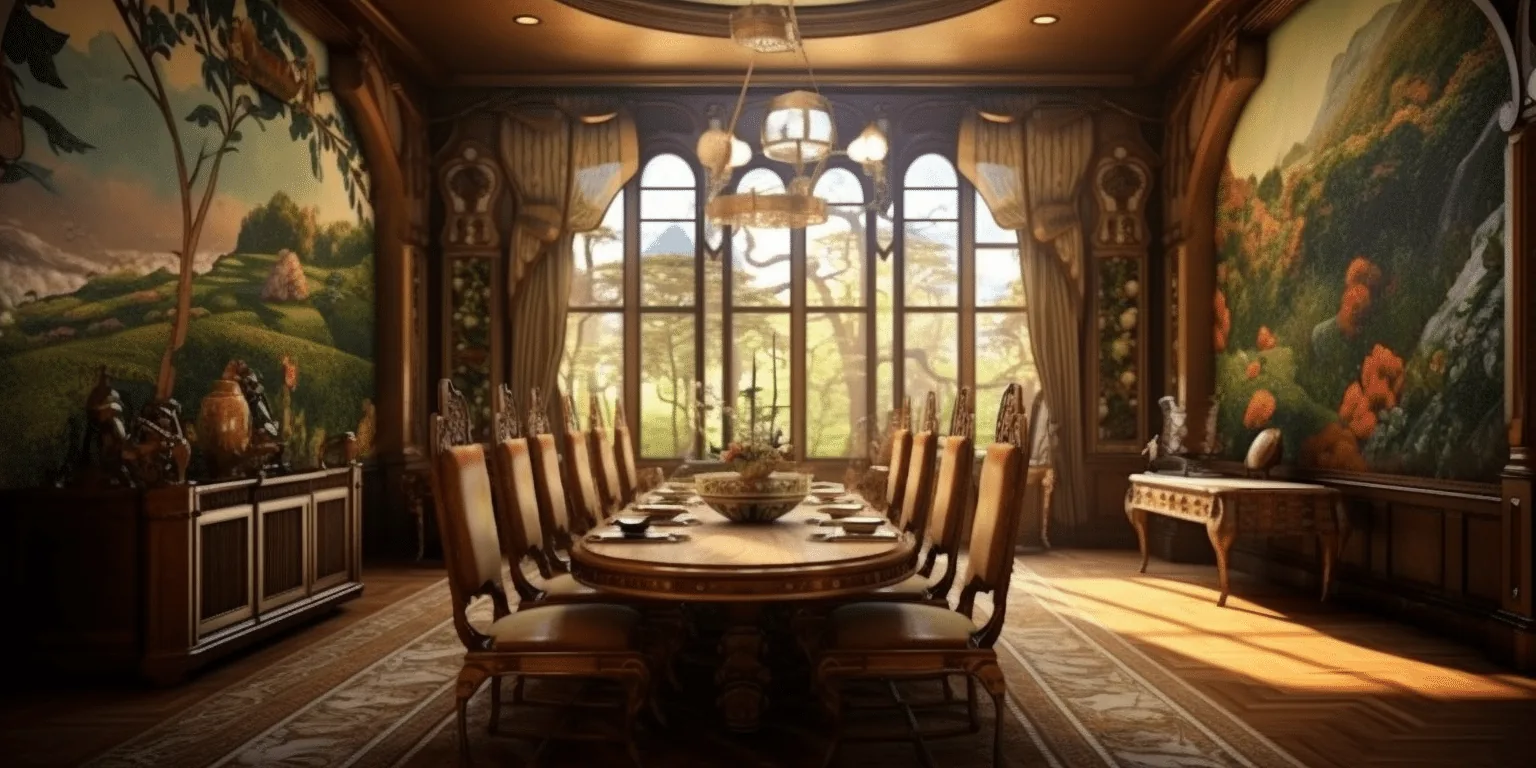
Art Nouveau interior design is one of those styles that looks instantly recognizable and yet is surprisingly hard to describe in words. The flowing lines, the stylized botanical forms, the way furniture and architectural details seem to grow from a shared organic logic. I worked on a renovation project in Lincoln Park about three years ago where the client had one original Art Nouveau mirror — gilt frame, sinuous floral carving along the top rail — and getting the rest of the room to cohere with that single piece taught me more about the style than any design textbook I\’d read.
That\’s what this guide covers: the actual principles that hold Art Nouveau together, which specific elements are worth investing in, and how to apply the style without ending up with a room that looks like the Paris Metro entrance got shipped to the Midwest.
The Core Design Principles That Set Art Nouveau Apart

The key principle here is that Art Nouveau treated the decorative arts as architecture. Not decoration applied to a surface, but form that emerged from the structure itself. When Hector Guimard designed the Paris Metro entrances, the iron forms weren\’t flourishes stuck onto a steel frame — they were the frame. That distinction matters because most Art Nouveau reproductions sold online miss it entirely. The line curves because it has a structural or botanical reason to curve, not because curved things look pretty.
Organic Line as a Design System, Not a Decoration
Art Nouveau borrowed directly from plant morphology: stems, tendrils, the way lily pads sit at the water\’s surface. Émile Gallé, who made his name in glass and furniture in Nancy, France, wasn\’t simply drawing flowers. He was modeling the structural logic of how plants grow. The line that starts at a chair leg and continues up through the back rail is following the same visual grammar as a vine climbing a trellis.
In practice, this means you\’re looking for pieces where the curve is consistent throughout the entire object. Not a straight-legged table with a floral pattern applied to the top surface. The object should speak the same formal language in its structure and its ornament. When those two things align, the piece looks inevitable. When they don\’t, it looks like a copy.
Asymmetry as an Intentional Feature
Most Western furniture before Art Nouveau was symmetrical by design. The movement broke that convention deliberately, because nature is almost never perfectly symmetrical. A recurring detail in pieces from Louis Majorelle\’s workshop is that the carved decorative elements mirror the general shape but not the exact detail: one side of a cabinet might carry three carved flowers where the other has two. That asymmetry creates the sense of movement that makes Art Nouveau furniture look alive in a way that period revivals rarely achieve.
This is also what separates a well-executed Art Nouveau room from one that merely looks \”fancy.\” Symmetry looks formal and static. The organic asymmetry of Art Nouveau looks dynamic, which is why the style works so well with natural light — shadows and highlights shift differently across an asymmetrical surface throughout the day.
Art Nouveau in Real Rooms: What to Prioritize
Lighting Is Where Art Nouveau Lives or Dies

I\’ve seen well-intentioned Art Nouveau rooms fail because the lighting was wrong. Generic pendant lights or recessed can lights completely undercut the style. Art Nouveau lighting was designed as sculpture first and light source second — the shade was the point, not the bulb behind it.
A genuine Tiffany Studios lamp from the early 1900s will cost anywhere from $3,000 for a small piece to $500,000 for a major work. That\’s not where most renovation budgets live. But there are production lines worth considering: lamps from Meyda Tiffany or Dale Tiffany use hand-assembled stained glass segments and cost $200 to $1,500 depending on size and complexity. The key differentiator from cheap knockoffs is the quality of the lead came — the metal strips between glass pieces. In a quality piece the came is even and sits cleanly against the glass. In a cheap reproduction it buckles and shows gaps, and you can see it from across the room.
For wall sconces, look for pieces with sinuous metalwork and frosted or tinted glass shades. The organic drape of the metalwork is the tell. If it looks like a straight-line bracket with a curved shade tacked on, it\’s not Art Nouveau — it\’s a category mistake.
Furniture Profiles: What to Look for When Shopping
The furniture that actually works in an Art Nouveau room shares specific characteristics. First, the legs. Art Nouveau furniture legs are tapered and often slightly curved, sometimes terminating in a pad foot that recalls a water lily stem meeting the surface it grows from. Straight turned legs are not Art Nouveau, regardless of what the product listing says.
Second, the surface treatment. Majorelle\’s furniture used marquetry — inlaid wood patterns — to create naturalistic motifs that followed the grain of the underlying wood rather than fighting it. A good reproduction will at minimum have carved relief decoration that echoes the line vocabulary of the main form. Flat-printed floral patterns on otherwise conventional furniture are not the same thing.
Third, the upholstery. Heavy tapestry fabrics in botanical patterns work. Velvet in deep jewel tones (burgundy, forest green, sapphire) is period-appropriate. Contemporary upholstery in neutrals looks wrong against Art Nouveau furniture profiles — the form and the material tell contradictory stories. This is one area where I\’d advise against trying to modernize.
Wallpaper and Surface Pattern: How to Avoid Overdoing It
Most people make the same mistake: Art Nouveau wallpaper on every wall, and then they wonder why the room feels overwhelming. The style was designed for buildings with high ceilings and generous windows that could hold the visual weight of elaborate surface decoration. Most modern rooms don\’t have those proportions.
One feature wall with a strong Art Nouveau wallpaper pattern is enough in most spaces. The other walls should be painted in a color pulled from the wallpaper palette — typically a muted sage, warm ivory, or dusty rose. William Morris patterns, which technically belong to the Arts and Crafts movement but share a visual vocabulary with Art Nouveau, are easier to source and often age more gracefully in contemporary interiors than harder-edged Art Nouveau motifs.
The Historical Context That Makes the Style Make Sense

Why Art Nouveau Happened When It Did
Art Nouveau emerged in the late 1880s and lasted until roughly 1910 — a period that maps almost exactly onto a specific cultural and industrial moment. Mass production had made machine-manufactured objects cheap and widely available, which put enormous pressure on the workshops and craft guilds that had been producing handmade decorative objects for centuries. The movement was, in part, a counterargument: evidence that handcrafted, design-integrated objects could not be reproduced by machines.
It\’s a parallel movement to the Arts and Crafts tradition in Britain, and it shares many of the same anxieties. Both were responses to industrialization. Both elevated the decorative arts to fine art status. The difference is that Art Nouveau leaned into new materials — iron, glass, industrial processes — while the Arts and Crafts movement idealized pre-industrial craft. That willingness to use industrial materials for organic ends is part of what makes Art Nouveau so durable as a reference. For comparison, Victorian Gothic interior design was grappling with the same cultural moment but reached very different formal conclusions.
The Designers Whose Work Still Sets the Standard
Hector Guimard designed the Paris Metro entrances between 1900 and 1913. Most survived and can still be seen in Paris. His cast iron work is the clearest surviving example of Art Nouveau applied at architectural scale — the forms are functional (they\’re gates and canopy supports) and fully ornamental at the same time.
Victor Horta built the Hôtel Tassel in Brussels in 1893, considered the first true Art Nouveau building. The staircase uses exposed iron structural columns as decorative elements — the inverse of the standard approach of hiding structure and applying ornament on top.
Louis Majorelle worked in Nancy, France, producing furniture that remains the benchmark for the category. If you\’re buying reproduction Art Nouveau furniture and want to understand what quality looks like, Majorelle\’s workshop pieces are the reference point. Charles Rennie Mackintosh, working in Glasgow, developed a more geometric interpretation that bridges Art Nouveau and early modernism — his work is genuinely useful as a reference for contemporary rooms that want the spirit of the movement without the full botanical density. His approach has more in common with Art Deco interior design than most people realize.
Art Nouveau Around the World: Regional Variations Worth Knowing

Jugendstil vs. Stile Liberty: Same Movement, Different Results
The style had different names in different countries, and those variations aren\’t just semantic. German and Austrian Jugendstil (named after the magazine Jugend) tended toward flatter, more geometric interpretations. Josef Hoffmann\’s work and much of the Vienna Secession movement sits at the harder-edged end of the spectrum. Italian Stile Liberty (named after the London department store) was more floral and organic, closer to the French mainstream.
This distinction matters for how you use the style in a room. If you want the full sinuous botanical effect, the French, Belgian, and Italian tradition is your reference. If you want something that looks Art Nouveau but can coexist with more contemporary furniture, the Jugendstil tradition is considerably more workable. The cleaner geometry of Jugendstil has more in common with Steampunk interior design\’s approach to Victorian industrial aesthetics than it might initially appear.
Riga\’s Art Nouveau Quarter: The Best Surviving Example at Urban Scale

If you want to understand Art Nouveau at the scale it was originally conceived, Riga, Latvia is the destination. The city built a substantial portion of its urban fabric during the Art Nouveau period and suffered less 20th-century reconstruction than most European cities, which means the buildings are largely intact. About a third of the buildings in the city center are Art Nouveau or Jugendstil in style — over 800 buildings in total.
The quality varies significantly, which is instructive. Some buildings are pure decorative maximalism; others are more sober and structural. Walking the streets gives you a sense of what the style looks like across a range of budgets and ambitions, and what survives 120 years of weather and maintenance. The answer to \”which parts last\” is the stone and iron structural work. The applied decorative stucco is the first thing to deteriorate. That\’s a useful lesson for interior applications too: invest in the structural elements, not the surface decoration.
Bringing Art Nouveau Into a Modern Home Without It Looking Like a Museum

The One Rule That Actually Changes the Result
Contrary to what most Art Nouveau interior guides will tell you, you don\’t need to commit to the style fully to use it well. The mistake I see constantly is all-or-nothing thinking: either do the complete period room or don\’t bother. Both extremes are wrong.
The approach I use with clients: anchor the room with one strong Art Nouveau piece, then build outward from its color palette and formal vocabulary. An original or high-quality reproduction Tiffany floor lamp in a room that is otherwise contemporary is not a mismatch — it\’s a focal point. The organic forms read as sculptural. What doesn\’t work is mixing three or four period pieces from different traditions with no visual logic connecting them. The first time I tried that approach on a project, the room looked like an antiques shop, not an interior. One strong piece, consistent palette — that\’s the working formula.
Where to Spend and Where to Save
After working on several rooms with Art Nouveau elements, my honest guidance on budget allocation:
Spend the money on lighting. A good Tiffany-style lamp from a quality manufacturer (Meyda or Dale Tiffany, not a cheap import) is the single most effective Art Nouveau element you can add. The light quality is genuinely different — the stained glass produces a warm, colored ambient glow that changes with the time of day — and the object holds up to scrutiny in a way that cheap decorative objects don\’t. A $400 lamp from a reputable maker will look better in ten years than it does today. A $60 knockoff will look worse.
Similarly, if you\’re going to use Art Nouveau wallpaper, buy quality. The motifs are complex enough that cheap printing looks immediately wrong. Registration of the pattern elements matters — in a well-printed wallpaper, the botanical forms flow across the seams. In a cheap one, they don\’t, and the room looks like a mistake.
Where you can save: small decorative objects. Reproduction Art Nouveau frames, bookends, and ceramic vases are widely available at reasonable prices, and at small scale the quality differential between good and mediocre is much less visible. Ornate Baroque-era design sensibilities — which you can explore further in our guide to Baroque interior design — share enough of the ornamental vocabulary that mixing a few pieces across both periods often works better than strict adherence to one style.
Frequently Asked Questions