Scandinavian Cabin Interior: Timber, Loft, and Compact Heat

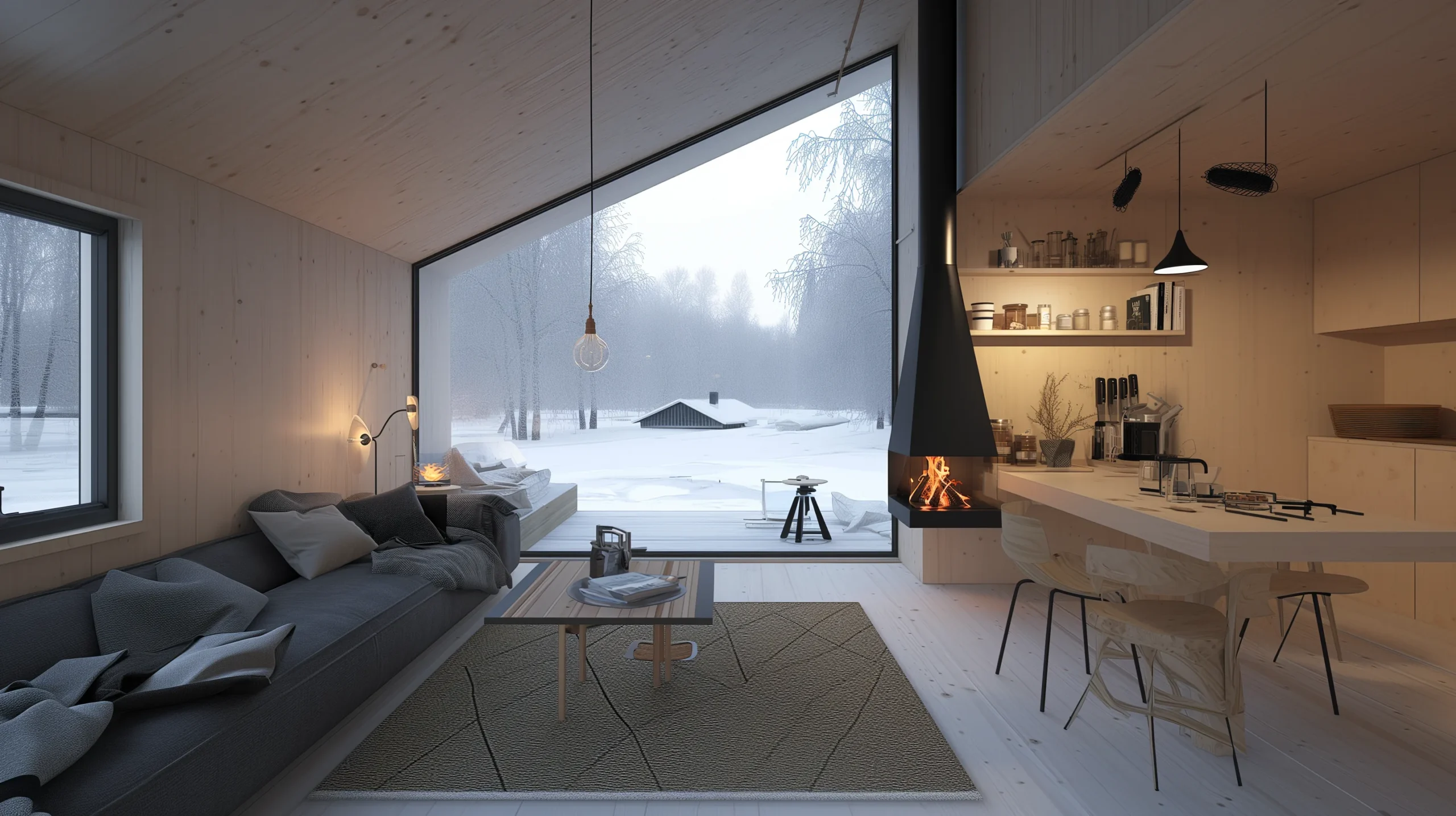
I found this style by accident. I was looking for cabin renovation ideas after renting a place in the Texas Hill Country last winter, and I kept clicking past the usual “cozy farmhouse” results until I landed on something that stopped me completely: a Scandinavian cabin with dark wood, white textiles, and almost nothing else. No shiplap. No mason jar arrangements. Just a reading chair, a fireplace, and a wooden ceiling that did all the talking.
The difference between a Scandinavian cabin interior and regular Scandinavian design is texture. The cabin version allows for rougher wood, exposed beams, stone, and a fireplace that functions as the room’s center. It’s still minimal, but it’s warmer in a way that doesn’t require staging. These 20 spaces show exactly what that looks like when it’s done well, and a few show what happens when one specific material choice makes or breaks the whole room.
Kitchens That Earn Their Place
Black Cabinetry Against Raw Wood
This kitchen gets something right that most cabin kitchens get wrong: contrast. The black cabinets against the raw wood walls make both materials look more intentional. Without the black, the wood looks background. With it, the wood becomes the wall of a kitchen that knows what it’s doing. The budget version of this is Rustoleum cabinet paint in Matte Black, about $40 a can at Home Depot. I repainted a typical apartment kitchen cabinets using two cans, and the result was close enough to this that I stopped browsing IKEA kitchens entirely.

When Every Surface Is Wood (And It Works)
All-wood kitchens have a reputation for looking either cluttered-rustic or like a sauna showroom. This one avoids both because the wood tones are consistent: one shade throughout, clean lines, and no open shelving crowded with visible dishes. The key detail here is the lack of variation across surfaces. Once you start mixing three different wood finishes in a kitchen, the Scandinavian calm is gone. The first time Trying a mixed-wood kitchen shelf situation in a rental, a friend looked at it and said it looked like a craft fair stall. She was right.

Bedrooms That Actually Help You Sleep
Dark Wood That Grounds a Light Room
Dark wood furniture in a light room works when the room has enough natural light to absorb it. This bedroom pulls that off because the window covers a significant portion of the wall. The white bedding isn’t a style choice here: it’s load-bearing. Take it away, swap in a patterned duvet, and the dark wood stops looking grounded and starts looking heavy. I’d keep the bedding plain and put the sourcing budget toward a good wooden bed frame instead. IKEA’s HEMNES in dark brown ash is a reasonable starting point if you’re working with a limited renovation budget.

Wooden Ceiling, Muted Bedding, Nothing Else Needed
There’s a temptation, when you have a wooden ceiling this good, to add things that match it. Wall art. Shelves. A wooden lamp base. Don’t. The point of a ceiling like this is that it is already the decoration. The muted bedding here sits in the right relationship to the ceiling: it doesn’t compete. What I find interesting about this bedroom is that it doesn’t have a single visible decorative object. Most people would read that as unfinished. It’s actually finished in a way that took real restraint to achieve.

A Sleeping Corner Built Into the Cabin
Small bedrooms in cabins work better than small bedrooms in apartments for one reason: the textures are allowed to be rough. A knitted throw that would look out of place against smooth painted walls looks exactly right against raw wood. The rug underneath this bed does something specific: it separates the sleeping zone from the floor in a way that makes the space feel considered rather than cramped. If I were doing this in a small room, I’d start with the rug size and work backwards. Get that wrong and the proportions collapse entirely.

Living Rooms Worth Spending the Evening In
Open Plan With Beams That Don’t Feel Cold
High ceilings in open-plan spaces usually lose the warmth that smaller rooms hold naturally. This room solves that with exposed wooden beams that visually lower the ceiling without physically doing so. The furniture arrangement matters here too: everything faces inward rather than toward the walls, which creates a sense of center that large open rooms often lack. I’ve seen versions of this where the owner left the beams painted white “to keep it bright,” and the whole room looked like an airport terminal. The beams need to be wood. That’s the entire premise.

Fireplace as the Whole Point
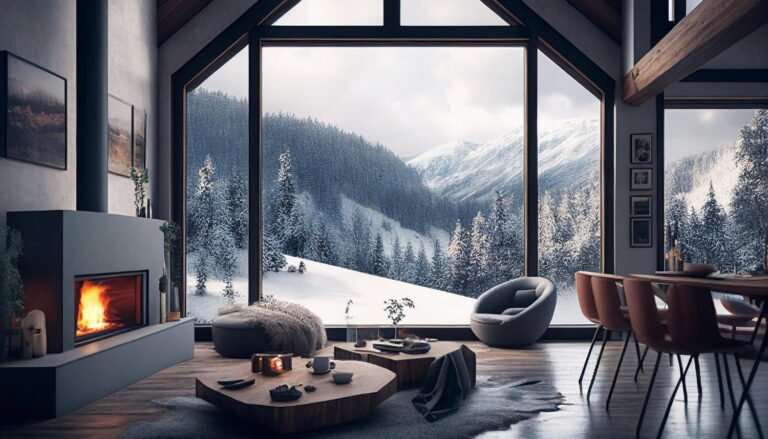
Most living rooms have a fireplace and furniture. This one has a fireplace, and then furniture arranged to acknowledge it. The wood stack next to the hearth isn’t decorative: it’s functional, and it stays in frame because it belongs there. What I keep coming back to in this room is the Scandinavian design principle of letting one element carry the entire room’s purpose. When I rented that cabin near Wimberley last winter, the fireplace was the reason I stayed inside when I could have been outside. Good rooms do that.

Black Accent Wall in a Naturally Lit Space
Most people treat black accent walls as a commitment they’re not ready to make. In this room, the black wall functions as the logical backdrop for a fireplace that would otherwise float in the space. The natural light prevents the room from going dark. This is the version of an accent wall I’d actually try: black behind the focal point, everything else in muted neutrals. Painting a charcoal accent wall in a home office a few years back, decided it was too much, and covered it within six months. Looking at this room now, I think I just didn’t have enough light in mine. That’s a recoverable mistake with the right window treatment.

Reading Corner and the One Armchair Principle
One armchair. One lamp. One side table. A fireplace that doesn’t need a mantel crowded with objects. This corner works because it took the question “what do I actually need here?” seriously and stopped before adding a second chair or a throw pillow collection. The stone fireplace gives the space its weight: it looks like it was built into the cabin, not installed afterward. If you’re ever looking at a prefab electric fireplace surround and wondering if it will have this effect, the short answer is no. You can get closer by looking at how mountain home interiors use stone as a structural texture rather than a decorative add-on.

Hygge Without the Prop Collection
Here’s the thing about hygge that most decorating content gets wrong: rooms that claim it are usually just trying to replicate a mood board. This room has the woven throw, the fireplace, the muted palette, and it works because those elements are the only things doing the decorating. Buying two matching knitted throws from a big box store once, added them to a room that was already fully furnished, and the effect was a room that looked like it was preparing for a photo shoot. Hygge is not about adding more. It’s about having less and letting the warmth of the materials carry everything else. Most people do the opposite.

Dining Spaces With Real Character
Dark Wood Table, No Styling Required
Scandinavian dining tables have a quality that makes them hard to style wrong: the wood is already the decoration. This dining space shows that clearly. The table and chairs are the point; everything else in the room is simply not getting in the way. The chairs here are worth looking at closely: they match the table’s grain direction but not its finish exactly, which keeps the room from looking like a furniture store floor display. A small mismatch in tone between table and chairs is almost always better than a perfectly matched set. Testing this across a few different apartments and it holds every time.

White, Grey, and Wood: Why the Proportion Matters
This dining room applies the classic Scandinavian color ratio correctly: white as the dominant field, grey as the secondary, wood as the accent. Most people get this reversed and then wonder why their Scandinavian dining room looks off. The plant here is doing specific work: it’s the only organic element with a visible irregular shape in an otherwise geometric space. One plant in this role is exactly enough. Three plants and it becomes a plant room with furniture in it.

Bright Wood and a Sheepskin Throw: The Accessible Version
Light wood with a natural fiber throw over a dining chair is probably the most accessible version of this whole aesthetic. The sheepskin (or a decent faux version from IKEA, which is around $29 and indistinguishable from a distance) brings the cabin warmth without requiring a renovation. The table here is simple: pale wood, clean lines, no visible grain drama. This is a reasonable target for anyone working with a furnished rental or a tight timeline. The throw costs almost nothing and shifts the room’s feeling considerably without touching anything permanent.

Details That Hold the Whole Thing Together
Small Cabin Room With a Wooden Ceiling
Small cabins succeed or fail based on whether the ceiling material adds warmth or just closes the space in. A white plasterboard ceiling in a small cabin room makes it feel like a storage unit. A wooden ceiling like this one makes the room feel intentional. The furniture placement here works because everything is pushed toward the walls except for the center, which is left deliberately open. That open center, even in a small room, signals confidence in the space rather than apology for its size.

Windows as the Primary Design Element
This is the approach I think about most when looking at cabin interiors: treating the window as the room’s main feature rather than as a light source you place furniture in front of. The light-colored wood and neutral palette here exist to support the view, not compete with it. Nothing in this room has a pattern. Nothing has a bold color. The design decision was made before any furniture was purchased, and it was: the view is the art. That’s a harder call to make when your view is a parking lot, but if you have it, this room shows how to honor it.

Honey-Toned Walls With a Glass Railing
The glass railing here is doing two things at once: maintaining the open sightline between levels, and providing a clean contrast against the warm honey-toned wood walls. In a cabin where nearly every surface is wood, transparent elements give the eye a break without introducing another material’s color or texture. This is also a privacy solution that doesn’t require a wall, which matters a lot in open-plan cabin layouts. It works in the same way that wabi-sabi interiors use negative space: letting what’s absent do as much work as what’s present.

What “Uncluttered” Actually Means
People confuse “Scandinavian minimal” with empty. This room is neither. There are objects in it: a plant, cushions, what appears to be a blanket folded over a chair arm. But nothing is present without a function, and nothing is duplicated. The plant is the only green element. The cushion is the only soft texture on the seating. The window has no covering. Uncluttered is not the same as empty: it means every object belongs in the room by doing something the room couldn’t do without it. That’s a harder edit to make than it sounds.

When the Skylight carries the look
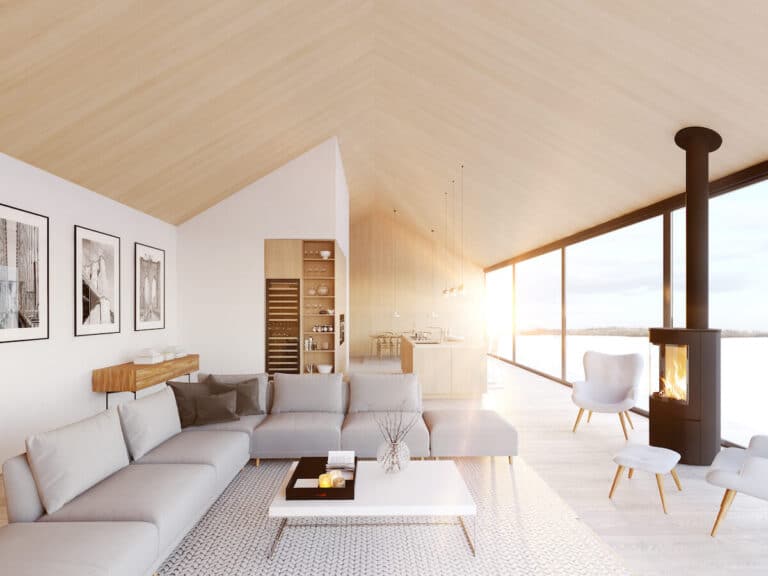
Skylights in Scandinavian design aren’t a luxury detail: they’re a practical response to limited winter daylight in Nordic climates. In a cabin context, a skylight in the living area changes how the room reads at different times of day in a way that no lamp arrangement can replicate. This living room makes smart use of the skylight by keeping the palette pale enough to reflect what comes in. The furniture is low-profile, which lets the ceiling height remain visible. One specific detail worth noting: the plants are small and positioned so they don’t cast shadows on the reading area below.

Wooden Beams in a Large Open Room
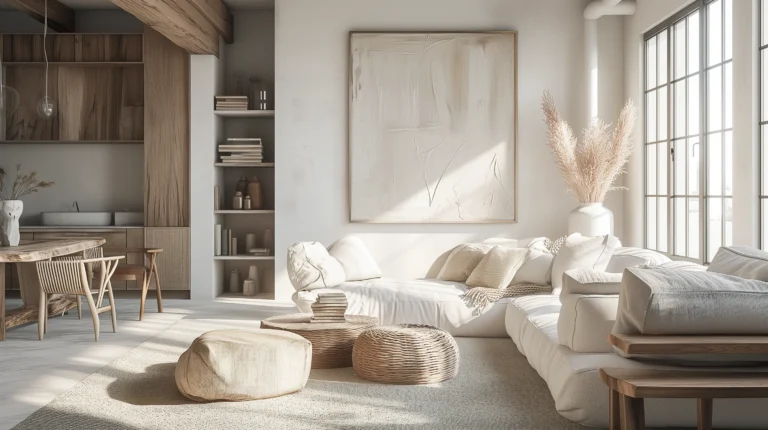
This is the version of the open-plan Scandinavian cabin that gets scale right. The beams are proportional to the ceiling height, the furniture is appropriately large for the floor area, and the color palette doesn’t try to shrink the room. Large open rooms in cabins often fail because the furniture is too small for the space, which makes the room feel like a waiting area. The rule I apply: if you can see more than four feet of unbroken floor between the sofa and the coffee table, the sofa needs to move forward.

The Bathroom You Don’t Want to Leave
Freestanding Tub, Wood Panels, No Clutter
Cabin bathrooms often get the least design attention, which is why this one stands out. The freestanding tub sits in front of what looks like a window with a forest view, and the wood paneling on the lower walls brings the cabin material into a room that could easily have felt like any hotel bathroom. The muted palette here is identical to the rest of the cabin: beige, grey, cream, with the wood providing the warmth. No towel stacks on display. No decorative soaps in a glass dish. The restraint in this bathroom is the same restraint that makes the rest of this interior style work: nothing is here to impress, everything is here to be used.

Frequently Asked Questions
What defines a Scandinavian cabin interior?
A Scandinavian cabin interior combines Nordic minimalism with natural materials specific to cabin architecture: exposed wooden beams, raw wood walls or ceilings, stone fireplaces, and a muted palette of white, grey, and natural wood tones. The difference from standard Scandinavian design is that cabin interiors allow for rougher textures and a fireplace or hearth as the room’s central element.
What colors work best in a Scandinavian cabin interior?
White, grey, and natural wood tones form the core palette. White is used as the dominant field, grey as a secondary tone, and wood as the warm accent. Black appears as a contrast element in kitchens or accent walls when there is enough natural light in the room to balance it. Avoid warm beiges or terracottas, which push the aesthetic toward farmhouse rather than Nordic.
How do you add warmth to a Scandinavian cabin interior without over-decorating?
The warmth in a Scandinavian cabin comes from materials, not accessories. Exposed wood, a working fireplace, wool or linen textiles in muted tones, and natural fiber rugs do the work. Resist adding more objects to increase warmth. Adding a third throw or a second decorative candle cluster usually makes the room look staged rather than lived in.
Can you create a Scandinavian cabin interior on a budget?
Yes, with a few specific priorities. A natural fiber rug in beige or grey anchors the look affordably. IKEA’s sheepskin throws ($29) add the cabin texture without the cost. Painting dark cabinetry with a matte black cabinet paint ($40 a can) creates the contrast that makes cabin kitchens look intentional. The most expensive-looking element is often just restraint: removing items that don’t belong costs nothing.
What furniture works best in a Scandinavian cabin interior?
Low-profile furniture with clean lines and natural wood construction works best. Avoid furniture with ornate detail, visible metal legs in gold or brass, or heavy upholstery in bold colors. Sofas in cream, oatmeal, or light grey with simple slipcovers or linen fabric pair well with wood surfaces. A mismatch between the table and chair finish is often better than a perfectly matched set.