Mountain Home Interior Design: Great Room, View, and Scale

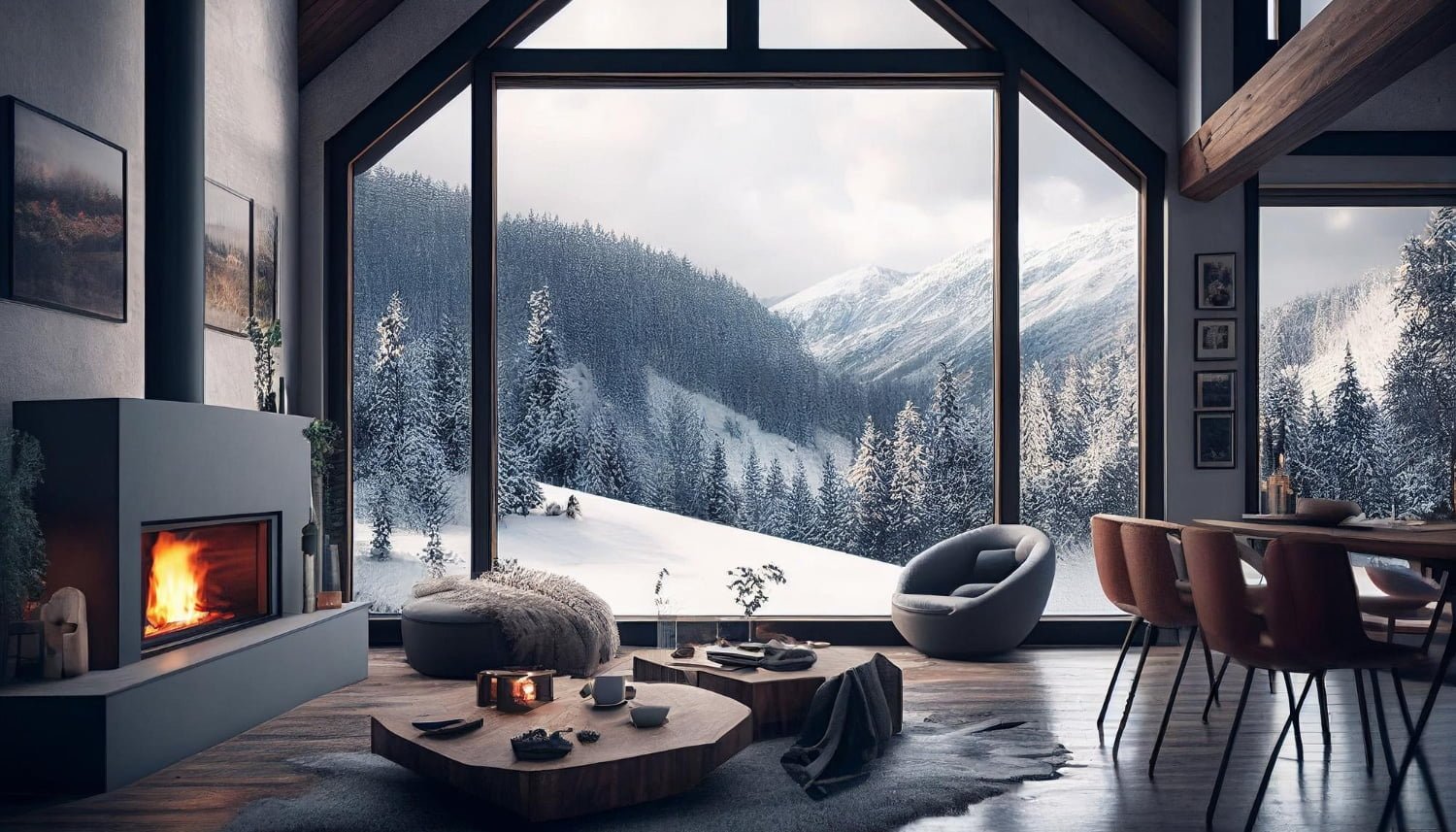
Modern mountain interior design sits at the intersection of two distinct design vocabularies. On one side: the raw, unfinished beauty of natural materials, stone, reclaimed wood, worn metal. On the other: clean architectural lines, a restrained palette, and furniture that belongs in the room in the room. Getting that balance right is harder than it looks, which is why so many mountain homes end up either too rustic (dark, heavy, overwhelming) or too generic (could be anywhere, connects to nothing).
The key principle here is material honesty. Mountain modern design doesn’t fake its surroundings. The wood looks like wood. The stone looks structural, not decorative. When this style works well, the interior feels like an extension of the landscape outside, not a boutique hotel that happens to be near trees. That distinction matters more than most people realize.
Key Takeaways
- Mountain modern design balances raw natural materials with clean contemporary lines.
- Material choices, wood, stone, and weathered metal, drive the aesthetic more than paint color or furniture style.
- Lighting strategy is where most mountain interiors succeed or fail.
Defining Modern Mountain Interior Design
Modern mountain interior design is one of those styles with a genuinely useful design logic behind it. The premise: you are in a specific place, surrounded by specific materials, with specific light conditions. The design should respond to all three. That’s different from styles that could theoretically exist anywhere. With mountain modern, geography is the brief.
The spatial signature is big openings, vertically and horizontally. Vaulted ceilings, large windows, open-plan living areas that flow into kitchen and dining. This isn’t arbitrary. Mountain homes are often used seasonally, or by groups. The layout needs to handle a crowd without feeling institutional and compress back down to feeling personal when it’s just two people and a fire going.
Natural materials are load-bearing in this style, literally and visually. Exposed structural beams, stone fireplace surrounds, wide-plank hardwood floors. These aren’t decorative additions you layer on top of a conventional interior. In practice, this means making material decisions early, before the drywall goes up, because you’re often talking about structural elements or substrate choices that affect everything downstream.
Lighting is where I’ve seen mountain interiors go wrong most consistently. The instinct is to add warmth with table lamps and candles, which works, but without adequate overhead structure, the room looks dim rather than atmospheric. The better approach: matte black or bronze pendant fixtures for kitchen and dining areas, recessed lighting along ceiling peaks to accentuate height, and table lamps as the tertiary layer for actual warmth.
Key Design Elements
There are about a dozen decisions that shape whether a mountain modern interior looks resolved or just expensive. These are the ones worth prioritizing.
1. Natural Materials
Reclaimed wood is the obvious starting point, and it’s obvious for a reason. No manufactured surface gives you the same visual weight. But the decision isn’t just “use wood,” it’s where and how much. A full wood-paneled room looks cabin. One feature wall or a ceiling treatment looks architectural. The material I see underused most often in mountain interiors is weathered steel. Used for window frames, stair railings, or light fixtures, it adds the edge that keeps mountain modern from sliding into pure rusticism.
2. Open Floor Plans
The open floor plan in a mountain home is almost always a given at the structural level. The challenge is creating distinct zones within it without using walls. In practice, the most effective method is layering rugs to define living, dining, and kitchen areas, combined with a consistent ceiling treatment that ties the spaces together. Counter-height kitchen islands do double duty here: they provide a visual break without closing off the space, and they give guests somewhere to sit while someone’s cooking.
3. Vaulted Ceilings
Vaulted ceilings are one of those features that look compelling on a design board but cause real problems if the proportions aren’t right. The peak height matters less than the pitch of the slope and where the lower wall height lands. Looking at a project where the clients had vaulted the main living room to 22 feet, and the sitting area felt uncomfortable, dwarfed by the volume above. We resolved it by dropping a large dark-stained wood beam at the transition point, which created a visual anchor at a more human scale without any structural work.
4. Large Windows
Large windows in a mountain home are only as good as what they frame. Before specifying window placement, I always ask: what is the actual view from this position, and at what time of day? West-facing floor-to-ceiling windows sound right until you realize they’re aimed at the neighboring lot. North-facing windows give consistent, even light without glare. If you’re in a real mountain setting with a meaningful view, the window should be sized and placed to frame it deliberately, not just maximize glass area. Minimal window treatments are the right call when the view earns it.
Incorporating Nature
Bringing nature into a mountain interior isn’t about adding accessories. It’s about material and texture choices that have real weight to them. The goal is surfaces you’d notice if they were removed, not surfaces that blend into the background.
5. Wooden Accents
I have a clear preference for wood that looks aged rather than new. Freshly milled lumber has a quality that works against the mountain modern aesthetic. Reclaimed wood from old barns or industrial buildings has grain patterns and color variation you can’t replicate at any price. For ceilings, exposed beams are the most impactful application. For walls, horizontal tongue-and-groove paneling works better than vertical shiplap in most mountain contexts. And for furniture, solid wood pieces with visible joinery read as more authentic than veneered furniture regardless of the price point.
- Furniture: Solid pieces in reclaimed or aged wood, tables and benches especially, carry more visual weight than upholstered alternatives at the same scale.
- Wall paneling: Horizontal tongue-and-groove paneling on a single feature wall or in a lower-ceiling corridor adds texture without overwhelming the space.
- Ceilings: Exposed beams are the highest-impact application. Even painted white, they add structure and a sense of scale that drywall alone cannot match.
6. Stone Features
Stone is the material I think most mountain homeowners underuse. It tends to get reserved for the fireplace surround, which is the obvious application, but there’s more opportunity. Stone flooring in a foyer or mudroom is practical and sets the material tone from the entry point. A stone accent wall in a low-ceilinged area adds relief without adding weight. The key is choosing the right stone profile: stacked ledger stone looks rugged, while honed limestone or flat-face fieldstone looks architectural. These are very different looks even when both are technically “stone.” For more ideas on how fireplace materials work across different styles, the post on modern farmhouse fireplace ideas covers the range in useful detail.
- Fireplace: A stone surround is the natural focal point for any mountain living room. Full-height stacked stone anchors the room vertically without requiring additional wall treatment.
- Flooring: Stone or large-format porcelain tile in entry areas handles foot traffic from outdoor activities without showing wear the way hardwood does.
- Accent walls: Stacked ledger stone or split-face travertine adds depth and relief to a flat wall surface, most effective in lower-ceilinged spaces where the texture reads up close.
7. Mountain-inspired Textures
Texture is what makes a mountain interior feel inhabited rather than staged. The surfaces you touch, throw blankets, wool cushions, woven rugs, need to have actual tactile weight. Thin, flat textiles read as generic regardless of color or pattern. A raw-edge wool throw on a leather chair costs less than most people expect and changes the feel of a room completely.
- Fabrics: Wool throws, heavy linen, and suede cushions hold their shape and add visual mass. Avoid synthetic fleece or sheer fabrics in mountain contexts.
- Natural materials: Antler accents, woven baskets, and cowhide rugs reference the landscape without requiring explanation or design-history study to read correctly.
- Earthy tones: Forest green, ochre, and terracotta used as accent colors against a neutral base. These read as deliberate in a mountain context rather than arbitrary.
When you layer these three material categories, wood, stone, and textile, you build the kind of depth that photographs can’t fully capture. The room has to be experienced to understand why it works.
Furniture and Decor
Furniture selection in mountain modern design comes down to one core question: how much rusticity do you want relative to the clean lines of the architecture? The balance you choose here determines everything else in the room.
8. Furniture Selection
I tend to specify leather sofas and solid wood coffee tables as the anchor pieces, then bring in upholstery for softness. Leather ages well in a mountain home. It handles the wear from guests, dogs, and ski weekends, and gets better looking over time rather than worse. Beyond that: avoid matching sets. A mountain interior that looks like a showroom display has lost the point. Mix an upholstered linen sofa with a reclaimed wood bench, a leather chair with a steel-framed side table. The variety looks intentional when the material language is consistent.
9. Functional Decor
The best functional decor in a mountain home earns its presence. A large wooden bowl on the dining table holds keys or fruit and has real material weight. A hand-forged iron coat hook in the mudroom is more useful and more honest than a decorative peg rail from a chain store. I’m skeptical of wildlife imagery as decor unless it’s genuinely artful. A large-format landscape photograph of a specific place you know is far more effective than any generic mountain print. The difference is recognizable to anyone who spends time in that space.
10. Layering with Rugs and Textiles
Rugs are the most underrated spatial tool in mountain interiors. The right rug defines a seating area within an open-plan space better than any furniture arrangement alone. For mountain homes, I prefer flat-weave or low-pile rugs in wool or jute over high-pile options. They photograph better, clean more easily after muddy weekends, and hold their edges flat on hardwood floors. Layer a second, smaller rug in a geometric pattern on top of the base rug under the coffee table to add pattern without competing with everything else in the room. By choosing neutral colors and earthy tones throughout, the layers reinforce rather than fight each other.
Lighting and Space Management
Lighting decisions in mountain interiors get made too late in the process. By the time the finishes are going in, the electrical rough-in is already done and the options are limited. Worth understanding how this style uses light before the walls are framed.
11. Natural Lighting
The floor-to-ceiling window is the mountain interior’s defining architectural feature, and it’s doing several things at once. It floods the interior with natural light. It frames the exterior landscape as a visual element within the room. And it removes the hard boundary between inside and outside, which is the whole point of being in that environment. Placement matters more than size. A badly placed large window frames nothing. A well-placed smaller window frames something specific, and that specificity is what makes it memorable.
Window treatments in this context should be as minimal as structurally possible. Sheer linen panels that pull fully to the side work well for most mountain homes. Heavy drapes are the wrong call here. If privacy or light control is actually needed, recessed blinds that disappear into the window frame are a better solution than any curtain treatment.
12. Task Lighting
Task lighting is where mountain modern can go wrong by trying too hard. Industrial pendant lights over a kitchen island can look forced if they’re too literal about the reference. The fixtures that work best are the ones that feel inevitable: a simple matte black dome pendant, a linen drum shade over the dining table, a plug-in wall sconce on a pivot arm next to the reading chair. Simple form, honest material. The shape language should be restrained. The more decorative the fixture, the more it competes with the materials doing the real work in the room.
Home offices and reading areas in mountain homes often need more task light than the ambient system provides. A solid floor lamp with a directional shade, something that can swing to where the light is needed, works better than a desk lamp in most mountain living rooms because the furniture arrangements tend to be flexible and shift with how the space is actually used.
13. Ambient Lighting
Ambient lighting in mountain modern interiors is about warmth, not brightness. The goal is a room that feels lit rather than illuminated. I use warm white bulbs, 2700K or lower, across all ambient fixtures. Recessed lighting works best when positioned along the walls rather than directly overhead, so the light washes the walls and ceilings rather than pointing straight down at the floor.
Recessed lighting along vaulted ceiling peaks does something useful: it accentuates the ceiling height and makes the architectural feature visible at night. Without it, the most important spatial element in the room disappears after dark. This is worth adding to the electrical rough-in plan even if it adds cost, because retrofitting it later is genuinely difficult.
Color Palette
The mountain modern color palette is more constrained than most styles, and that’s a feature rather than a limitation. The range runs from warm neutral to deep earth tone, with room for one or two accent colors if they’re used with real intention.
14. Earth Tones
Looking at mountain interiors where the palette ran from white to charcoal with nothing in between, and it worked because the material colors carried the room: the warm grain of the wood flooring, the cool gray of the stone fireplace, the amber of the leather sofa. Paint color in a mountain home is often less important than people expect. What matters more is the undertone. A wall that looks warm white next to cool gray stone is doing something right. A wall that looks yellow-white next to warm wood is fighting the materials rather than supporting them.
- Soft whites
- Beige
- Warm browns
- Grays
- Olive green
- Copper
Start with the material palette before committing to a wall color. The materials will tell you what the paint needs to do.
15. Accent Colors
Accent colors in mountain modern are where the space stops reading as a category and starts reading as someone’s specific home. The colors that work best here: forest green, cobalt blue, ochre, deep terracotta. One or two, used in a specific application such as a painted interior door, a set of cushions, or a ceramic vessel on the dining table, is enough. Three accent colors is too many. It stops reading as intentional and starts reading as indecisive.
- Cobalt blue
- Rustic reds
- Deep greens
- Mustard yellow
The test I use: does the accent color look like it could exist in the landscape outside the window? If yes, it will probably work in the interior. If no, think harder before committing.
Customizing Your Mountain Home
Designing a mountain home involves a question most clients don’t think to ask until late in the process: how much time will you actually spend here? A primary residence and a seasonal cabin have different design requirements even when they share the same aesthetic goals. The primary residence needs to function fully for daily life, with storage, workflow, and maintenance ease all figured out. The seasonal cabin can prioritize atmosphere over function in ways the primary residence cannot.
Once the functional brief is clear, the design choices follow more directly. For a mountain modern aesthetic: clean silhouettes in furniture, a restrained palette anchored in natural material colors, and one or two statement pieces that hold the room visually. A single oversize abstract painting on a stone wall. A hand-thrown ceramic vessel on a raw-edge console. The statement piece doesn’t need to cost a fortune; it needs to hold visual weight and feel deliberate.
Lighting planning should happen in the design phase, not the finishing phase. The electrical plan needs to anticipate where the furniture will go, where the reading areas will be, and where the statement pieces will land. I’ve seen beautiful mountain homes where the lighting was added after the fact and every lamp has an extension cord running to the nearest outlet. That problem is almost impossible to fix without reopening walls.
Mountain homes have specific functional requirements that urban or suburban homes don’t. Mudrooms matter more. Storage for skis, snowshoes, and winter gear needs to be planned explicitly. Flooring in high-traffic entry areas needs to handle wet boots and tracked mud without looking wrecked by the end of the season. These aren’t glamorous design decisions, but getting them wrong is more visible than getting them right.
The investment I always recommend clients make is a single large-format photograph or artwork that references a specific place. Not a generic mountain landscape, but the actual ridge they hiked last August, or the river valley visible from the kitchen window. It grounds the design in real experience in a way that no amount of rustic texture can replicate.
Popular Design Styles
Rustic
Rustic mountain style leans hard into the raw material vocabulary: exposed log construction, rough-hewn beams, stone floors with visible mortar joints. It’s the older reference point for mountain interiors and it remains popular for good reason. The warmth is immediate and legible. The risk is that it tips into a kind of historical recreation, where the interior looks like it belongs to a different era rather than reflecting a specific aesthetic sensibility. The way to avoid that: edit the accessories ruthlessly and keep the palette lighter than the materials suggest.
Contemporary
Contemporary mountain design is what happens when the architectural vocabulary of modernism meets the physical reality of a mountain site. Clean geometric forms, large glass openings, and a material palette that looks sophisticated without hiding behind ornamentation. This is the style most likely to appear in architectural publications, and it requires the most discipline to execute well. The details need to be precise. Anything slightly off looks sloppy, because there’s nothing else in the room to absorb the mistake.
Scandinavian
Scandinavian style overlaps with mountain modern more than most people realize. Both share a preference for pale natural materials, restrained palettes, and a connection to the landscape. The difference is in scale and weight. Scandinavian design tends toward lighter, more refined forms. Mountain modern allows for heavier, more structural elements. The combination works well for mountain homes used year-round: the Scandinavian vocabulary keeps the space from feeling oppressive in summer, while the mountain modern elements provide the physical warmth needed in winter. For a specific application of this combination, the post on Scandinavian cabin interiors shows how these two vocabularies work together in practice.
Industrial
Industrial design in a mountain context is more compatible than it sounds. The shared vocabulary: exposed structure, raw materials, honest surfaces. The difference is mostly in the specific materials. Where industrial uses exposed concrete and galvanized steel, mountain modern uses stone and weathered steel. The design logic is the same. Adding one or two industrial references, a factory-style pendant light or a steel-frame coffee table, keeps mountain modern from sliding into pure nostalgia and gives the space a more current edge. If you’re also interested in how this plays out in ranch-style contexts, the post on ranch-style interior design covers the overlap in useful detail.
My Thoughts
What I find most interesting about mountain modern design, having worked on several projects in this category, is how disciplined it requires you to be. The natural materials can easily overwhelm each other if you’re not editing constantly. The palette can slip from warm and grounded to dark and heavy. The key is restraint and clear hierarchy: more stone than wood in one room, more wood than stone in the next, a fireplace that uses both. When the balance is right, the interior feels like it was designed in conversation with the landscape. That’s the goal worth working toward.
Frequently Asked Questions
What is modern mountain interior design?
A design approach that combines natural materials like stone and reclaimed wood with clean contemporary lines. The goal is an interior that feels connected to its mountain setting without relying on nostalgic or purely rustic references.
Which materials are commonly used?
Stone, reclaimed wood, weathered steel, and glass are the primary materials. The preference is for materials that look aged and genuine rather than new and synthetic. Locally sourced stone and reclaimed lumber are worth the effort when available.
How does it differ from traditional mountain decor?
Traditional mountain decor relies on log construction, antler chandeliers, and heavy dark wood. Mountain modern retains the material vocabulary but applies it with architectural restraint: cleaner lines, more considered proportions, and a palette that reads as sophisticated rather than purely rustic.
If you liked this post about Modern Mountain Interior Design, don’t forget to follow us on Pinterest so you don’t miss any more interior design news!