Want some Drama? Victorian Gothic Interior Design your Choice

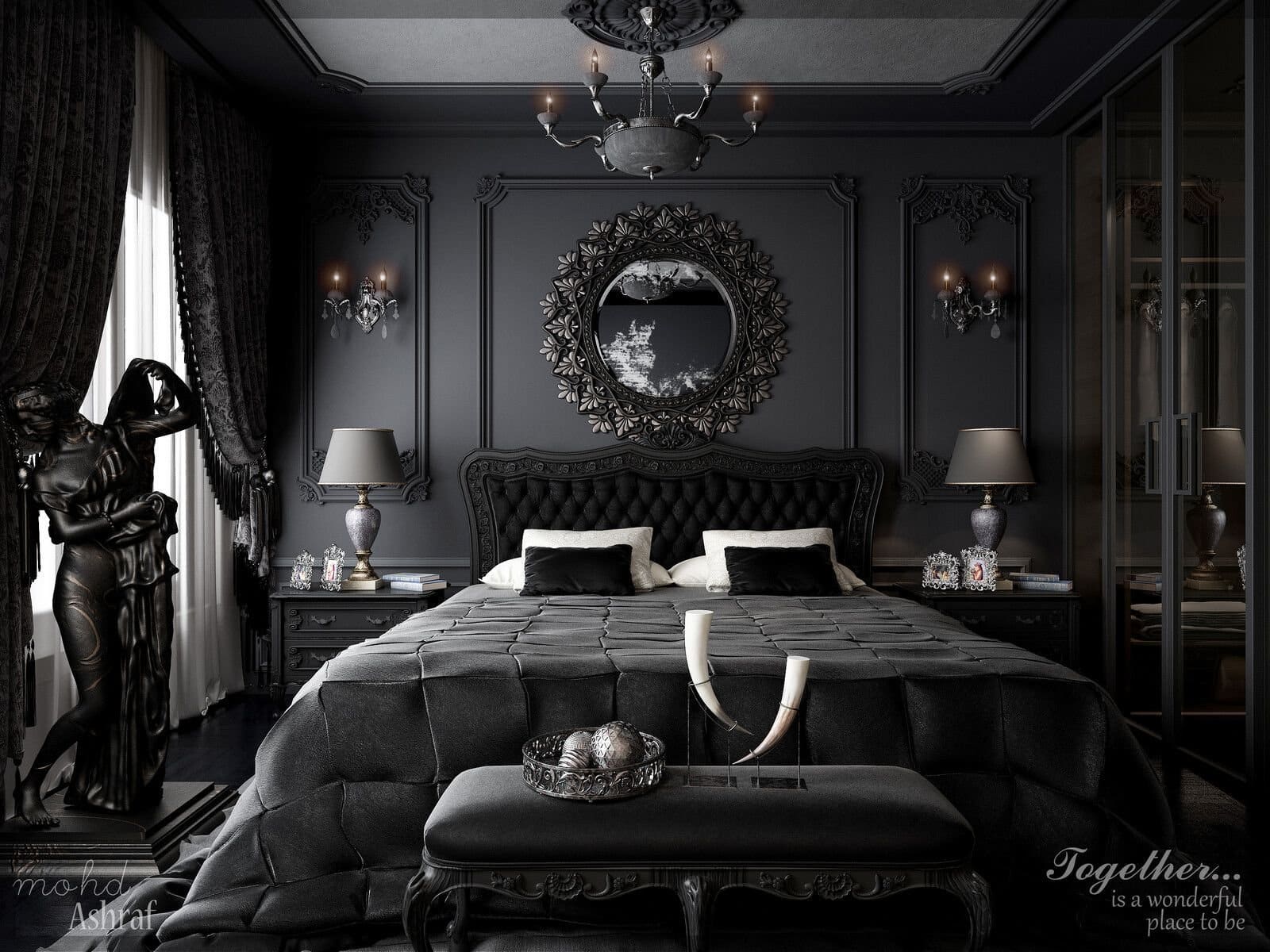
Victorian Gothic interior design is built on a specific visual grammar: pointed arch motifs, deep jewel-tone color on walls, heavy carved furniture, and textiles that absorb light rather than reflect it. If you’re drawn to a room that feels considered rather than decorated, this style is worth understanding in detail. The key principle here is that every element carries genuine weight, which means fewer pieces do more work than you’d expect.
What separates Victorian Gothic from generic dark decor is the historical layering. The style emerged from a 19th-century cultural obsession with medieval architecture, romantic literature, and the idea that beautiful things should have complexity and substance. In practice, this means each element in a Victorian Gothic interior has to earn its presence. Nothing is there because it seemed like a good idea in the moment.
I’ve worked with this aesthetic in spaces ranging from a two-bedroom condo in Wicker Park to a full-floor townhouse in Lincoln Park. The scale of the space matters less than how you work with proportion. A room done with three correctly chosen pieces in this style will always outperform one that’s full of Gothic-adjacent objects that don’t have a clear relationship to each other.
What is Victorian Gothic Interior Design and its History
Victorian Gothic interior design draws from two distinct sources: the Victorian era’s taste for ornamental detail and medieval Gothic architecture’s commitment to height, pointed forms, and structural drama. The combination produces a style that is simultaneously historical and theatrical. Understanding both sources makes it much easier to apply correctly.
Characterized by dark wood finishes, jewel-tone palettes, stained glass, and heavy draped textiles, the style reached its height in Britain and the United States during the mid-to-late 1800s. What’s kept it relevant is that it has internal coherence. Every convention in this style traces back to actual design principles, which means it responds logically when you engage with it seriously.
The Origins of Victorian Gothic Interior Design
Gothic Revival as a formal movement began in the 18th century with figures like Horace Walpole, whose eccentric Strawberry Hill house in Twickenham became one of the first serious attempts to apply medieval Gothic architecture to domestic interiors. By the Victorian era, the Gothic had expanded into a full cultural aesthetic: paneled libraries with pointed arch details, lancet windows, carved oak furniture that referenced cathedral joinery. What we now call Victorian Gothic interior design is essentially the domestic translation of that architectural tradition.
The Victorians were drawn to the Gothic for specific reasons: it referenced a pre-industrial past, it carried associations with romantic literature and mystery, and producing it well required genuine craft skill. Today the style has found a new audience among people who are fatigued by minimalism’s restrictions. Victorian Gothic and steampunk design share a design ancestry, both rooted in Victorian-era material culture and a preference for visible craft. (For a related design direction, see my guide on Steampunk interior design.)
Key Characteristics of Victorian Gothic Interior Design
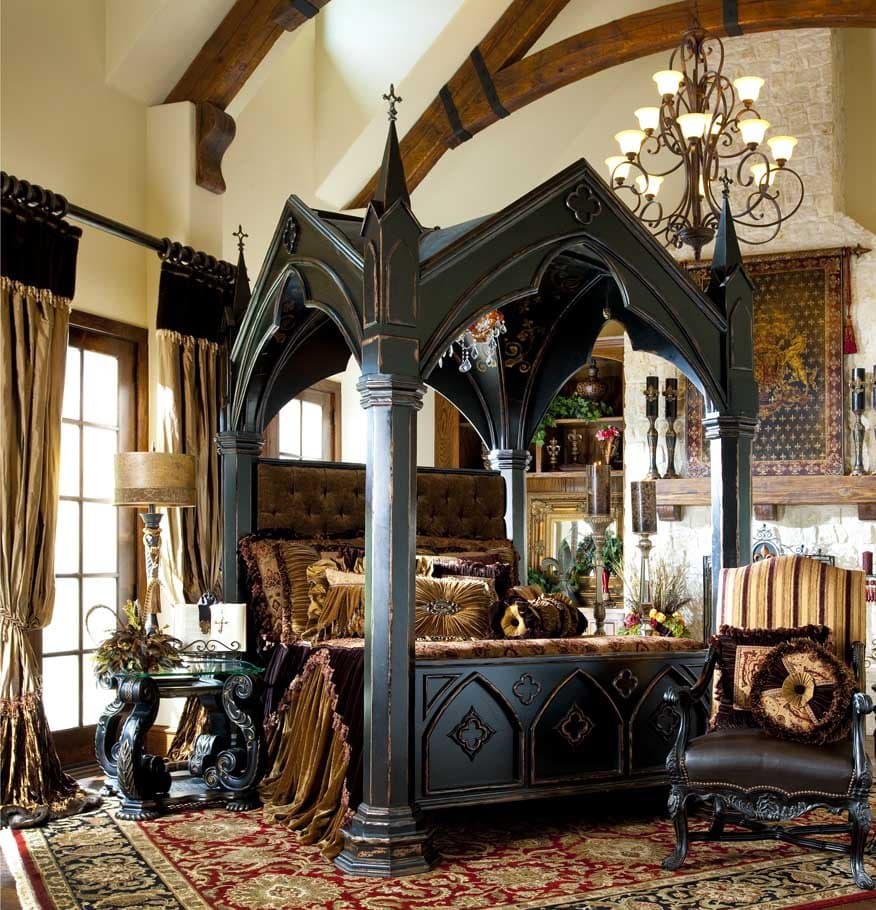
The visual markers are consistent across well-executed Victorian Gothic interiors: pointed arch motifs in windows, furniture, mirrors, and wallpaper; dark wood with carved detailing; rich saturated color on walls (deep burgundy, forest green, indigo, or near-black); heavy window treatments that reach the floor; ornate metalwork in chandeliers and sconces; and patterned textiles in velvet or brocade on upholstery and floors. Every one of those elements has a traceable historical origin.
The style is more restrained in execution than it appears in photographs. Each element carries significant visual weight individually, which means you need fewer pieces than you might expect. In most projects I work on, the biggest mistake clients make is adding too many Gothic elements when three or four precisely chosen ones would accomplish the same result with considerably more clarity.
The Benefits of an Authentic Victorian Gothic Decor
The main argument for authenticity in Victorian Gothic interiors is that the style was designed to function as a cohesive system. Victorian designers thought carefully about how each element would relate to the others: the wallpaper pattern coordinated with the textiles, the fireplace surround was scaled to the ceiling height, the chandelier was chosen with the room’s proportions in mind. When you understand that underlying system, you can execute it correctly even with a modest budget.
The other argument is longevity. This style doesn’t read as “on trend” because it predates the concept of interior design trends as we understand them today. Rooms done with authentic Victorian Gothic principles look the same in ten years as they do on the day they’re finished, which is not something you can say about most contemporary design directions.
The Allure of the Dark Side
The defining characteristic of Victorian Gothic is that darkness is structural, not just atmospheric. The deep wall colors aren’t there to look moody in photographs. They’re there because Victorian interior design theory held that saturated color creates a sense of enclosure and warmth that pale walls simply can’t achieve in the same way. The key principle here is that the darkness has to be consistent and intentional across all surfaces, not applied selectively.
I’ve seen this work when clients commit fully: walls in a near-black like Benjamin Moore’s Witching Hour or Farrow and Ball’s Pelt, velvet upholstery in deep green or burgundy, brass or bronze metalwork used throughout. The result is a room with real visual weight. When the proportion is right, it doesn’t feel oppressive. It feels like a room someone actually thought through from beginning to end.
Creating a Unique and Memorable Living Space
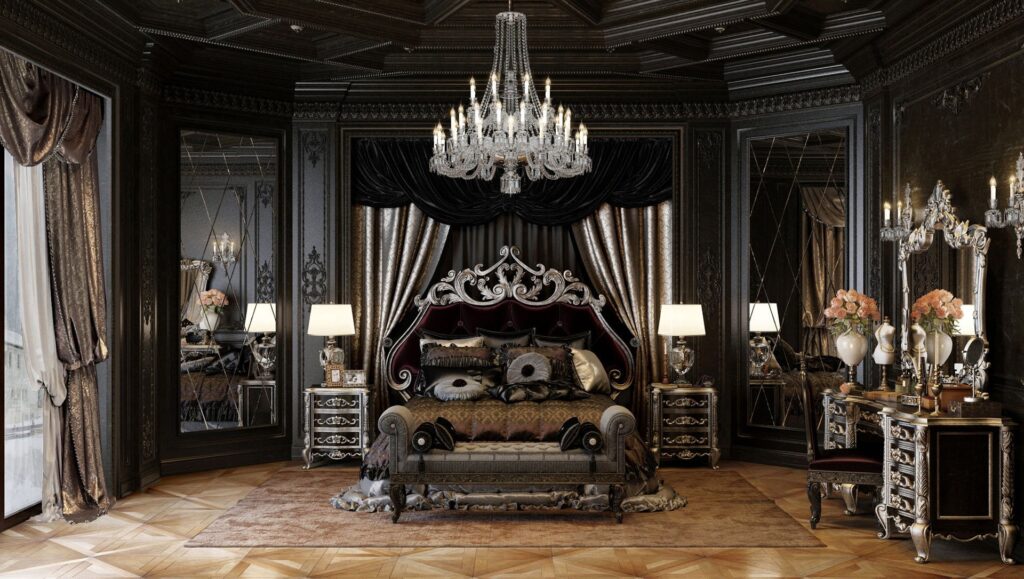
Victorian Gothic rooms are inherently specific, which is their main advantage over more neutral styles. A room done in this style communicates clearly what the occupant values: craft, history, texture, and the kind of ornamental complexity that minimal design deliberately rejects. In practice, this means the style demands a strong editorial eye, not just a willingness to add dark elements to whatever you already have.
The most memorable Victorian Gothic interiors I’ve encountered in my work share one quality: a clear visual anchor that organizes everything else. Usually a carved fireplace surround that commands the room, a bed frame with pointed Gothic arch details that defines the sleeping space, or a statement chandelier that establishes the ceiling height as a design element. Everything else is calibrated to support that anchor rather than compete with it.
The Timelessness of Victorian Gothic Interior Design
Victorian Gothic occupies an unusual position in design history: it’s a revival style that was itself reviving something older. That layered historical reference is part of why it hasn’t dated. It was never trying to look contemporary. It was always referencing a longer arc, which gives it a kind of immunity to trend cycles that styles like mid-century modern or Scandinavian don’t have in the same way.
A well-executed Victorian Gothic interior looks as considered today as it did in 1880, which is more than you can say for most 20th-century design movements. For anyone interested in how darkly dramatic spaces can be layered with real precision, my piece on dark interior design principles covers the foundational approach in more depth.
Elements of a Victorian Gothic Home- from Paint to Furniture
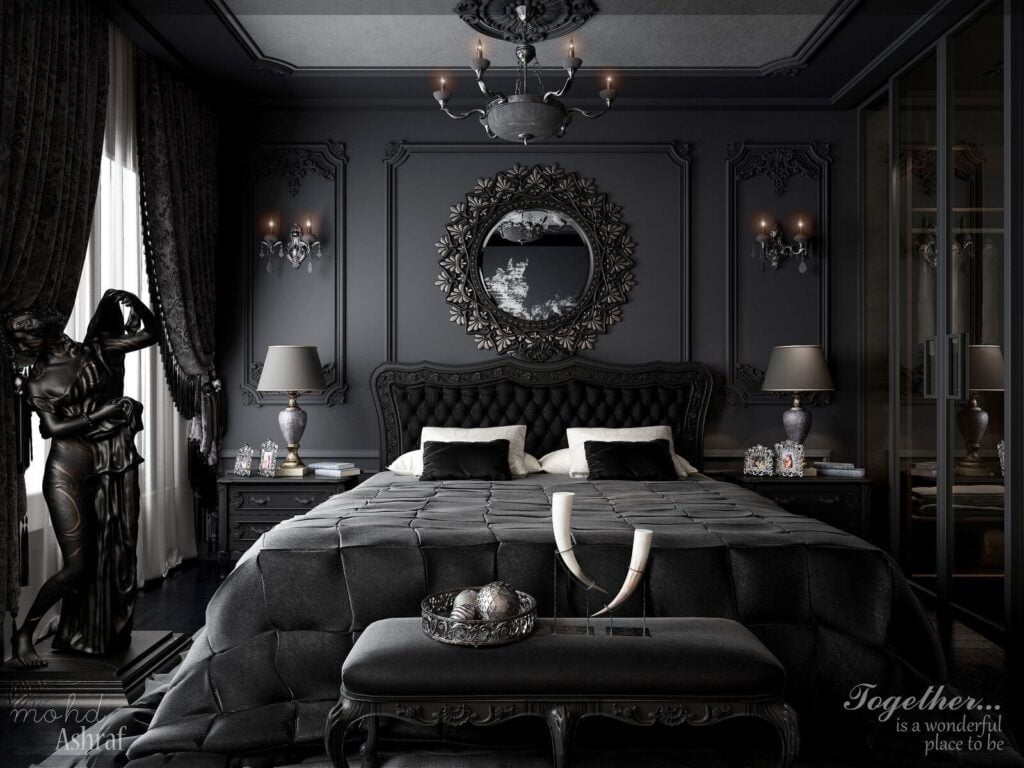
Every major surface category in a Victorian Gothic interior has its own established conventions, and knowing those conventions makes sourcing and specification much more efficient. You’re not inventing the style each time you make a decision. You’re referencing a system that was worked out in considerable detail over several decades of serious design practice.
The starting point is always the walls. In authentic Victorian Gothic interiors, the wall is never a background. It’s a designed surface: deep saturated color, heavy patterned wallpaper, or both in combination using chair rails and picture rails to divide the wall into registers. Once the walls are established, every other decision follows from them.
Bold Color Palettes
Victorian Gothic color is jewel-toned and saturated: deep burgundy, midnight blue, forest green, plum, and near-black. These are not pale or muted versions of those colors. Benjamin Moore’s Black Beauty, Farrow and Ball’s Brinjal, and Sherwin-Williams Rainstorm are closer to the correct register. Paired with warm metallic finishes (brass, bronze, aged gold) and rich textiles, saturated colors read as opulent rather than gloomy.
The key is that all the dark tones need to work together across a consistent warm or cool temperature. Mixing a warm burgundy wall with cool blue-gray upholstery creates a visual conflict that undermines the atmosphere immediately. In practice, this means choosing your palette anchor color first and confirming every other element sits on the same temperature side before committing to anything.
Intricate Woodwork and Ornate Details
Original Victorian Gothic furniture was made by craftsmen who had both time and material at their disposal. The carved oak panels, turned legs, and pointed arch cabinet doors were not decorative afterthoughts. They were the point. Reproductions and antique pieces from this period hold up well because the joinery is solid and the carved details age interestingly over time. The style isn’t genuinely achievable with flat-pack furniture, but a single quality carved sideboard or Gothic bookcase anchors a room more effectively than any number of smaller period-adjacent objects.
Gothic Furniture and Decor
The furniture profile in Victorian Gothic interiors is heavy dark-stained wood with upholstery in velvet or brocade. Pieces worth looking for: Gothic-arch bookcases, tufted chesterfield sofas in deep green or burgundy, canopy beds with pointed arch finials, and carved credenzas with decorative ironwork hardware. These pieces appear regularly at estate sales and antique markets because they’re not fashionable enough for the general market, which keeps prices reasonable for buyers who know what they’re looking for and are willing to take time sourcing correctly.
Lighting and Accessories
Lighting is where most Victorian Gothic interiors either succeed or fail. The original approach was layered: chandeliers provided ambient light, wall sconces created mid-level pools of warmth, and candles added movement. In a modern context, this translates to choosing fixtures with visible metalwork and glass, avoiding recessed can lighting wherever possible, and using dimmers to control the atmosphere in the evening. A well-chosen wrought-iron chandelier with amber glass on a dimmer does more for this style than any amount of dark wall paint alone.
Accessories follow the same principle: every piece should have real visual weight. Ornate framed mirrors, heavy ceramic vases, antique clocks, and gilded frames all contribute correctly. The discipline is editing ruthlessly. A Victorian Gothic room cluttered with small objects looks chaotic rather than opulent. I typically recommend clients work with ten percent of the objects they’re initially considering and add slowly from there. The room tells you when it has enough.
How to Incorporate Modern Trends into a Classic Look
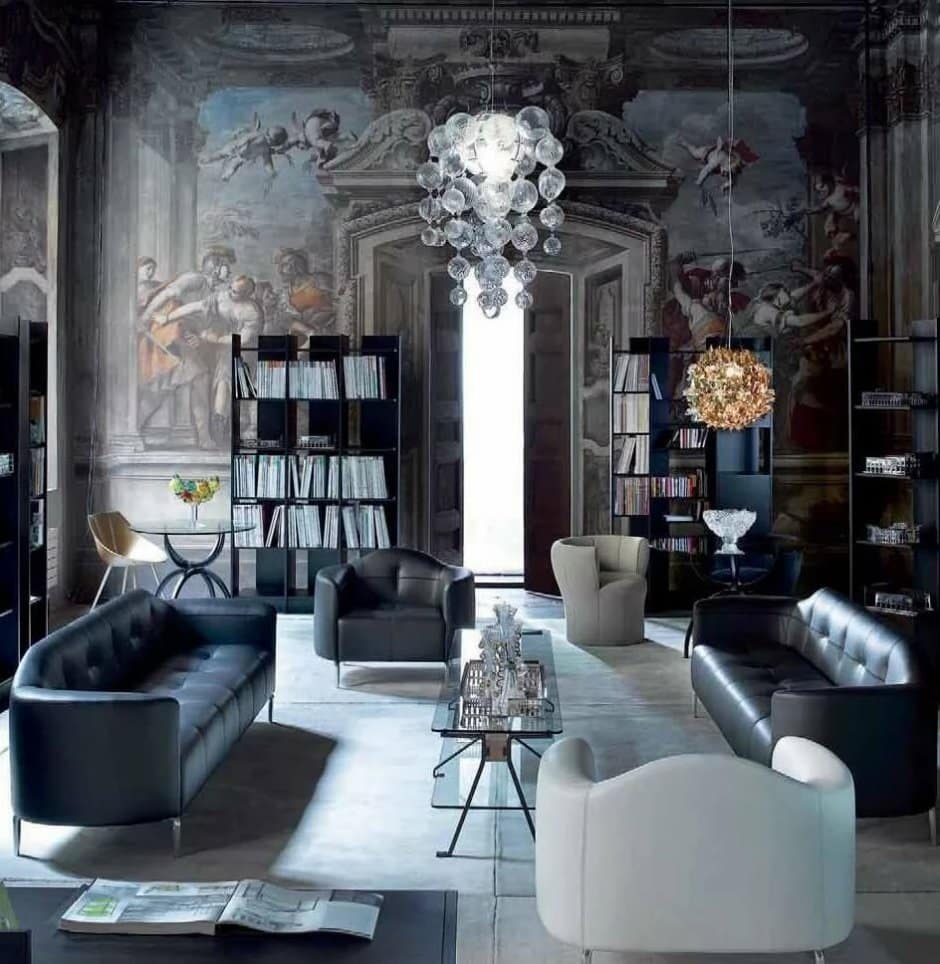
The most successful modern updates to Victorian Gothic interiors don’t attempt to lighten the style. They introduce contemporary form within the existing color and material system. A clean-lined sofa in midnight velvet sits well against a Gothic arch bookcase. A modern geometric pendant in aged brass works with patterned dark wallpaper. The principle is contrast of form with continuity of tone and material, not a compromise of the palette itself.
What doesn’t work is softening the color. The moment you bring in beige or pale gray to “balance” the darkness, the visual logic of Victorian Gothic collapses. The style requires commitment to the palette. A room that’s half Gothic and half contemporary minimalist ends up serving neither aesthetic. The Victorian Gothic elements are the container; contemporary forms are the contrast inside that container.
Mixing and Matching Styles
Victorian Gothic shares design DNA with several adjacent styles that mix well: Baroque, which amplifies the gilded ornament; Romantic Gothic, which borrows from French 19th-century interiors with more upholstered surfaces and softer textiles; and what I’d call Maximalist Gothic, which pushes the darkness further in every direction. Each combination has a different character. Baroque interior design and Victorian Gothic share a love of ornament but diverge sharply on color: Baroque gravitates toward gold and cream, while Victorian Gothic goes considerably darker and less gilded.
The most natural complement I’ve found in practice is medieval Gothic: raw stone finishes, heavy timber beams, and an ecclesiastical color palette all reinforce Victorian Gothic’s existing visual language rather than competing with it. A vaulted ceiling with exposed beams looks authentically Gothic regardless of whether the furniture is Victorian or contemporary. For context on that related direction, my overview of medieval interior design principles covers what actually transfers into residential spaces.
Using Contemporary Art and Decor
Contemporary art works well in Victorian Gothic interiors because the contrast is deliberate and legible. A saturated abstract painting in deep jewel tones hung against dark paneling makes both the art and the architecture more visible, not less. The key is that the art should share the style’s color register even if it doesn’t share its ornamental language. A pale, light-filled landscape is a mistake in this context. A darkly chromatic abstract looks like a considered choice that extends the room’s logic.
The same principle applies to contemporary decor objects. A sculptural ceramic in charcoal or deep green, a modern version of a classical form, or a glass object in amber or ruby: these work because they’re in dialogue with the palette. The overall effect is a room that looks inhabited and specific rather than assembled for a period film set, which is exactly the distinction worth preserving.
Embracing Minimalism
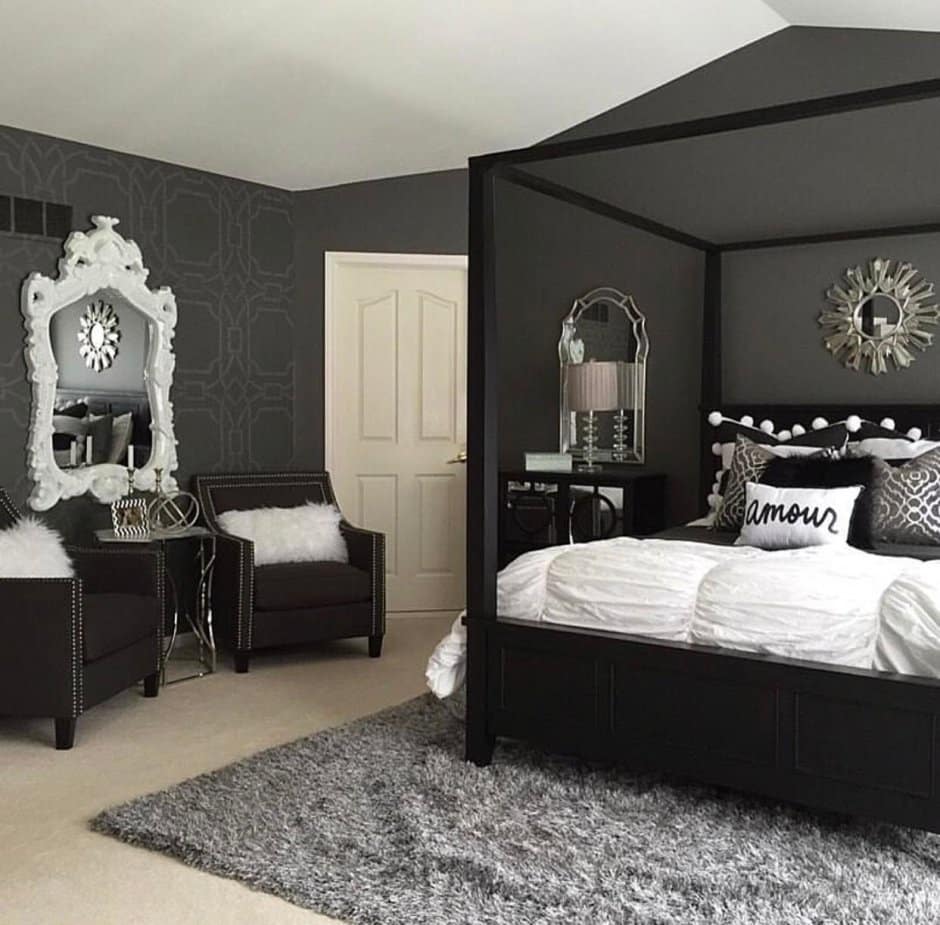
This heading is a bit of a provocation, because Victorian Gothic and minimalism seem like opposites. But the practical version of the idea is worth taking seriously: the best Victorian Gothic rooms are not over-furnished. They have presence because each piece carries genuine visual weight, not because there are too many pieces. The discipline of choosing carefully and leaving negative space around significant objects is, in that sense, a form of restraint that overlaps with what minimalism is actually about.
I’ve worked with clients who wanted Victorian Gothic but lived in genuinely small spaces, and the solution was consistent: identify one anchor piece per room that commits fully to the aesthetic, then let everything else recede. A carved Gothic bookcase against dark walls with minimal other furniture looks intentional and complete. The same bookcase surrounded by ten additional dark objects looks like a room that ran out of editing before it ran out of space.
Ideas for Refreshing Your Existing Interior Design
If you’re working with an existing space that already has some dark or traditional elements, Victorian Gothic is a natural direction for a refresh. The first move is always the walls. Dark paint or architectural-scale patterned wallpaper does more to establish the character of the style than any furniture purchase. Once the walls are established, one or two key furniture pieces and the room reads correctly.
For a partial refresh with less commitment, concentrate on the textile layer: replace pale upholstery fabrics with velvet or brocade in deep colors, swap out light curtains for floor-length heavy drapes, and add patterned rugs with traditional medallion or botanical designs. These changes shift the atmosphere quickly and remain reversible if you want to return to a more neutral base later.
Adding Gothic Accents
Gothic accents work when they reference the style’s architectural origins: pointed arch details on mirrors or picture frames, ironwork candleholders, and decorative objects that relate to actual Gothic architectural sculpture rather than generic Halloween-adjacent imagery. The distinction matters significantly. Real Victorian Gothic ornament is historically grounded and ages well. Generic “dark and spooky” objects date quickly and undermine the style’s underlying seriousness.
Incorporating Darker Colors and Textures
Rich burgundy walls paired with dark walnut furniture, velvet curtains in deep navy, wool rugs in jewel-toned geometric or medallion patterns: these combinations work because the color temperature is consistent and the textures all absorb light rather than reflect it. The result is a dramatic atmosphere that feels considered rather than theatrical. The critical detail is choosing colors that sit on the same warm side of the spectrum. Cold gray or blue-white accents in a Victorian Gothic room look like mistakes because they are mistakes.
Repurposing Vintage Furniture
Victorian Gothic furniture is one of the better categories for vintage sourcing. The carved oak pieces from the 1850s through 1900 are structurally sound, the patina on dark finishes has had over a century to develop, and the style’s current niche status means antique dealers often price it below comparable pieces from mid-century modern or Scandinavian categories. Estate sales in neighborhoods with older housing stock are consistently good sources if you’re willing to look regularly.
The practical approach is to identify the specific piece type that will anchor each room, then search for that piece rather than buying anything that looks vaguely Gothic. A pointed-arch mirror, a carved sideboard, or a canopy bed frame in dark walnut will define a room. A collection of miscellaneous dark objects will not. Fewer pieces chosen with more specificity is the same principle the style operates on, applied to the sourcing process itself.
Final Thoughts
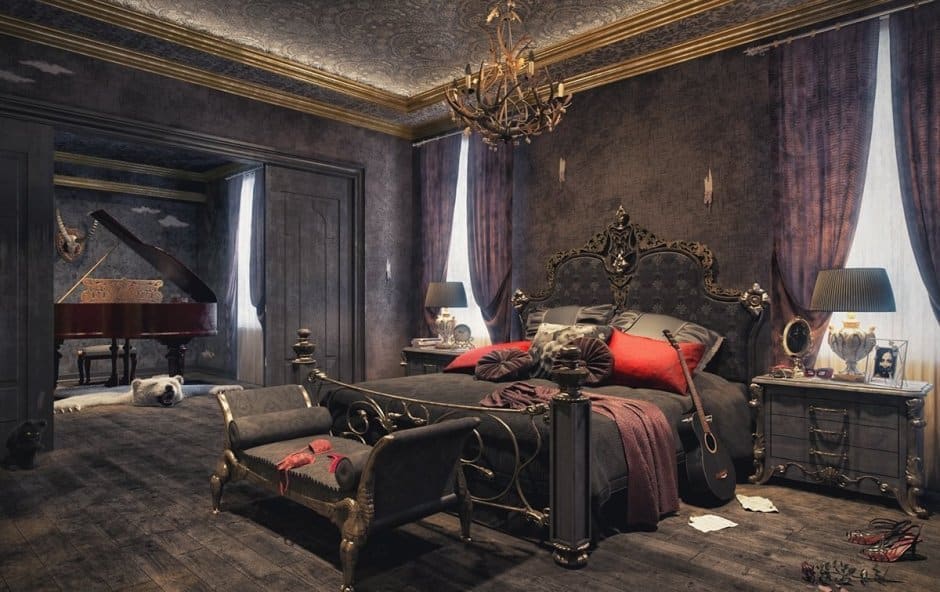
Victorian Gothic interior design rewards the same qualities it demands: precision, commitment, and a genuine engagement with design history. The style has internal logic that becomes clearer the more closely you engage with its sources. In practice, every decision in a Victorian Gothic interior should be traceable to an actual design principle rather than a vague preference for dark and dramatic. That’s a higher standard than most styles require, which is part of what makes it satisfying to work with.
The test I give clients is straightforward: can you explain why each piece is in the room? If the answer involves the piece’s visual weight, its material, its relationship to the Gothic architectural tradition, or its role in the palette, it belongs. If the answer is just “it seemed to fit the vibe,” it probably doesn’t. Victorian Gothic rooms that work don’t just look like nothing else. They look like they were put together by someone who understood what they were doing and didn’t stop until each decision was resolved.
Is gothic style Victorian?
Gothic and Victorian are distinct but related styles. The Gothic Revival was a serious architectural and design movement that reached its peak during the Victorian era, which is why the two terms overlap so frequently. Victorian Gothic interior design draws specifically from that intersection, but the broader Victorian style encompasses many other influences beyond Gothic sources.
What is Victorian Goth?
Victorian Goth is a design and aesthetic style that combines Victorian-era materials and ornamental sensibility with Gothic architecture’s preference for dark color, pointed forms, and dramatic atmosphere. In interior design, this means deep jewel-tone palettes, heavy carved furniture, rich textiles like velvet and brocade, and layered lighting with visible metalwork fixtures.
What is Victorian Gothic interior design?
Victorian Gothic interior design merges 19th-century Victorian decorative traditions with medieval Gothic architecture’s formal vocabulary. In practice, this means dark saturated wall color, carved dark-wood furniture with pointed arch details, stained glass elements, heavy window treatments, ornate metalwork in lighting and hardware, and patterned upholstery in velvet or brocade. The result is a style that prioritizes visual weight, historical reference, and ornamental complexity.
Follow us on Pinterest for more interior design guides across every style, from the historical to the contemporary.