Surf Shack Interior Design: What the Look Needs

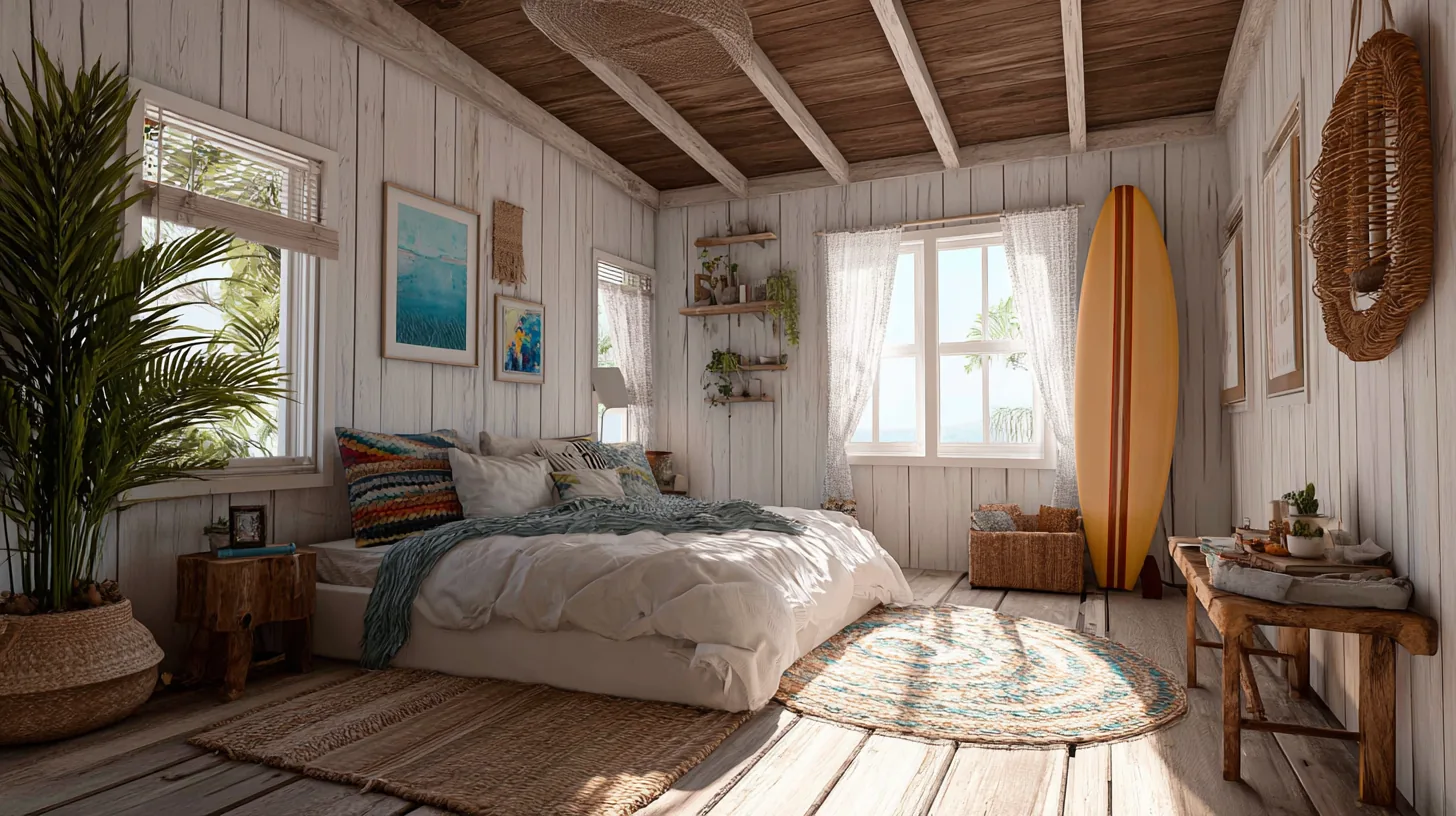
I found surf shack style by accident. I was scrolling for something that felt relaxed enough for everyday life but had more character than the usual all-neutral coastal look, and a photo of a small California living room made me stop. Whitewashed wood, a vintage longboard leaned against the wall, linen cushions that looked like they’d been through a hundred beach days. Nothing was trying too hard. I wanted that feeling in a typical apartment, which has never once been near the ocean.
Surf shack interior design is not the same as generic coastal decor. Coastal design can lean polished and formal, think navy-and-white stripes and perfectly matched starfish accessories. Surf shack is the opposite: imperfect, warm, and genuinely lived-in. The key principle here is that the space should feel collected over time, not put together in one styling session. That distinction is what makes it work, and what trips people up when they try to replicate it.
What Surf Shack Interior Design Actually Looks Like
The easiest way to describe this aesthetic is “comfortable and slightly worn.” Not shabby-chic, not aggressively rustic, not resort-hotel coastal. There’s a quality to the best surf shack interiors that suggests the space has been used and thought about and slowly built up rather than designed and executed all at once. That’s both the goal and the method.
The Vibe Is Worn-In, Not Polished

Natural light is the first detail that gets the vibe right. Surf shack spaces lean into whatever sunlight they have, usually with minimal window treatment: light sheer curtains or bamboo shades, nothing heavy or lined. When Trying heavier linen drapes in a room I was going for this look in, the space immediately felt more deliberate than I wanted. Let the light pour in and arrange seating to face windows rather than against them. This single decision does more for the casual quality of a room than most decor choices combined.
A Color Palette That Feels Like Sun and Salt

The surf shack palette is not the saturated turquoise-and-coral you see on vacation rental Instagram pages. It’s quieter: sand, faded white, grey-washed blue, bleached off-white, with occasional pops of something warmer like sea glass green or a muted coral that reads more terracotta than neon. Think of colors that have had time to fade gently rather than colors selected to make a statement. If your palette looks like it came straight from a fresh Pantone collection, it probably needs to be softened. Pops of brighter color work best as accents in pillows or ceramics, never as a full wall treatment.
The Materials That Make or Break the Look
You can get the colors right and still miss the surf shack feeling entirely if the materials are wrong. This style depends on texture in a specific way: rough, organic, imperfect surfaces rather than anything smooth or shiny. In practice, this means wood, rattan, jute, linen, and weathered finishes are doing the heavy lifting. Anything glossy or synthetic-looking pulls the room in the wrong direction.
Weathered Wood Is the Foundation

The wood in a surf shack interior should look like it has a history. Whitewashed planks, driftwood-grey finishes, reclaimed boards with visible knots and grain: these are the surfaces that make everything click. You can mix different wood tones without it looking chaotic. A light oak floor under a grey-washed coffee table works fine because the casual combination reads as collected rather than mismatched. What doesn’t work is anything lacquered or overly refinished. High-gloss wood in this style sends exactly the wrong message. Look for pieces with imperfections built in, or give new wood a light whitewash treatment before bringing it into the room.
Natural Fibers Over Synthetics, Almost Always
Jute rugs, seagrass baskets, rattan chairs, cotton or linen throws: these are the textiles that make a room feel like actual surf shack aesthetic rather than a simulation of it. For a budget-friendly approach, IKEA’s rattan and seagrass pieces give you the texture without the boutique price. A dedicated rattan chair from Serena and Lily can run $800 or more, while the IKEA BUSKBO is under $100 and looks the part from across the room. I’d rather spend the difference on a genuinely good organic linen throw in warm off-white than on a designer piece that looks nearly identical. The goal is the texture, not the brand name on the tag.
Furniture That Actually Invites You to Stay
Surf shack furniture follows a simple logic: low to the ground, soft enough to sink into, and casual enough that you don’t worry about it. This is the opposite of a curated showroom. The pieces should feel like they arrived from different places and different times and just happen to work well together, because that’s the actual history of how most real surf shack spaces come together.
Low-Profile Pieces That Give the Room Air

Low furniture is one of the underrated details of this style. Coffee tables close to the floor, wide sofas with low arms, platform-style beds in bedrooms: all of these make a space feel more casual and open than standard-height alternatives. The first time I put a low rattan chair in a surf shack-inspired room, I noticed how much the reduced height made the ceiling feel taller and kept the room’s visual weight grounded. If you’re working with a smaller space, this principle matters even more because low furniture makes rooms feel less cluttered even when they’re actually quite full. Open shelving is better than closed cabinets anywhere you can swing it: closed cabinets push a surf shack room toward formal, which is the wrong direction.
Mix-and-Match Is the Point, Not a Design Problem

The mix-and-match quality of surf shack spaces trips people up because most of us are conditioned to think visual consistency equals good design. A vintage rattan chair and a modern slipcovered sofa coexist perfectly if they share a general tone: natural, worn, soft. What I’d watch out for is buying a matched furniture set with the intention of achieving this look. Coordinated sets tend to read as staged rather than lived-in, which is exactly the wrong quality for this style. Add floor cushions or rattan poufs for flexible extra seating. Bean bags, oversized floor cushions, and hammock chairs belong in this aesthetic in a way they wouldn’t in a more formal room, and they’re genuinely useful when you want different seating arrangements for different situations.
Surf Decor That Doesn’t Look Like a Souvenir Shop
This is where most surf shack attempts go wrong. There’s a version of this style that reads as “beach house rental” rather than an actual lived space, and the difference is almost always in how the decor has been selected. The goal is objects that feel personal and meaningful rather than a thematic collection of generic coastal merchandise.
Surfboards as Art, Done Right

A surfboard leaned against a wall or mounted above a sofa is one of the most effective statements in this style. I’ve also seen it done badly enough times to have a specific opinion: decorative replicas of surfboards almost always look like hotel decor. An actual board, even a beat-up or vintage one found at a thrift store or estate sale, has a presence that mass-produced wall art doesn’t. If you don’t surf, look for old longboards at vintage shops. A weathered 1970s board on the wall reads completely differently than a brand-new decorative piece from a home goods store. Pair it with a few photographs of actual surf spots rather than generic wave prints, and resist the urge to fill the entire wall. Three things done well beats ten things competing for attention.
Accessories That Add to the Story

Shells, driftwood, and sea glass work well as accents, but there’s a rule I’ve found genuinely useful: one driftwood piece per room, maximum. I’ve been in spaces where driftwood appeared on every surface and it stopped feeling natural and started feeling like a prop. One well-placed piece, one basket of shells from an actual trip, a stack of surf magazines on the coffee table: this kind of restraint makes objects feel personal. For cushions and textiles, stripes and simple wave patterns in the muted palette work better than printed tropical scenes. Woven baskets for storage are both functional and visually right for the aesthetic. Coastal farmhouse decor uses natural materials in a similar spirit if you want to see how this philosophy applies across related styles.
Nautical Details That Know When to Stop

Rope mirrors, glass lanterns, and weathered wood accessories are surf shack classics that work when used with restraint. A rope-trimmed mirror in the bathroom is both functional and visually complete as the room’s main accent. A glass lantern on a coffee table adds warmth without competing with anything else. What I’d skip: anchors, ship wheel clocks, and fisherman’s nets on the ceiling. These push the style into theme-restaurant territory fast. The Hawaiian interior design approach handles tropical-coastal accents with a similar edit-first philosophy, and it’s worth looking at if you’re calibrating where your restraint line should be. Striped linen curtains and shiplap-style wall paneling are the right structural choices for building the backdrop rather than filling it with more objects.
Getting the Lighting Right
Surf shack lighting is about layering sources rather than relying on a single overhead fixture. The goal is a room that feels warm and casual after dark. The flat overhead-light-only setup that most apartments default to is the single easiest thing to fix, and it makes a noticeable difference in how the space feels in the evenings.
Open Layouts Let Light and Air Move

An open layout is central to this style because it allows both light and air to move through the space, which is what creates the breezy quality. Too much furniture in the wrong places closes the room down and kills the casual feeling. Arrange seating to face natural light sources where possible. Use area rugs to define different zones in combined living and dining spaces rather than using furniture to create physical barriers. The surf shack look rewards rooms that feel generous with their space, even when they’re actually quite compact. If you combine your living and dining area, keep the path between them open and easy rather than filled with accent tables and side chairs you don’t really need.
Evening Light That Keeps the Chill Going

String lights and lanterns do more heavy lifting in this style than pendant fixtures and recessed lighting ever will. They give the room a warm, slightly golden quality after dark that sits naturally with the natural materials and worn-in furniture. For practical ambient lighting, look for pendant fixtures with woven shades or a driftwood base rather than anything chrome or geometric. LED candles near art or on open shelves add soft accent light without the fire risk. If you’re going to invest in one lighting upgrade for a surf shack room, a dimmer switch is the best return on that investment. Being able to drop the light level in the evenings changes the entire character of the space in a way that no number of new fixtures alone can match.
Sustainability Built In, Not Tacked On
Surf culture has always had a relationship with the natural environment, and that translates into the design approach in a way that feels authentic rather than performative. The material choices that make surf shack interiors work, reclaimed wood, natural fibers, secondhand pieces, also happen to be the more sustainable choices. That’s not a coincidence.
Reclaimed and Upcycled Pieces Have More Character

Old surfboards, shipping pallets turned into shelving, vintage rugs from thrift shops: these are the raw materials of the best surf shack rooms. A table made from a reclaimed door panel and hairpin legs costs less than a comparable new piece and looks more interesting because it has actual history built in. The worn-in quality you’re working hard to create with new furniture comes naturally with secondhand pieces. I’ve picked up three vintage rattan items at a rental city estate sales over the past couple of years, each under $40, that would run $200 or more new. The imperfections in the weave and the darker patina from years of use are exactly the features boutique stores charge a premium to replicate. DIY projects, painting old wooden crates, braiding rope into a wall hanging, add personal meaning that no amount of shopping can replicate.
Materials That Look Good and Actually Last

Bamboo and FSC-certified wood are practical starting points for furniture that’s lower-impact and genuinely durable. For textiles, organic cotton and linen age better than synthetics: they soften with washing rather than pilling or fading unevenly, which is exactly the quality you want in this style. Wool rugs handle foot traffic well and are biodegradable at the end of their life. Low-VOC paint is worth using throughout, both for environmental reasons and because it off-gasses faster. The one place I’d push back on the eco-maximalist approach: you don’t need to replace everything you own with certified-sustainable alternatives at once. The reclaimed-and-secondhand approach does more for your budget and the environment than buying a full suite of expensive “sustainable” new furniture ever will. Build the room gradually and let it develop character over time. That gradual accumulation is the whole philosophy of surf shack style. For ideas on how natural materials work in a related coastal aesthetic, the farmhouse cottage decor guide covers similar ground from a different angle.
Frequently Asked Questions
What is surf shack interior design?
Surf shack interior design is a casual coastal style built on natural materials, worn-in textures, and surf-culture elements like vintage boards and ocean-inspired color. It’s defined more by a relaxed, collected feeling than by any specific product category.
How do I create a surf shack vibe at home?
Start with a muted coastal palette, bring in natural materials like rattan, jute, and weathered wood, and add a few personal surf-culture objects. The key is restraint: a few meaningful pieces work better than a room full of themed accessories.
What colors work best for surf shack interiors?
Faded whites, sandy tans, grey-washed blues, and bleached off-whites form the base. Pops of sea glass green or muted coral work as accents. The palette should feel like colors that have been gently bleached by sun and salt rather than freshly chosen from a catalog.
Do I need to live near the ocean for surf shack style to work?
Not at all. The style is about materials and a feeling, not geography. Natural textures, low furniture, and casual lighting translate anywhere, including landlocked cities. Personal objects like a vintage board or a collection of shells connect the space to the ocean without requiring proximity to one.
What is the difference between surf shack and generic coastal decor?
Generic coastal decor tends toward polished, matching sets and themed accessories like anchors and starfish. Surf shack is more organic: secondhand and reclaimed pieces, natural textures, and a worn-in quality that comes from accumulation rather than styling. The difference is usually visible immediately.
Surf shack interior design works best as a gradual process. Add pieces over time, mix what you find with what you already have, and let the room develop its own character. Follow us on Pinterest for more interior design inspiration, or browse our guide to Hawaiian interior design if you want to explore how tropical-coastal aesthetics come together in a related style.