Futuristic Interior Design: Materials That Age, Not Gadgets

Futuristic interior design is one of those styles where people often confuse the concept with the aesthetic. The clean lines and reflective surfaces are obvious. What’s less obvious is the underlying principle: every element in the space should feel like it was designed for a specific purpose, not just placed for effect. Looking at a handful of spaces that could genuinely be called futuristic, and the difference between a room that feels forward-thinking and one that simply feels clinical almost always comes down to how well the designer understood that distinction.
Futuristic Design Interior
The best futuristic interiors I’ve seen aren’t trying to look like a spaceship. They’re spaces where the materials, the lighting, and the spatial logic all point in the same direction: forward.
Futuristic design has always been interested in the relationship between form and function. The smart home technology angle is real, but it’s not the whole picture. What makes a space genuinely feel futuristic is a kind of intentionality about materials and proportion that most trend-driven design can’t sustain past two or three years. Get those foundational decisions right, and the space stays convincing regardless of which specific products or finishes cycle in and out of fashion.
Futuristic Design Principles
A few related Pinterest references in the same visual family as the section above.
Futuristic design principles are grounded in a specific idea: the interior should feel like a response to how people actually live and move through a space, not just a demonstration of what materials can do. The themes of science fiction, digital technology, and spatial efficiency inform the visual language, but the better approach is to treat them as context rather than instruction. Three principles come up in every well-executed futuristic space I’ve encountered: functionality, materials, and contrast.
Functionality
Functionality in futuristic design means something more specific than “practical.” It means eliminating anything that isn’t doing a clear job in the space. I’d draw a line to Zen Japanese interior design here: both styles share a preference for empty space as an active design element. In a futuristic interior, a surface without an object on it isn’t bare. It’s deliberate. The furniture is typically built around that logic: modular, reconfigurable, or dual-purpose. The space should feel like it could adapt to you, not the other way around.
Materials
The material palette in futuristic design is where most people get it wrong. Glass, metal, and high-gloss finishes are the obvious moves. The less obvious element is the quality of how those materials meet each other. A glass panel flush-mounted to a concrete wall suggests precision. A glass panel with a visible metal frame and exposed fasteners looks industrial, not futuristic. The difference is in the detail resolution: how cleanly one material transitions to the next is the deciding factor, and it’s something that can’t be faked with expensive materials alone.
Contrast
Contrast in futuristic design operates differently than in most other styles. It’s not about visual busyness or a dramatic color pop. It tends to be material-based: a brushed matte surface against a high-gloss one, a heavy horizontal plane floating above a void. I find this more interesting than color contrast because it’s subtler. The room rewards attention rather than announcing itself immediately. When you walk in and can’t quite identify what makes the space feel different, that’s the contrast working correctly.
Interior Design Trends
Interior design shifts constantly, and futuristic aesthetics move with it. What felt cutting-edge in 2019 can easily look dated by now. In 2026, the three directions I think are most relevant are still evolving: pure futurism, the return of natural materials as a counterpoint, and the retro-futurist hybrid that refuses to fully commit to either.
Futurism
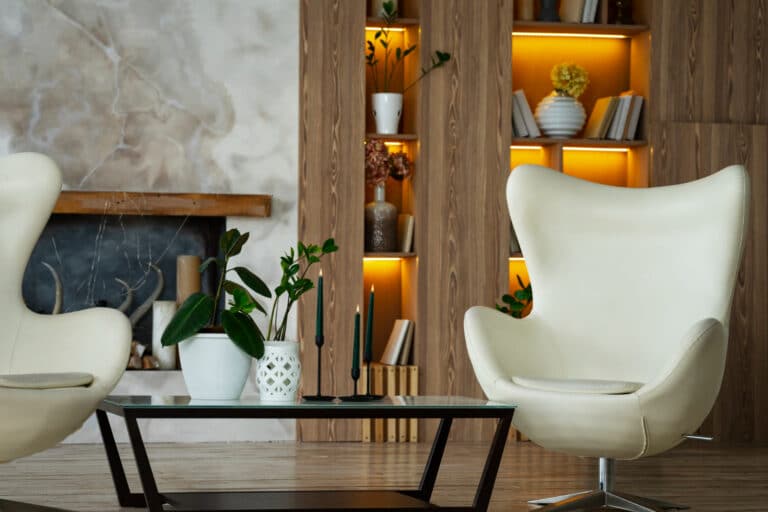
The core futurism direction has gotten quieter and more refined over the past several years. The oversized pod chairs and chrome-everything of the early 2010s have largely given way to something more restrained: sculptural furniture in muted tones, integrated lighting that’s barely visible when off, surfaces that prioritize texture over shine. Smart home integration is now an expectation in this category, not a selling point. If you’re still presenting voice-controlled lighting as a feature rather than a baseline assumption, you’re behind the conversation.
Natural Materials
Natural materials entering the futuristic space is a tension that most designers either ignore or mishandle. The instinct is to use wood or stone as a “warm” counterpoint to the cold, hard surfaces. That can work, but it often produces a room that looks indecisive. The better approach is to treat the natural material as a sculptural element, not a softening agent. A solid stone bench with clean geometry fits. A reclaimed wood accent wall with visible knots does not. The question to ask: does this material add to the spatial logic, or does it just add warmth?
Retro Futurism
A few related Pinterest references in the same visual family as the section above.
Retro futuristic interior design takes the mid-century optimism about the future and filters it through a contemporary sensibility. The palette tends toward bold monochromes and saturated accent colors. The furniture shapes are rounded and often oversized. What makes this direction interesting rather than nostalgic is the commitment to internal logic: the space should feel like a consistent world, not a collection of vintage references. A bubble chair next to a farmhouse kitchen island is not retro futurism. That’s a conversation starter that doesn’t go anywhere.
The strongest futuristic interiors of any variety tend to be the ones where the designer picked a lane and committed. A room that’s 80% futuristic with 20% of something else rarely works as well as a room that fully inhabits its logic. That applies whether you’re leaning toward pure futurism, natural material integration, or the retro-futurist direction.
Furniture and Decor
The furniture decisions in a futuristic interior are where the theory has to become practice. The goal is openness without emptiness, and that’s harder to execute than it sounds. Most people err on the side of too much furniture, then wonder why the room doesn’t feel futuristic even though all the individual pieces look the part.
Living Room
A futuristic living room works best when the furniture count is lower than you think you need. I’ve seen a sofa, a low-profile coffee table, and a single accent chair hold a 400-square-foot living room without it feeling underfurnished. The key is choosing pieces with real presence: a sofa with a strong horizontal silhouette, a table that sits unusually low or has an unexpected material combination. Touch-controlled blinds, integrated lighting, and door controls make a significant difference to how the room functions across different times of day. In this context, these aren’t luxury add-ons; they’re part of the spatial logic.
Bedroom
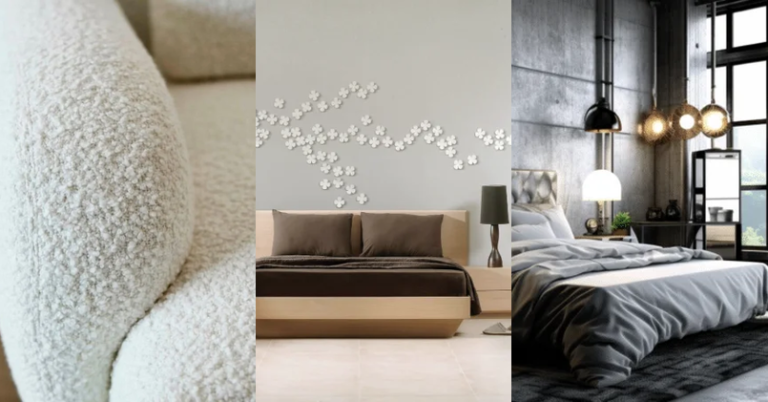
Futuristic bedrooms tend to work when the bed is the only real focal point. Clean platform frames in matte finishes, recessed lighting rather than table lamps, minimal surface clutter. One thing I’ve found across multiple projects: the fewer the objects on any horizontal surface, the more intentional each remaining object looks. A single object on a bedside table is a design choice. Four objects is just accumulation. The futuristic bedroom is not a room you add to; it’s a room you edit.
Kitchen
The futuristic kitchen has an obvious visual solution: handleless cabinetry, integrated appliances, a surface palette that looks uniform. What’s less obvious is how to handle the inevitable messiness of a functional kitchen. The answer is usually storage: more of it, better hidden, and organized such that surfaces can stay clear after use. A kitchen that looks futuristic only when it’s empty is a poorly designed kitchen.
Across all three rooms, the underlying principle is consistent: futuristic design is less about individual statement pieces and more about how the room functions as a system. Current interior design trends confirm this direction: the most forward-looking residential interiors right now prioritize spatial clarity over decorative interest.
Materials
Wood
Wood shows up in futuristic interiors more often than people expect, and I think the reason is that designers have gotten better at understanding what form of wood actually works in this context. Light-toned ash and birch plank in a simple, tight grain conveys contemporary precision. A live-edge piece with a bark boundary conveys something else entirely. The wood should look chosen, not found. Natural character is the quality that makes wood warm and organic in other styles; it’s the same quality that makes it look out of place in a futuristic interior.
Glass
Glass in futuristic design can go several directions. Fluted glass creates a privacy boundary without blocking light, and it’s had a long run as a design trend for good reason: it catches light in a way that adds texture to an otherwise flat surface. Matte or frosted glass does something similar, but flatter. The more interesting applications are structural: a glass staircase rail, a glass partition wall that doubles as a room divider. These work because they’re honest about what the glass is doing, which is holding space without visually interrupting it.
Metal
Brass was the dominant metal finish for years, and it’s still a valid choice in futuristic interiors when used in small doses: a single handle detail, a lamp base, one shelf bracket. When brass covers an entire kitchen it belongs in an Art Deco project, not a futuristic one. Matte brushed metal finishes work better in this context: they suggest precision without the visual weight that polished surfaces carry. Matte metal combined with glass or matte-finished stone can produce a material pairing that feels genuinely forward-thinking rather than simply trend-forward.
Marble, quartz, and poured concrete all appear in futuristic interiors regularly. The governing principle is consistency of finish rather than consistency of material: when the surfaces in your space all share a similar level of refinement, the room feels considered regardless of whether you’ve mixed three or four different materials. In practice, this means paying as much attention to the transitions between materials as to the materials themselves.
Color Schemes
Color in futuristic design is less about bold statement-making than most people assume. The iconic image of a spaceship interior is mostly white, gray, and black with a few accent lights. That core palette still what really matters. What’s changed is how designers use color to introduce hierarchy and warmth without losing the spatial logic. The four colors that come up most consistently in futuristic interiors are red, green, blue, and the black-and-white combination.
Red
Red works in futuristic interiors when it’s used as a single accent: one chair, one art piece, one pendant shade. I’ve seen red work well in small doses against a very neutral backdrop, where it looks intentional rather than decorative. What doesn’t work is red spread across multiple surfaces. The energy of the color overwhelms the restraint that the rest of the space depends on. Red in this context is punctuation, not prose.
Green
Green in a futuristic context works best in muted, saturated tones: deep forest green, slate green, olive. Not mint, not lime. The cooler the green, the more it fits the palette. It can be used on a single upholstered piece or as a painted surface on a single architectural element, like a partition or a built-in shelving unit. The natural material associations of green make it a useful bridge between a futuristic material palette and something that still feels inhabitable rather than clinical.
Blue
Blue is arguably the most natural fit for futuristic design. Navy and deep cobalt look confident without feeling heavy. The reference point is less ocean and more atmosphere: the quality of light at high altitude, the depth of a display screen at low brightness. Used on a wall or as a large upholstered surface, deep blue can give a futuristic interior a sense of depth that the typical white or gray palette doesn’t achieve on its own. I used deep blue on a bedroom partition wall in a project that would otherwise have felt blank, and the difference was significant enough that the client extended it to the ceiling.
Black and White
The black and white combination remains the most reliable foundation for a futuristic palette. High contrast doesn’t need to mean dramatic: a white room with black hardware, black-framed windows, and a single black furniture piece looks sharp without feeling performative. The key is to avoid the gray zone where the contrast has been softened to the point where neither color is doing anything. Black should be black, and white should be white. The moment you introduce warm gray as a compromise between the two, the futuristic logic starts to dissolve.
Futuristic Interior Design Styles
Futuristic interior design isn’t a single aesthetic. It’s a direction that can be applied with different priorities, and the result feels genuinely different depending on which values the designer puts first. The four approaches I see most often are functional, luxury, trendy, and cozy, and each has a distinct internal logic that drives decisions about materials, furniture, and finish.
Functional
Functional futuristic design starts from the question: what does each element need to do? The furniture is typically multi-purpose. The lighting is integrated into architecture rather than added afterward. The material choices prioritize durability and cleanability alongside appearance. I’d describe this as the version of futuristic design most likely to actually improve daily life in a space, as distinct from the version that photographs well but requires constant maintenance to look right. The key principle here is that no element gets a pass by being purely decorative.
Luxury
Luxury futuristic design takes the same restraint as functional futurism but inverts the material logic: instead of prioritizing performance materials, it prioritizes high-status ones. Marble, bookmatched stone, hand-finished metal. The interesting tension in this approach is that futuristic design’s preference for empty space actually amplifies the quality of individual materials. A single piece of bookmatched marble makes a much stronger statement in a spare futuristic room than it would in a traditionally furnished one where it has to compete for attention.
Trendy
The trendy futuristic direction is the most variable, by definition. It tends to incorporate whatever material, color, or form is currently moving through the design conversation: fluted glass panels, curved sofas, integrated LED strips. Worth understanding before committing: the more a room depends on specific trend-forward elements, the shorter its shelf life. That’s not automatically a problem if the goal is to refresh the space every few years, but it’s a realistic constraint to account for before investing in custom pieces.
Cozy
Cozy futuristic design is a contradiction that works in practice. The approach is to apply the structural and material discipline of futuristic design while making the furniture itself comfortable and warm: deep-cushioned seating in performance velvet, integrated floor heating, lighting that can shift from cool white to warm amber. The result is a space that feels forward-thinking without feeling cold. This is the direction I’d recommend for bedrooms and family rooms where the spare spaceship aesthetic would be exhausting to live in day to day.
FAQ
What is retro futuristic interior design?
Retro-futuristic interior design combines the optimism about the future that defined mid-20th century design with contemporary materials and sensibility. In practice: rounded furniture forms, saturated color accents, chrome and plastic surfaces, and an overall aesthetic that looks like a 1960s vision of what 2001 would look like. The key distinction from pure futuristic design is the historical reference point. Retro futurism is nostalgic about a specific idea of the future, while contemporary futuristic design is more interested in what forward-thinking design can do right now.
What makes a building look futuristic?
Futuristic architecture tends to rely on a few consistent signals: asymmetrical massing, large uninterrupted glass surfaces, minimal exterior ornament, and materials like corten steel or exposed concrete that convey industrial precision rather than traditional craft. The proportions matter as much as the materials. A building can use conventional materials and still look futuristic if the geometry is unexpected and the detailing is very clean.
How can I make a house more futuristic?
Three practical starting points. First, reduce the number of objects on horizontal surfaces by about half. Empty surfaces look intentional in futuristic design. Second, replace decorative light fixtures with integrated solutions: recessed downlights, LED strip lighting inside cabinets or beneath toe kicks, a single architectural pendant rather than a cluster. Third, pick one material upgrade that applies across multiple elements in a room: the same matte metal finish on door hardware, light switches, and shelf brackets will do more to unify the space than a single statement piece.
If you liked this blog article about the topic: Futuristic Design Interior, don’t forget to follow us on Pinterest and leave us a comment down below to tell us about your experience.