Hawaiian Interior Design: Climate, Shade, and Material Honesty

Hawaiian interior design is one of the most misunderstood styles I encounter. Most people treat it as a decorator’s shorthand for “add a palm and some teal”, then wonder why the result looks like a hotel lobby from 2003. The style has a real design logic behind it, and once you understand that logic, it becomes far more useful than the cliché suggests.
Looking at three projects where clients wanted “something tropical” without knowing exactly what that meant. The Hawaiian approach came up each time as a reference point, and in each case the same underlying principles mattered: the relationship between materials and natural light, the specific way Hawaiian design handles indoor-outdoor transitions, and a color philosophy that’s less about brightness and more about saturation. What follows walks through those principles in the order they actually matter when designing a space.
What Hawaiian Interior Design Actually Is
A Style Rooted in Place, Not Trend
Hawaiian design draws from a specific geography and cultural history, not just “tropical vibes.” The defining source is the native Hawaiian concept of malama ‘aina (caring for the land), which translates into design as an insistence on natural materials, minimal barriers between interior and exterior, and a reverence for organic texture over manufactured finish. A lot of “tropical” design is essentially European design with brighter colors. Hawaiian design, at its most coherent, is structured around the landscape it comes from.
The main visual influences are Polynesian craft traditions (kapa cloth, woven lauhala, carved wood), mid-century modernism as practiced by architects like Vladimir Ossipoff, and the particular light quality of the Pacific. Ossipoff’s work is worth studying before attempting anything in this style. His integration of indoor and outdoor space is the clearest architectural expression of what Hawaiian design is actually trying to achieve. The same principle holds for other culturally grounded styles: the best versions are always specific to a place, which is something I’ve thought about while comparing it to Korean interior design, where the cultural grounding is equally legible in the material choices.
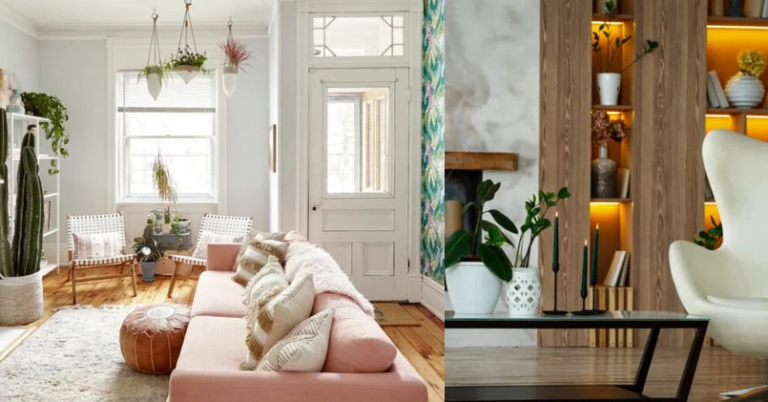
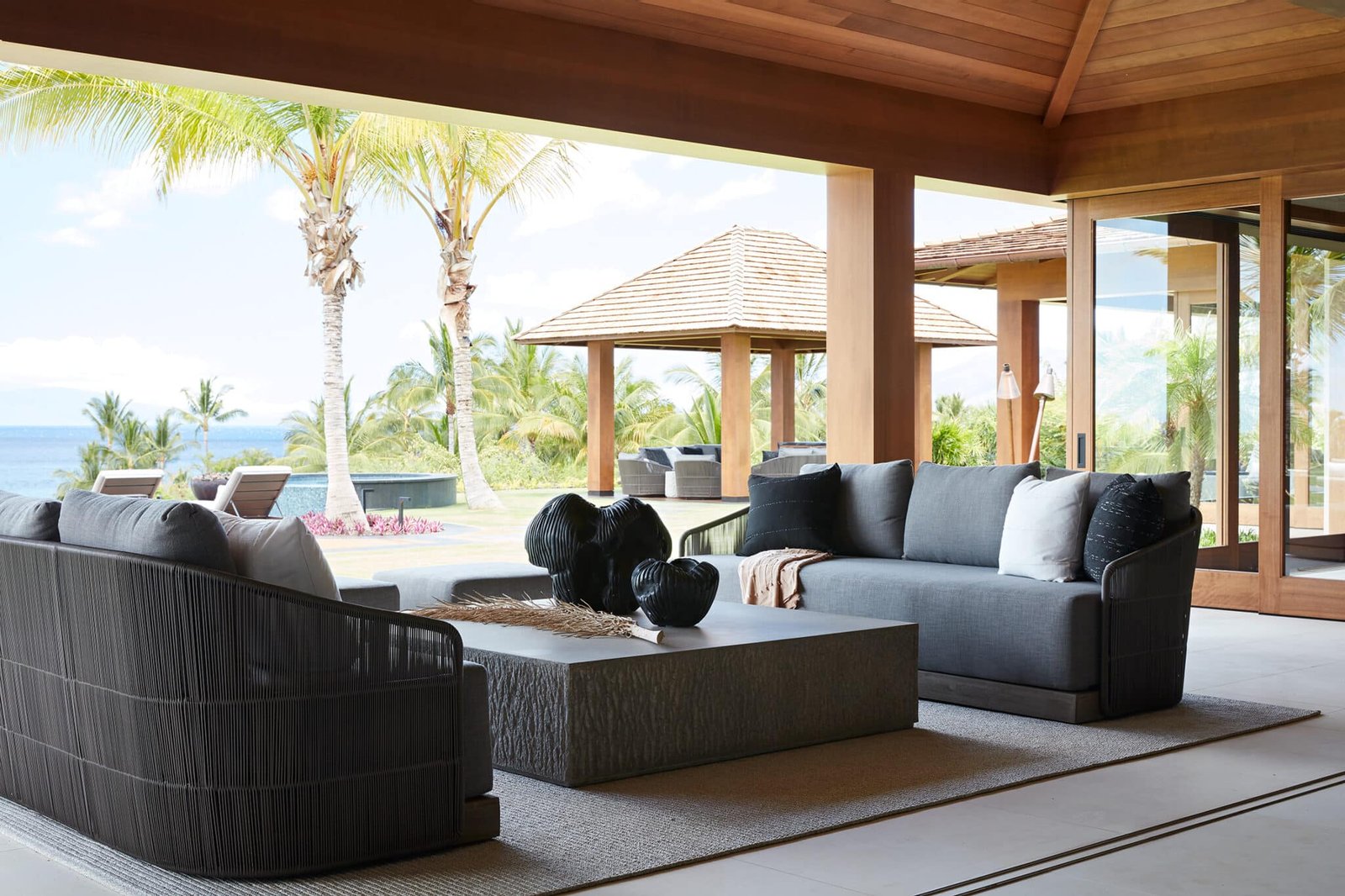
More Hawaiian and tropical-leaning interiors with open light, natural texture, and indoor plants carrying the mood.
Indoor-Outdoor Flow: The Core Structural Principle
Every guide to Hawaiian design mentions indoor-outdoor flow. What most guides skip is the specific architectural device that makes it work: the lanai. A lanai is a covered outdoor living space, essentially an extension of the interior that has its own furniture and function. If you’re working with a property that doesn’t have one, the concept translates by treating any transition zone (a covered porch, a deep overhang, a generous threshold) as a room rather than a passageway.
The principle extends inside too. I’ve seen this work in a the city loft where we used the same flooring material through from the main living area out onto a small terrace. The visual continuity matters more than physical openness in colder climates. The eye registers the connection and the brain follows. It’s one of those fundamentals that applies well beyond Hawaiian design. Anyone building a thorough understanding of interior design basics will encounter the same idea about material continuity as a spatial tool.
Materials, Colors, and Pattern
Natural Materials That Work (and Two That Don’t)
The material palette for Hawaiian design: rattan, bamboo, koa wood (or a similarly warm-toned hardwood if koa is out of budget), lauhala woven mats, cotton and linen in natural or ocean-washed tones, and ceramic accents. What doesn’t work: synthetic rattan that’s too uniform in color, bamboo flooring that sits cold or yellow-toned, anything high-gloss. The whole point of this palette is texture and warmth. High-gloss surfaces cancel both.
My specific recommendation: invest in one piece of high-quality rattan furniture: a genuine mid-century piece by someone like Elinor McGuire, or a good vintage chair, rather than buying a matched set from a home goods chain. The real thing has an irregularity to it that looks authentic. Three cheap pieces of rattan will always look like a beach-themed restaurant. One good piece, combined with solid-colored upholstery and natural textiles, looks like a considered design decision.
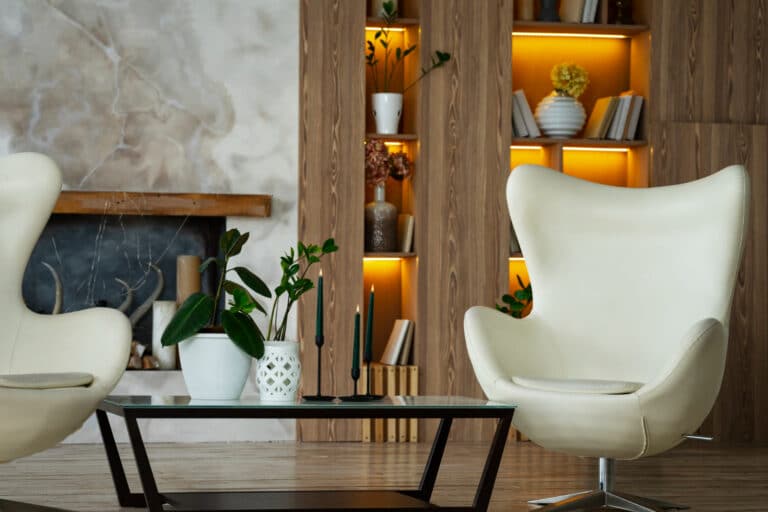
More Hawaiian and tropical-leaning interiors with open light, natural texture, and indoor plants carrying the mood.
Color: The Part Most People Get Wrong
The common mistake is equating Hawaiian design with high saturation: coral, aqua, bright yellow. Those colors exist in the Hawaiian palette but they’re accents, not base tones. The structural colors (walls, large upholstery, flooring) should be quiet: warm whites, linen, sand, pale celadon green. The vivid colors appear in textiles, artwork, and plants. When the structure is neutral, even one coral throw pillow looks deliberate. When everything is saturated, the room looks uncontrolled.
Pattern follows the same logic. Kapa-inspired geometric prints and tropical botanical patterns belong in textiles and single accent walls, not across every surface. The key principle here is restraint in the base layer, expression in the detail layer. This is the same balance that governs harmony in interior design more broadly. It just has a specific application in the Hawaiian context, where the temptation to layer patterns is particularly strong.
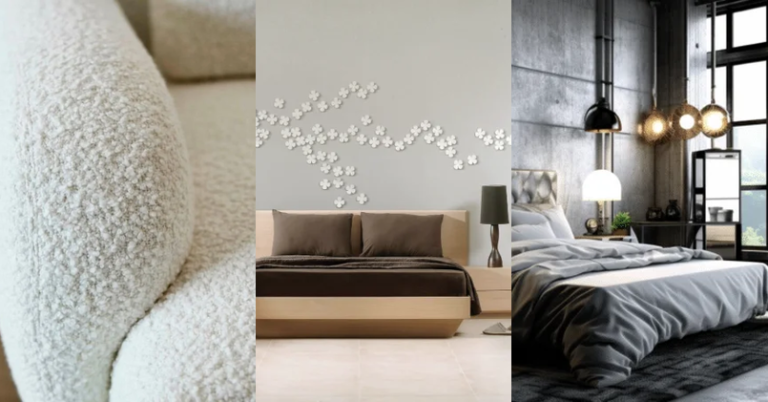
More Hawaiian and tropical-leaning interiors with open light, natural texture, and indoor plants carrying the mood.
Furniture, Scale, and Floor Plan
The Furniture Profile That Creates the Right Feeling
Hawaiian-influenced rooms use lower-profile furniture than most American interiors: floor-level or low-sitting pieces that echo a regional preference for sitting close to the ground. This isn’t just aesthetic. Low furniture makes ceilings look higher and rooms feel airier, which matters when you’re referencing a style built for pavilion-scale spaces. If your room has eight-foot ceilings and you fill it with tall case furniture, no amount of rattan will give it the right feeling.
Specific things to look for: low-slung rattan sectionals or lounge chairs, platform beds with simple teak or bamboo frames, side tables made from natural slice wood or woven materials. Things to avoid: overstuffed upholstery with thick wooden legs (this tends to look like Pottery Barn rather than Hawaiian), ornate carved pieces that belong to other traditions, anything that signals “themed decor” rather than “considered design.”
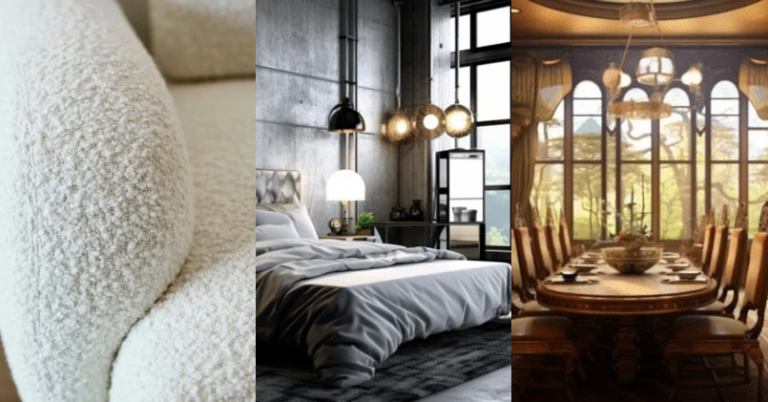
More Hawaiian and tropical-leaning interiors with open light, natural texture, and indoor plants carrying the mood.
How to Orient the Floor Plan Toward Light
Open floor plans aren’t just stylistically appropriate . They’re structurally necessary. Hawaiian-style rooms need visual breathing room. If you’re working in a closed floor plan, the most effective intervention is removing non-structural walls between the main living and dining areas, or at minimum replacing solid walls with partial-height dividers or open shelving that allow light through.
The other layout principle worth following: orient seating toward windows and outdoor access rather than toward the center of the room. Most American floor plans default to a television or fireplace as the focal point. In Hawaiian design, the pull should be toward light and the view. The first time I shifted a sofa arrangement to face a set of glass doors rather than the entertainment unit, the client looked at the room for a full minute before saying anything. That pause (the moment the room stops feeling like a box) is what a correct orientation produces.
Open indoor-outdoor living with the same light-first logic Hawaiian interiors rely on.
Lighting, Plants, and the Finishing Layer
Lighting That Preserves What You Built
Natural light is the primary light source in a well-done Hawaiian interior. Everything else supplements it. This means maximizing window area where possible (interior shutters or plantation-style louvers are both historically accurate and useful for controlling glare), using fixtures in warm incandescent tones rather than cool white, and avoiding overhead can lighting that flattens the texture of natural materials.
For evening lighting: paper or rattan pendant shades, low-placed floor lamps, and candles are the right approach. The goal is to preserve the warmth that natural materials create during the day. Harsh overhead lighting destroys texture. It’s one of the fastest ways to make a thoughtfully sourced rattan chair look cheap. I made this mistake on one project, left the recessed lights in at the client’s insistence, and spent the next four months trying to correct the flat effect with layered soft light. The can lights will fight every other decision in the room.
More Hawaiian and tropical-leaning interiors with open light, natural texture, and indoor plants carrying the mood.
Plants as Structure, Not Decoration
Most people treat plants as the final decoration layer, something added once the room is done. In Hawaiian design, plants are structural. Monstera deliciosa, bird of paradise, palm varieties, and pothos are large enough to function as room dividers, visual anchors, and scale references. A 6-foot bird of paradise in a corner does more design work than any floor lamp.
The rule I apply: plan for at least one oversized plant per room, and supplement with medium plants at different heights rather than multiple small plants at table level. A grouping of identically sized small plants functions as decoration. A single large plant functions as architecture.
For rooms that don’t get sufficient natural light for tropical plants: artificial grow lighting in warm kelvin (2700K-3000K), placed at floor level behind large plants, is invisible and effective. I’ve seen this work in basement apartments in a city apartment. The light coming from below makes large leaves glow in a way that looks genuinely tropical. The effect is surprisingly convincing, and the fixture disappears entirely behind the plant.
More Hawaiian and tropical-leaning interiors with open light, natural texture, and indoor plants carrying the mood.
Making Hawaiian Design Work Outside Hawaii
Adapting the Style When the Climate Doesn’t Cooperate
Hawaiian design is built for a specific climate: warm, humid, with natural light available almost year-round. Most readers aren’t in that climate. The adaptation isn’t complicated, but it requires being intentional about which principles translate directly and which need adjustment.
The main adaptation: replace the literal indoor-outdoor connection with a visual one. Use flooring and wall colors that look continuous with your outdoor space even when the doors are closed. Warm-toned natural stone, outdoor-grade porcelain tile used inside, and natural sisal or jute area rugs all create this effect. For small apartments, the two Hawaiian design principles that help most are the low furniture profile (critical for tight spaces, creating vertical breathing room,) and the plant-as-structure approach. Both work at any scale. What doesn’t scale down is the open floor plan. If you have 600 square feet, focus on material palette and light quality instead. A related application of these ideas in a coastal context is surf shack interior design, which works through similar material logic at a smaller scale.
Where to Put the Budget (Most People Get This Backwards)
If I had to prioritize one investment in a Hawaiian-inspired room: flooring. A warm-toned wood floor or natural stone tile does more to establish the style than any individual furniture piece. Second priority: one quality rattan or wicker furniture piece. Third: a large plant. Everything else (textiles, smaller accessories, lighting) can be sourced at various price points without compromising the overall result.
This is contrary to how most people approach interior design budgeting, where furniture absorbs the majority of the money. But in a style where material quality and natural texture are the primary signals, the floor and the plants are more load-bearing than the sofa. The style is forgiving at the detail level precisely because the foundation is strong. Get the floor right and most of the other decisions become easier.
Frequently Asked Questions
What are the key elements of Hawaiian interior design?
The key elements are natural materials (rattan, bamboo, koa wood), an indoor-outdoor connection that treats transition spaces as rooms, a neutral base palette with saturated color accents in textiles, and structural plants. Cultural references from Polynesian craft traditions and Pacific mid-century modernism give the style its specific character.
How can I incorporate Hawaiian style into my home?
Start with flooring and one quality rattan furniture piece before adding textiles and accessories. Orient seating toward windows rather than toward the room’s center, and plan plants as structural elements rather than decoration. The material palette does most of the work. Prioritize texture and warmth over pattern.
What colors are popular in Hawaiian interior design?
The structural colors should be quiet: warm whites, linen, sand, and pale celadon. Saturated coral, aqua, and yellow appear in textiles and accent objects only. High-saturation color across all surfaces makes the room look uncontrolled. The palette works by contrast between a calm base and vivid details.
Can Hawaiian interior design work in a small apartment?
Yes, with two adaptations: replace the literal indoor-outdoor connection with a visual one through matched flooring materials and a continuous palette, and focus on the low furniture profile and large plants rather than open floor plans. Both of those principles work at any scale.
What is the difference between Hawaiian and generic tropical design?
Hawaiian design is grounded in specific cultural references (Polynesian craft traditions, Pacific modernism) and the design philosophy of malama ‘aina. Generic tropical design often reduces to pattern and high-saturation color without that structural logic. The difference is visible: Hawaiian design has a calm, material-focused quality that tropical-theme design typically lacks.
If you liked this post about Hawaiian interior design, don’t forget to follow us on Pinterest so you don’t miss any more interior design news!