Windowless Office Design: Light You Have to Invent

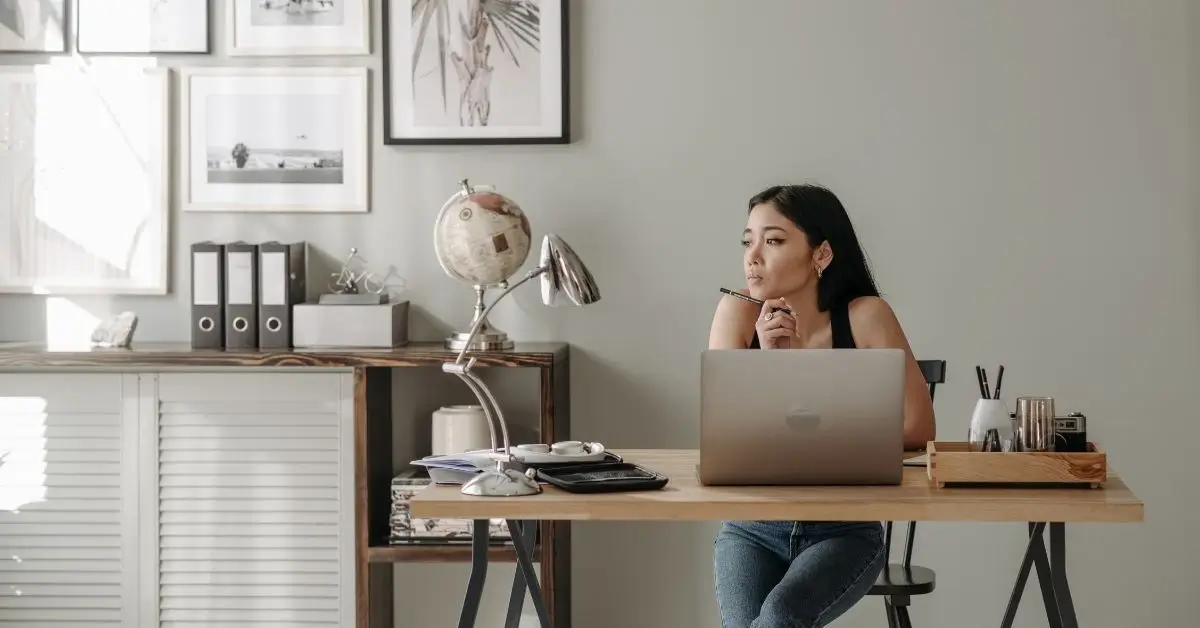
A windowless office is one of those design problems people approach with low expectations. They figure the best they can do is “make it tolerable.” After designing several of these spaces for a home, I’d push back on that framing entirely. The constraints are real, but so are the solutions, and the right approach produces rooms that feel genuinely good to work in, not just acceptable.
The key principle here is that you’re not trying to fake having windows. You’re working with what the room actually is: an enclosed space with controlled lighting and surfaces you can fully optimize. That’s a narrower toolkit than a bright corner room, but it’s a workable one.
Why Lighting Is Everything in a Windowless Office
When there’s no natural light source to anchor the room, artificial lighting has to do the full job. Most people install one overhead fixture and call it done. In practice, this creates flat, shadowless light that makes the space feel institutional and draining. The fix is layering, and it’s worth understanding why single-source lighting fails before trying to fix it.
Use Three Light Sources, Not One
Think in terms of three roles: ambient (general fill light), task (direct light where you’re working), and accent (light that hits specific objects or walls). In a windowless office, I recommend starting with recessed overhead lighting or a quality LED panel for ambient, a dedicated desk lamp with a directional arm for task, and at least one accent source, like a floor lamp in the corner or an LED strip behind a shelf unit.
For Someone project in a city apartment, we used a pendant over the desk zone, a plug-in sconce on the opposite wall, and a small uplighter in the corner. The room was 120 square feet with no windows. The result was a space that felt intentionally lit rather than just illuminated. That distinction matters more than most people expect.
Color Temperature Matters More Than Wattage
Most people choose bulbs based on brightness (lumens), but in a windowless space, color temperature is the variable that changes how the room actually feels. Bulbs in the 2700K to 3000K range produce warm, yellowish light that can make a space feel dim even when it’s technically bright. For a home office, I recommend staying in the 4000K range, which looks neutral white and keeps the eye alert without the harsh blueness of daylight bulbs at 5000K and above.
This is one change most people can make for under twenty dollars and it immediately shifts how the room reads. It’s the kind of fix that feels like a lighting upgrade when it’s really a calibration adjustment.
Light Placement Beats Fixture Count
Where you put your light sources matters as much as how many you have. Lights positioned only at eye level or below create shadows upward that feel oppressive in an enclosed room. One uplighter or a fixture that washes the ceiling with light opens the vertical space significantly. In practice, this means: one ceiling or near-ceiling source for ambient, desk lamp at or below eye level for task, and something at floor or low-shelf level for warmth.
The Paint Color Decision Is More Complicated Than “Go Light”
Most advice for windowless offices stops at “paint it white” and moves on. That’s not wrong, exactly, but it leaves out the actual reasoning, and the reasoning matters when you’re making irreversible decisions about wall color.
Why Pure Bright White Often Backfires
Bright white walls reflect everything, including the color cast of your artificial lighting. Under warm-toned bulbs, white walls read slightly yellow. Under cool-toned bulbs, they look clinical. This is less noticeable in rooms with natural light because daylight calibrates our perception. Without that reference point, the wall color interacts directly with your artificial sources, and the result is often unflattering regardless of which bulbs you choose.
A better option in most cases is a warm white or a soft off-white with a yellow or cream undertone, something in the Benjamin Moore White Dove or Sherwin-Williams Alabaster range. These absorb the warmth of artificial lighting and read as neutral rather than picking up unwanted color casts.
When Slightly Saturated Colors Work
Designing two windowless offices where we used a soft sage green on the walls, and in both cases the result was better than any white would have been. The color gave the room a deliberate character, something that read as a design choice rather than a workaround. Light-value greens and blue-grays are particularly well-suited because they read as atmospheric without pulling the room dark.
The rule I apply: if the paint chip is below a 70% light value on the manufacturer’s scale, test it in the actual room before committing. Hold it against your primary light source at different times of day. What looks sage in a brightly lit showroom can read as olive under a warm-toned LED at 9 PM.
Low-Light Plants that work
Plants in a windowless office serve a dual purpose: they add organic texture that hard surfaces can’t replicate, and there’s reasonable evidence that greenery in work environments reduces perceived stress. The catch is that most popular houseplants need more light than a windowless room provides. The ones that genuinely tolerate low light without slowly declining are a shorter list than most guides suggest.
The Species Worth Buying for a Windowless Space
The three I recommend without hesitation: ZZ plant (Zamioculcas zamiifolia), snake plant (Sansevieria), and pothos. All three tolerate fluorescent and LED lighting at typical office levels. The ZZ plant is my top pick because it genuinely thrives in low light rather than just tolerating it, grows slowly enough that it doesn’t outpace its container, and has a graphic quality that reads well against a flat wall. A large ZZ in a matte white ceramic pot costs between forty and eighty dollars at most garden centers and requires watering roughly once every two to three weeks.
Peace lily is worth considering if you want something that flowers, but it prefers slightly higher light than the others and will droop dramatically when it needs water. Some people find that useful as a built-in indicator. Others find it annoying. Know which type you are before buying one. For a fuller breakdown of plant placement and pairing strategies, the interior plant design guide covers approaches that translate well to office contexts.
Don’t Dismiss Artificial Plants Outright
Contrary to what design orthodoxy suggests, a well-chosen artificial plant is a legitimate option in a windowless office. The quality of fabric and silk versions has improved significantly in the last five years. At the forty to eighty dollar range from quality vendors, they’re difficult to distinguish at conversational distance. If you travel frequently, work irregular hours, or simply find plant maintenance unreliable in your routine, a quality artificial in a proper ceramic pot does the visual job without the failure mode.
Mirrors and Reflective Surfaces
Mirrors in a windowless office don’t create light, but they redistribute it, and that achieves a similar perceptual effect. The key is placement: a mirror works best when it reflects another light source, whether that’s a lamp, a lit wall, or an accent fixture, rather than a dark corner or the back of your chair.
Where to Hang a Mirror for Real Effect
Position mirrors opposite or adjacent to your primary light source. In a typical office layout, that means the wall facing the desk lamp or the wall that gets the most ambient light from the overhead fixture. A large rectangular mirror (at least 24 by 36 inches) produces more visual impact than several small ones. A frame with warm metal tones, brushed brass or aged gold, works better under artificial light than chrome or cool silver.
One homeowner who put a full-length mirror on the wall directly opposite their desk because they’d heard mirrors “make rooms bigger.” The problem was it reflected their own face and screen throughout the workday, which was both distracting and unflattering under overhead lighting. The better move was a horizontal mirror above the console table on the adjacent wall, angled slightly toward the lamp. Same square footage of glass, completely different result.
Metallic Accents as a Supporting Strategy
If a large mirror doesn’t suit the room, metallic-finish accessories accomplish some of the same redistribution at smaller scale. A brushed brass desk lamp, a mirrored tray on a shelf, or light-reflecting picture frames all bounce light in small doses. It’s a subtler effect but it compounds, and it’s easier to incorporate without committing to a major piece of furniture. If you’re working with a limited budget, the low budget small office interior design guide covers what’s achievable at each price point before you commit to new fixtures.
Making the Space Feel Personal Without Cluttering It
A windowless office doesn’t benefit from the visual breathing room that natural light provides in other spaces. Clutter reads differently here. It compresses the space in a way that daylit rooms absorb more easily. This means personal objects need to be curated rather than accumulated, which sounds restrictive but is actually clarifying.
Art That Functions Like a Window
The best choice for a windowless office is art that looks an aperture: a large landscape photograph, an abstract piece with significant depth perspective, or a print with a strong horizon line. These give the eye somewhere to rest that portrait-format or tight geometric pieces don’t. Size matters here more than it does in windowed rooms. A single large piece reads better than a gallery wall of smaller ones because the eye needs a single focal destination, not several competing ones.
I keep a 30 by 40 inch black-and-white photograph of Lake Michigan above my own desk in a home office, which faces a wall. The water recedes toward a horizon line, which creates an optical pull that partially substitutes for the depth a window would provide. It’s not a trick, exactly, but it changes how the room feels at the end of a long working session in a way that’s hard to attribute to anything else.
Desk Setup as a Design Statement
In a windowed room, natural light draws the eye outward and the surface clutter competes with that pull. In a windowless room, the desk is always in the foreground. There’s no competing focal point. This means a considered desk setup matters more here than in almost any other space type.
I recommend investing in one quality desk organizer rather than several cheap ones, keeping the surface clear except for active work items: a single ceramic mug for pens, a well-designed lamp, one small plant or object with personal meaning, and nothing else. The cozy desk ideas guide covers specific surface arrangements worth adapting for enclosed spaces. The principles of balance in interior design also apply directly here because visual weight needs deliberate distribution when the room can’t rely on asymmetric natural light to do it.
Frequently Asked Questions
What is the single most important fix in a windowless office?
Lighting, and specifically the color temperature of your bulbs. Switching from warm 2700K bulbs to neutral 4000K immediately changes how alert and spacious the room feels, and it costs almost nothing compared to furniture or paint.
What is the best paint color for a windowless office?
A warm white or soft off-white with a cream undertone, like Benjamin Moore White Dove or Sherwin-Williams Alabaster. Pure bright white picks up color casts from artificial lighting, while warm whites read as neutral regardless of bulb type.
Can plants actually survive in a windowless office?
Yes, if you choose the right species. ZZ plants, snake plants, and pothos all tolerate the light levels produced by standard office fluorescent or LED fixtures. Most other popular houseplants will decline slowly in a windowless space.
How do I make a windowless office feel less claustrophobic?
Layer your light sources, position a large mirror adjacent to your primary lamp rather than facing you directly, and choose one large piece of art with depth perspective rather than several small pieces. Reducing visual clutter on surfaces helps as much as any decor addition.
Should I use a daylight lamp or a warm lamp in a windowless office?
Neither extreme. Daylight bulbs at 5000K and above feel harsh and clinical in enclosed spaces. Warm bulbs at 2700K make the room feel dim and yellowed. The 4000K range, labeled neutral white on most packaging, hits the right balance for sustained work.
Is a windowless office bad for productivity?
Not inherently. What reduces productivity is poor lighting, visual clutter, and a lack of personal connection to the space. All three are fixable without windows. The evidence on natural light and productivity is real, but the gap between a well-designed windowless office and a poorly designed windowed one is significant.
If you liked this article on how to decorate windowless office spaces, follow us on Pinterest so you don’t miss any more interior design guides.