Modern Gothic Interior Design Done Right: A Designer’s Guide

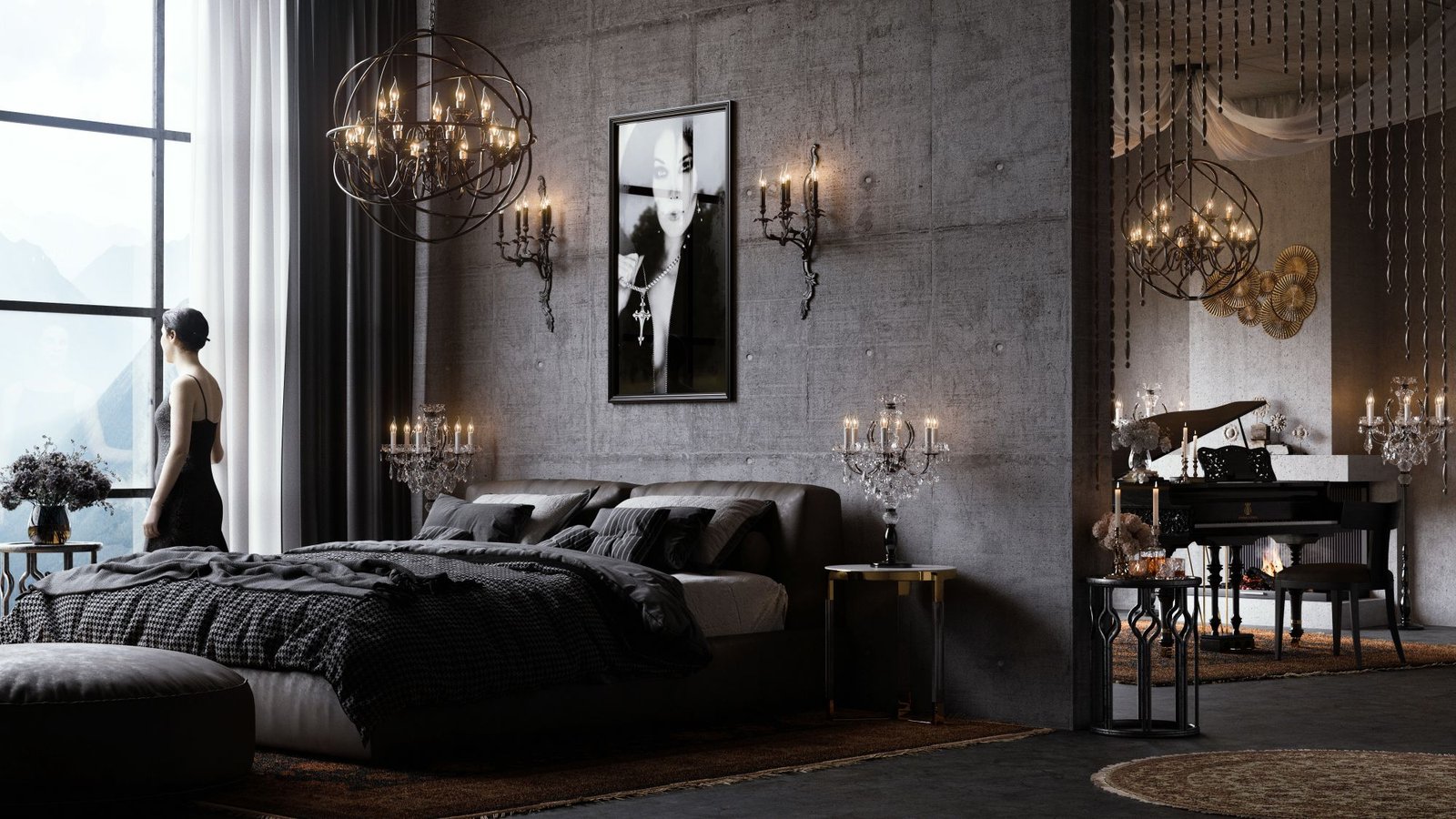
Modern gothic interior design is one of those styles that gets misquoted constantly. The defining principle isn’t darkness for its own sake. It’s about using architectural drama, careful material hierarchy, and controlled color to create spaces that feel genuinely atmospheric. Not like a Halloween prop department.
I’ve worked on three residential projects that started with “we want something gothic,” and in each case the client had a different image in mind. One meant Victorian maximalism with velvet drapes and skull motifs. One meant a clean dark apartment with dramatic architectural lines. One, honestly, meant moody and wasn’t sure what that meant at all. Getting the principles right before you start ordering furniture makes the difference between a coherent design and a collection of dark objects in a room.
What Modern Gothic Actually Means
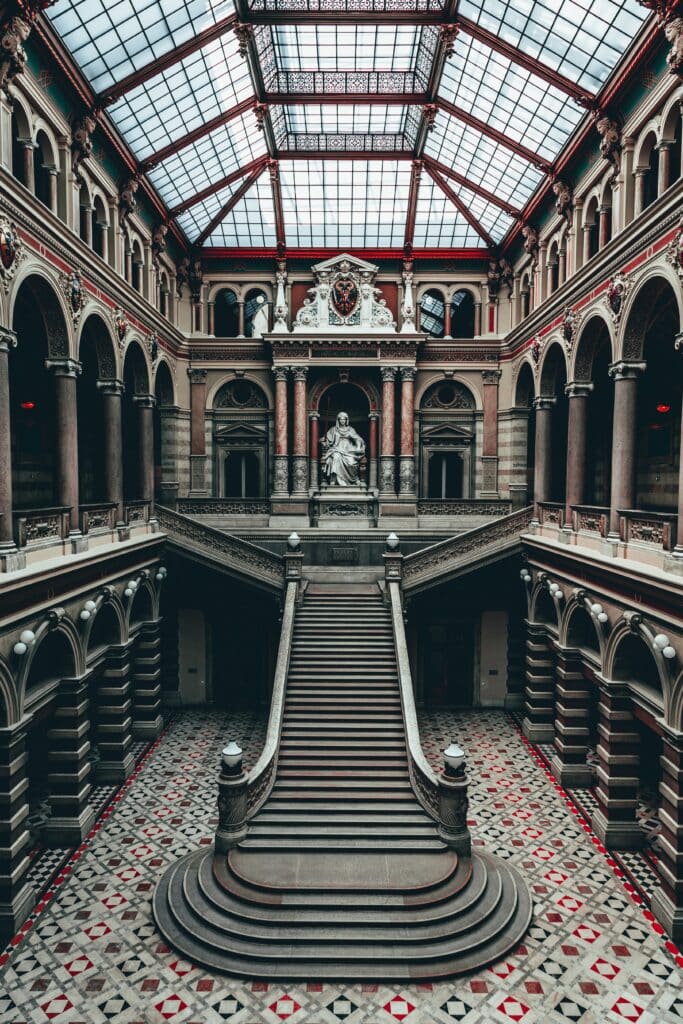
The confusion usually starts with the word “gothic.” Gothic architecture, the kind from 12th-century French cathedrals, is about structural innovation expressed through height, light, and pointed geometry. The pointed arch, the ribbed vault, the flying buttress: all engineering solutions that became aesthetic vocabulary. Modern gothic interior design borrows that visual vocabulary and applies it to residential spaces without requiring you to recreate a cathedral interior.
The Architectural Origins That Inform the Style
The architectural lineage matters more than most people realize. When you understand that pointed arches were originally load-bearing structural elements, you start to understand why they carry so much visual weight in a room. A doorway with a pointed arch isn’t just ornamental; it carries significance because it references centuries of architecture where those forms served a real structural purpose. That’s the kind of historical resonance you can deploy in a modern space without replicating a cathedral. The reference doesn’t need to be literal to be effective.
Where Victorian Gothic Ends and Modern Gothic Begins
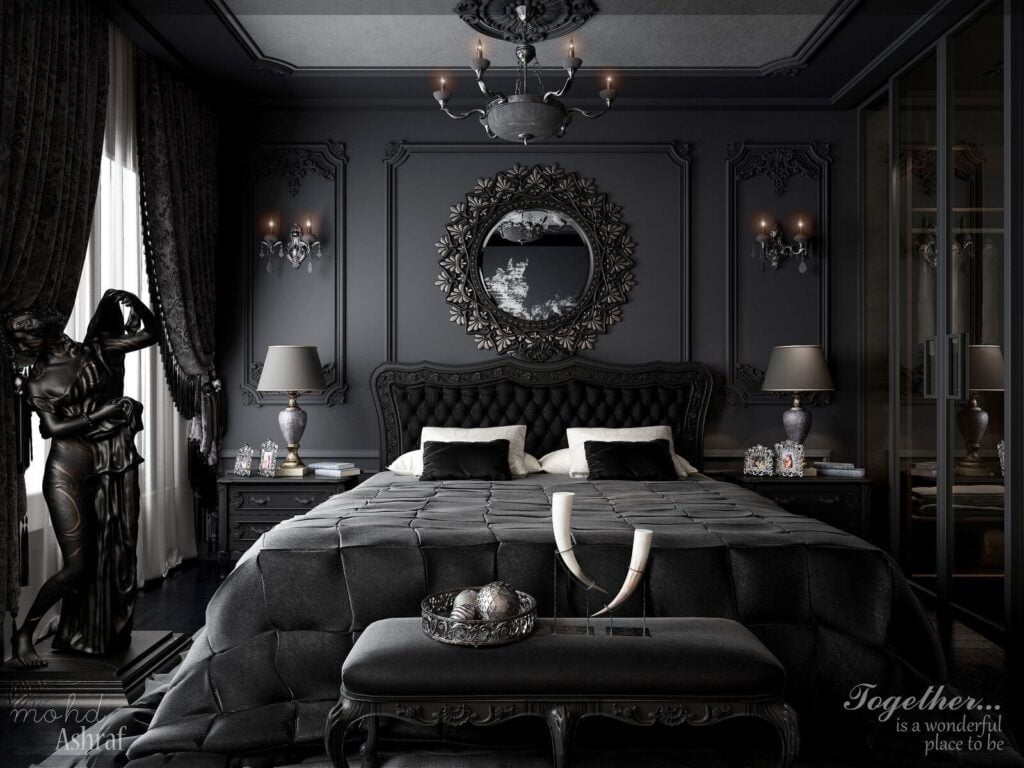
Victorian Gothic interior design is the most familiar interpretation of the style, and it’s worth understanding the distinction. Victorian Gothic leans into ornamentation: heavy carved woodwork, dramatic drapery, dark wallpaper patterns, period furniture. Modern gothic takes those aesthetic cues and strips them back to their core principles. High contrast. Architectural emphasis. Controlled drama. The critical difference is restraint. Victorian gothic is maximalist by definition. Modern gothic should work in a contemporary apartment without looking like a stage set.
The Four Elements That Define Modern Gothic
Color: Contrast First, Darkness Second
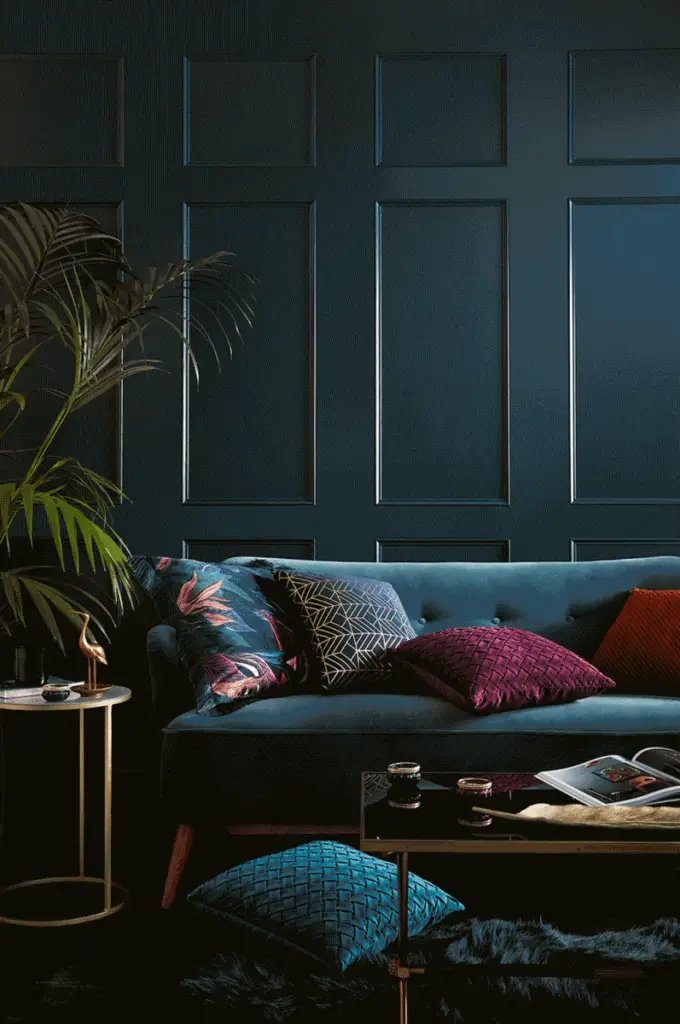
Most people approach the gothic color palette by choosing the darkest version of every color. That’s the wrong starting point. The key principle here is contrast, not darkness. A room painted in deep charcoal with white architectural trim registers as far more gothic than a room painted uniformly black. The drama comes from the relationship between tones, not from eliminating light entirely.
In practice, this means: one dominant dark (charcoal, navy, forest green, deep burgundy), two or three architectural contrast points in cream or warm white, and accent materials in metallic or reflective surfaces. I used deep slate walls with plaster-white crown molding and unlacquered brass hardware in a Chicago townhouse project, and the effect was exactly right without the space feeling oppressive at any time of day. The brass in particular mattered: it signals warmth where chrome would have felt cold, and cool finishes undercut the effect in this style.
Architectural Anchors: Ceilings, Arches, and Vaulted Lines
If you have the option to introduce or emphasize architectural elements, do it before spending on furniture or accessories. Pointed arches are the single most effective gothic reference you can add to a modern space. An arched doorframe, a mirror with an arched top, bookcases with arched backs: these elements register as gothic immediately without requiring any of the heavy ornamentation associated with the Victorian version.
Ceilings are underused in this style. A painted ceiling two shades darker than the walls creates the sense of enclosure that gothic architecture achieves through vaulted height. In a standard apartment with eight-foot ceilings, this can work in your favor: it makes the room feel more deliberate and contained rather than just low. Wood ceiling beams, if they’re already there, are worth painting or staining dark. Exposed beams in a lighter wood that doesn’t match the room’s palette is one of those details that breaks the coherence of an otherwise solid design.
Windows and Light: The Element Most People Get Backwards
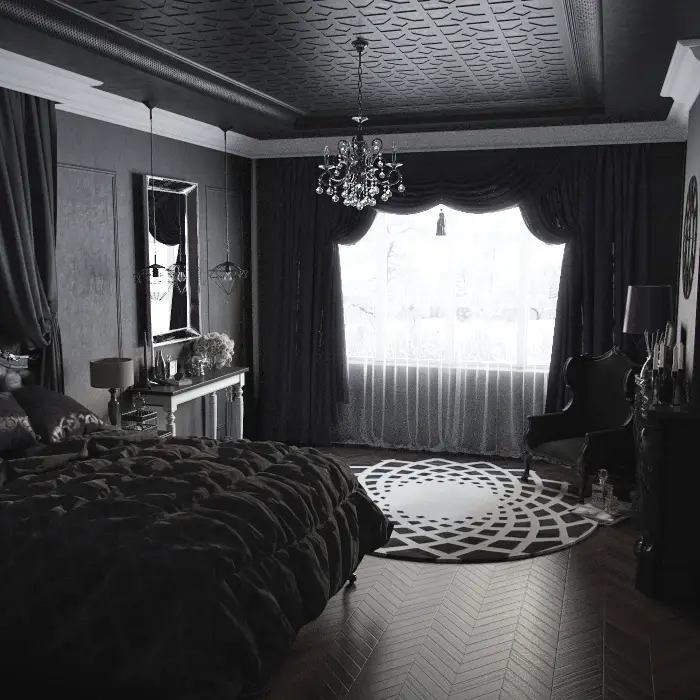
Modern gothic interior design should not try to eliminate natural light. This is the aspect of the style I see mishandled most often. The gothic cathedral aesthetic is built on the dramatic play of light: filtered, colored, directional. Heavy drapes that block all natural light don’t achieve the gothic effect; they just produce a dark room. The goal is to control how light enters the space, not to remove it entirely.
Curtains in rich fabrics like velvet or heavy linen work here when positioned to frame windows and allow light to enter at the sides rather than blocking it completely. Stained glass film applied to existing windows is an affordable option that genuinely changes the quality of light in a room. Colored glass panels set into an existing window frame are more expensive but more architectural; I’ve used them in a bedroom project where the goal was something that functioned more like a gothic reference point than a curtain solution.
The Fireplace: Your Most Important Architectural Element
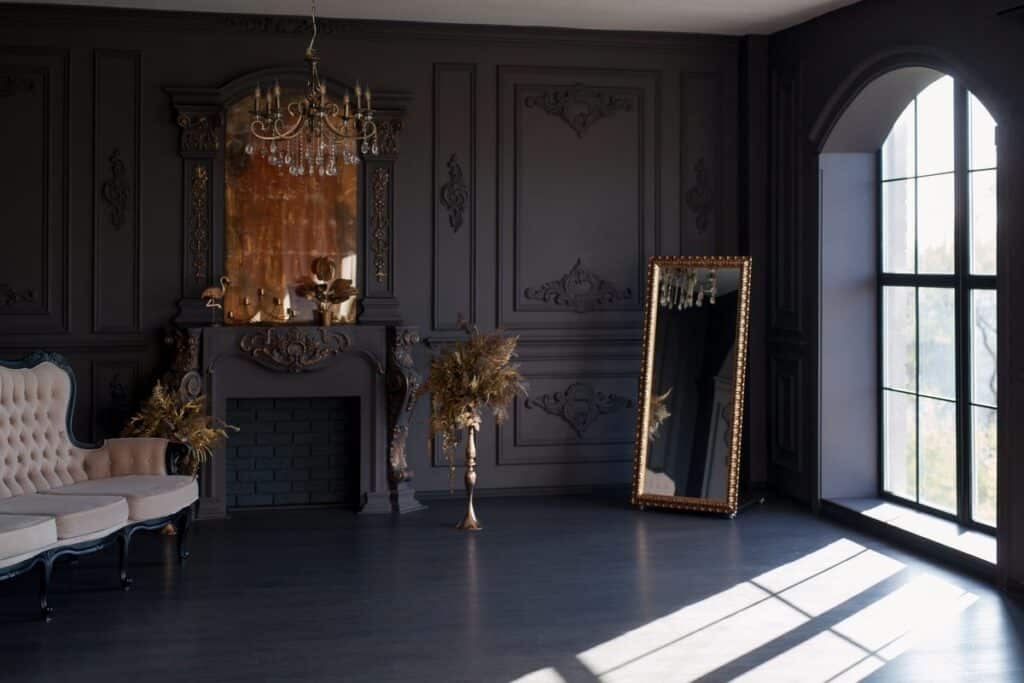
A fireplace is the most natural gothic focal point in residential design, and it’s the element I’d prioritize above almost everything else in a room. The materials matter specifically: carved stone or dark-painted wood surround with visible joinery signals the right aesthetic; a smooth white painted drywall surround does not, regardless of how much gothic furniture you place around it.
I’ve watched people spend significant money on gothic-style accessories while ignoring a beige drywall fireplace sitting in the center of the room. That’s the wrong order of operations. Fix the architectural anchor first. Adding a stone veneer surround or a dramatic dark-painted mantel with architectural detail is usually far more cost-effective than replacing the whole unit, and the impact on the room is immediate.
Room by Room: How the Principles Apply
The Living Room: Where You Set the Register
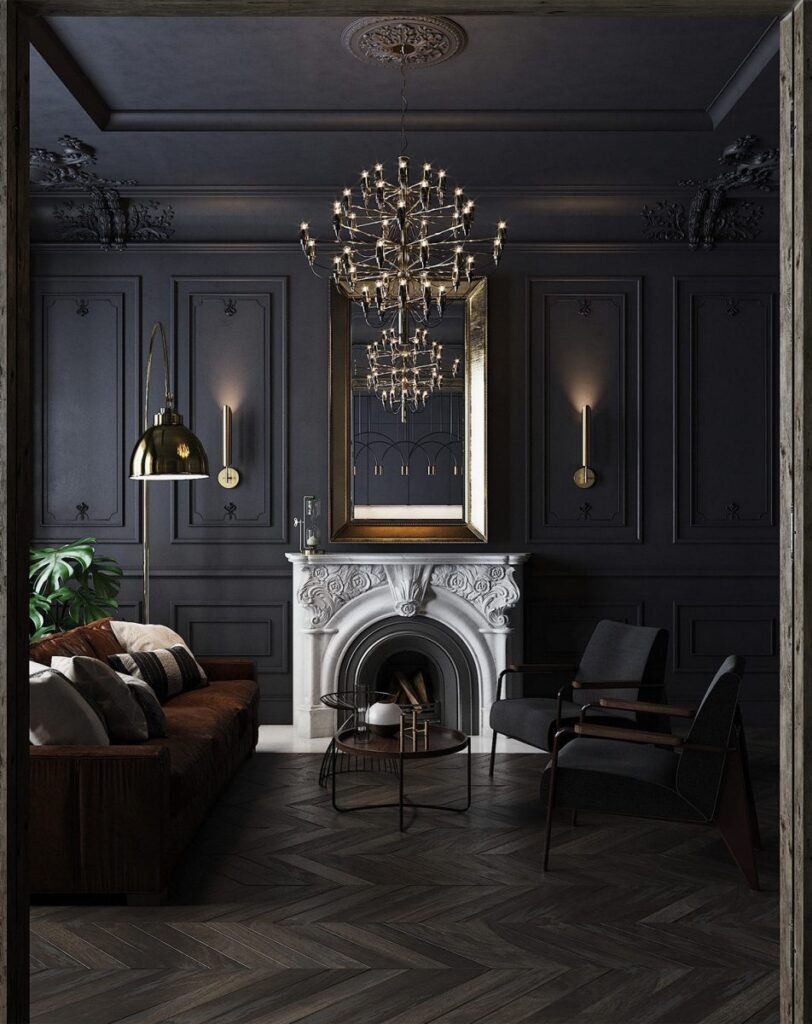
The living room is where you establish the overall tone of the design, and the decisions you make here inform every other room. Upholstery in rich, matte fabrics carries the most weight: velvet in deep jewel tones, leather in near-black or dark cognac, heavy wool in charcoal. Avoid anything shiny or high-sheen; lacquered surfaces feel contemporary rather than atmospheric. For dark interior design more broadly, the living room is always where the principle either lands or falls apart.
Lighting should come from multiple sources at different heights: a wrought iron chandelier overhead, wall sconces at eye level, and one or two floor lamps for accent. The layered approach prevents any single point of harshness and creates the ambient quality this style needs. A wrought iron chandelier from Uttermost or Quorum International in the $300-600 range gives you the architectural weight the style calls for. Avoid anything with visible plastic components; they break the material authenticity and communicate budget concession immediately.
The Bedroom: Avoiding the Four-Poster Trap
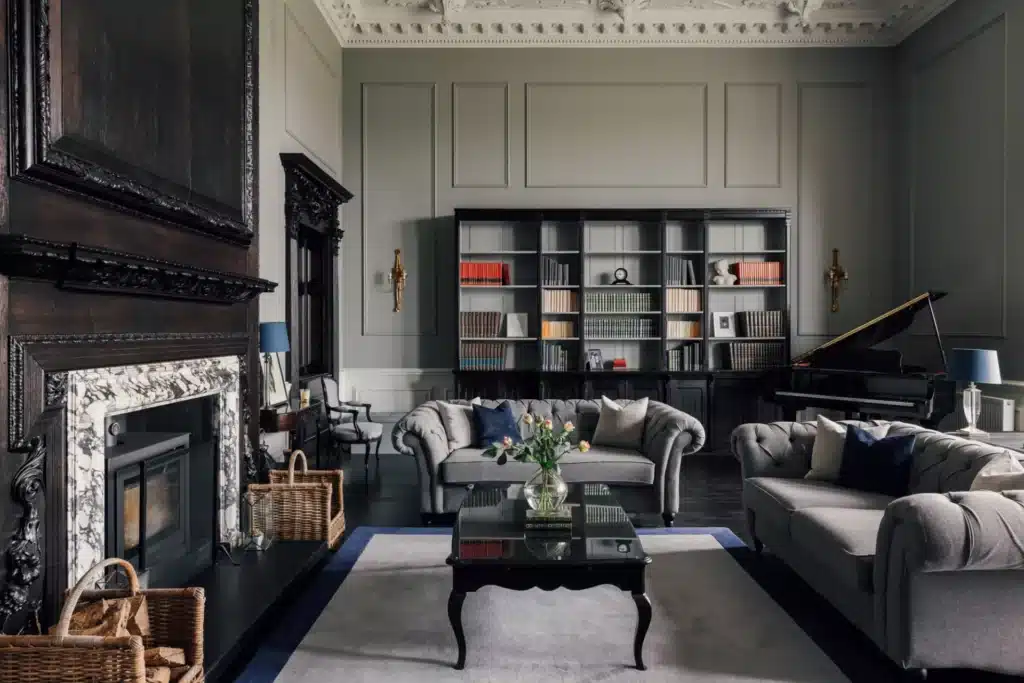
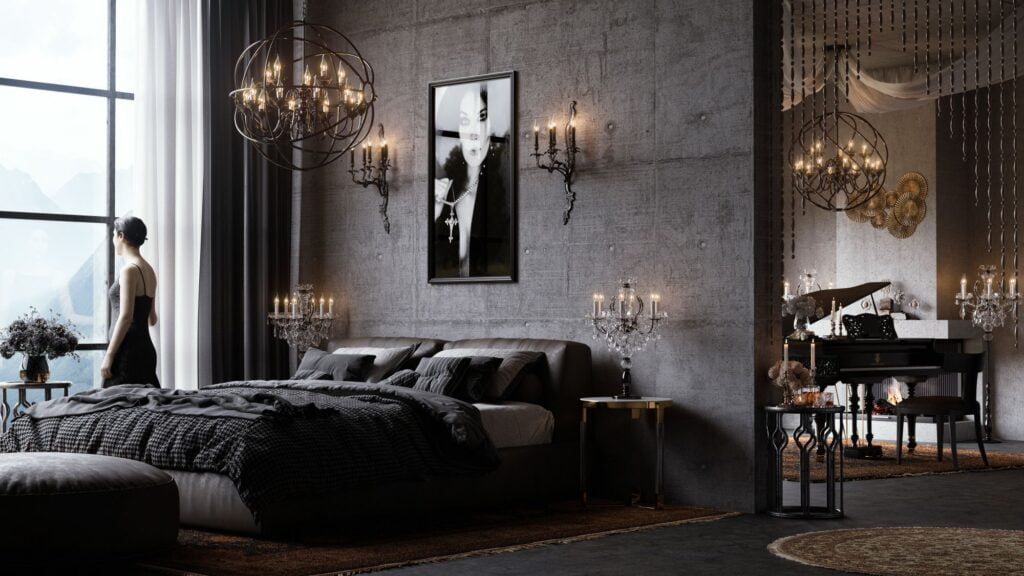
The bedroom application goes wrong most often with the canopy bed approach. A dramatic four-poster with sheer black draping sounds right but tends to feel theatrical rather than atmospheric when executed in a standard room. It works if the ceiling is high enough to accommodate the proportions. In a room with a standard eight-foot ceiling, the bed will dominate in a way that feels cramped rather than dramatic.
A better starting point for most rooms: a headboard with an arched profile in dark velvet or carved wood, dark bedding in wool or heavy cotton, and one significant lighting fixture. Wall sconces flanking the headboard are more proportionate than an overhead chandelier in most bedroom contexts. If the goal is a dark bedroom that functions well for sleep and not just as a design statement, the layered lighting approach is essential here too.
The Kitchen: The Hardest Room to Get Right
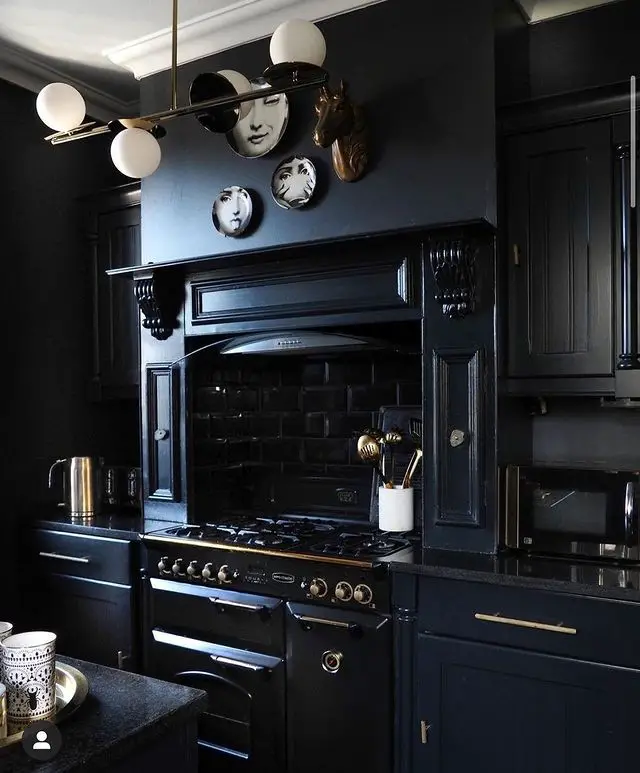
Kitchens test modern gothic interior design most directly. The functional requirements, bright work surfaces, easy-clean materials, visible organization, run against the atmospheric qualities the style depends on. The mistake is trying to make the entire kitchen gothic. The approach that actually works is identifying one or two elements where the style can land cleanly without compromising function.
Dark wood cabinetry with visible grain and simple hardware is the most reliable entry point. Painted cabinetry in deep navy or forest green with unlacquered brass pulls is the contemporary equivalent. A backsplash in geometric or architectural tile (hexagonal, arabesque, or elongated subway in a dark glaze) is a more achievable gothic gesture than trying to introduce heavy drapery into a kitchen context. If budget allows one structural change, painting the upper cabinets and ceiling the same dark color removes the hard visual stop at the top of the kitchen and gives the room a more intentional, architectural quality.
The Bathroom: Small Room, Significant Impact
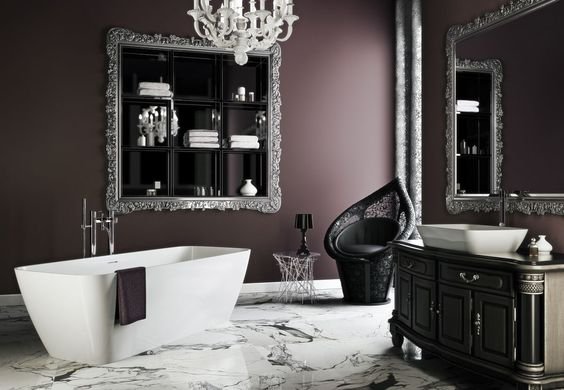
Bathrooms have one advantage in this style: they’re small enough that a single dramatic element carries a lot of weight. A clawfoot tub in a dark color (navy, matte black, or charcoal) positioned against a dark-tiled wall is one of the most direct modern gothic statements you can make in a residential space without structural changes. Unlacquered brass or dark bronze fixtures are the right hardware choice. Chrome looks too contemporary and too cool in color temperature for this style.
The walls are your biggest lever in a bathroom. Floor-to-ceiling tile in a dark hexagonal or arabesque pattern is more architectural than paint and holds up better over time. If budget is a constraint, focusing the tile treatment on one featured wall behind the tub and keeping the rest simpler is a valid approach. A large arched mirror over the vanity adds the gothic architectural reference without requiring any structural changes. That single element, in the right size, can define the whole room.
What Most People Get Wrong About Gothic Furniture
Contrary to what most gothic interior design guides suggest, you don’t need ornate, heavily carved furniture to achieve the style. Gothic Revival carved pieces are expensive, difficult to find in good condition, and tend to look costume-y in contemporary homes. What you actually need is furniture with the right weight and material quality: substantial proportions, dark finishes, and upholstery that signals seriousness.
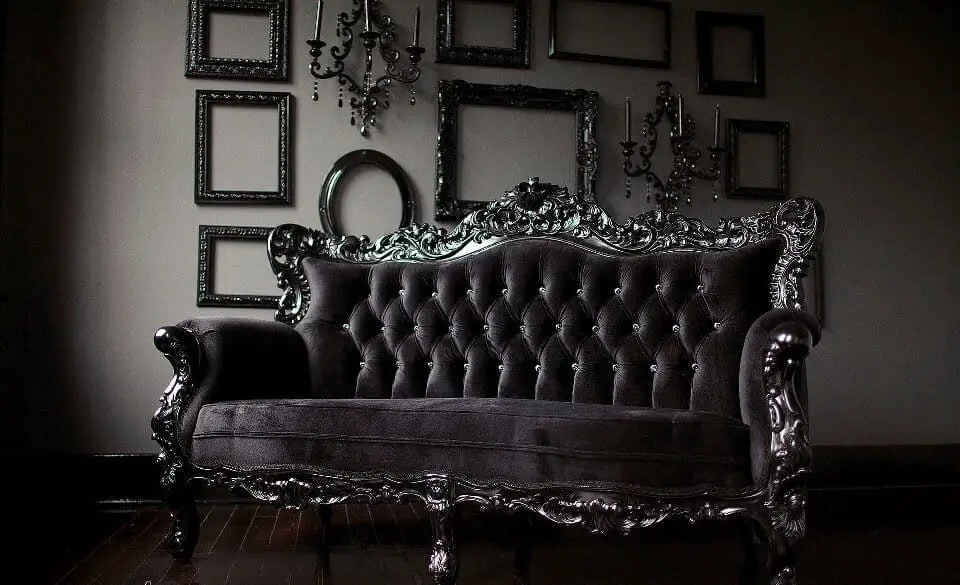
A well-proportioned Chesterfield sofa in dark leather accomplishes more in a modern gothic interior than an overwrought carved wood piece from an antique store. A simple dining table in near-black with clean joinery and paired with velvet chairs works better than a table with claw feet and ornate aprons. The key principle: gothic drama comes from composition and material, not from individual objects being “gothic enough.” If you’re drawn to similarly ornate historical styles, baroque interior design follows comparable logic about when ornamentation adds to a space and when it overwhelms it.
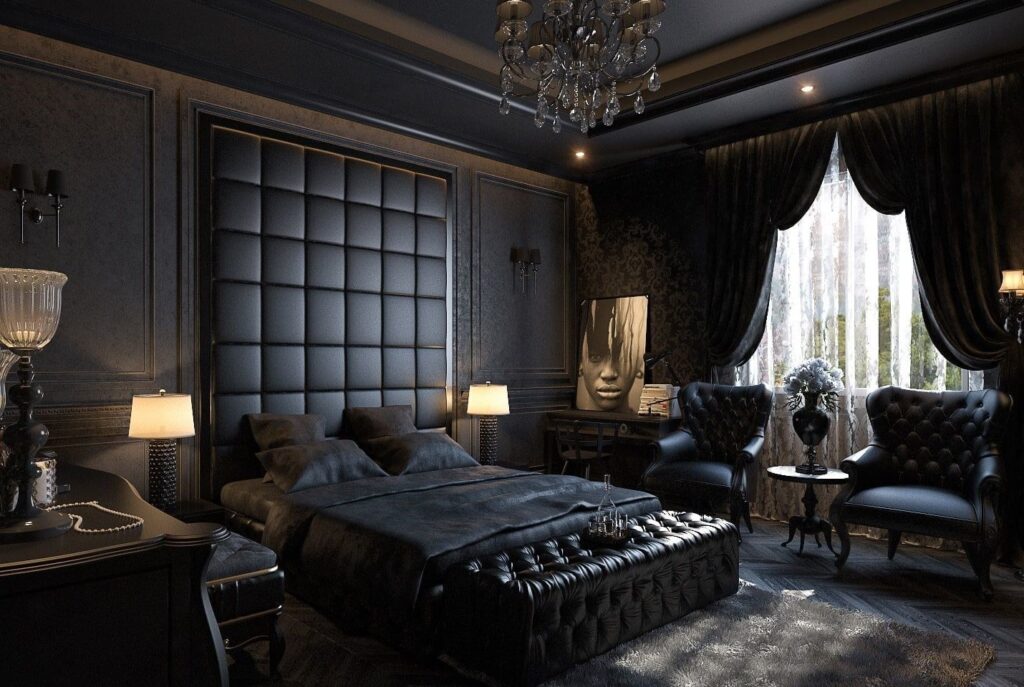
A useful test: if the piece would look fine in a standard contemporary room, it probably doesn’t have enough visual weight for this style. If it would look appropriate in a university library or a law office with dark paneling, you’re close to the right territory. The material quality has to be there regardless of the form; cheap velvet over pressed wood will undercut any amount of correct architectural detail you’ve put into the room.
Frequently Asked Questions
How do I start a modern gothic interior design without going overboard?
Start with the architecture before the accessories. Paint one room in a deep, saturated color with lighter architectural trim, add one significant lighting fixture, and live with it for a few weeks. Most rooms only need two or three deliberate gothic elements to register correctly. The overboard problem usually comes from adding too many accessories without addressing the architectural bones first.
What colors work best for modern gothic interior design?
Deep charcoal, navy, forest green, and burgundy are the most reliable anchors. The more important decision is the contrast point: warm white or cream trim against a dark wall does more for the gothic effect than the exact dark color you choose. Avoid cool grays paired with black; the combination feels contemporary rather than atmospheric.
What materials define modern gothic interior design?
Velvet, wool, and leather for upholstery. Dark-stained or painted wood with visible grain for furniture and architectural elements. Wrought iron or unlacquered brass for hardware and lighting. Stone or dark ceramic tile for surfaces where practical. Avoid synthetic versions of these materials; the tactile quality of the real thing matters more in this style than in most others.