Dorm Room Ideas: Shared Walls and Tiny Footprints

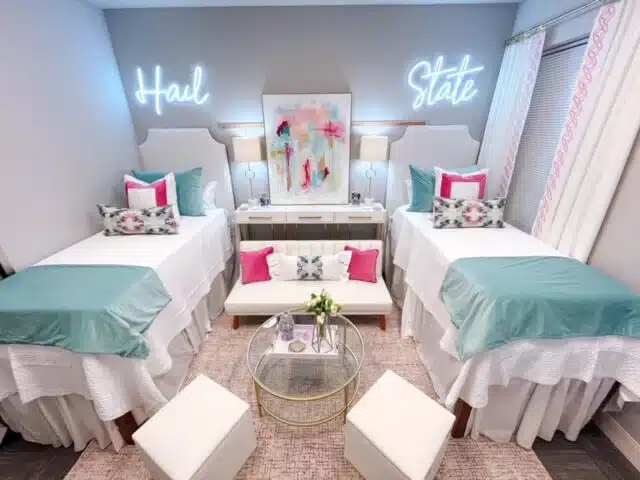
Dorm rooms are, by any honest measure, one of the harder design problems in residential spaces. The square footage is fixed, the furniture is often non-negotiable, and the constraints stack up fast: you can’t paint the walls, you can’t damage the floors, and in many cases you’re sharing the room with someone who has an entirely different idea of what a functional space looks like. I’ve worked with a handful of incoming students on their setups over the years, and the approach that consistently works is the same one I use in compact professional projects: design around what the room actually needs to do, not around what looks good in photos.
The key principle here is that a dorm room has to serve as a bedroom, a study, and a social space within a few hundred square feet. That means every piece of furniture and every decor item has to earn its place. Bedding that works as daytime seating. Storage that stays out of the traffic path. Lighting calibrated for two distinct uses: focused task light for studying and ambient light for winding down. Getting these foundations right makes the aesthetic decisions considerably easier.
Key Takeaways
- Design for function first: identify the room’s primary uses (sleep, study, social) before buying anything
- Prioritize vertical storage and multi-use furniture over decorative pieces that serve only one purpose
- Coordinate with your roommate on the layout basics early, then keep personal zones clearly defined
Fundamental Dorm Design Principles
Functionality and Comfort
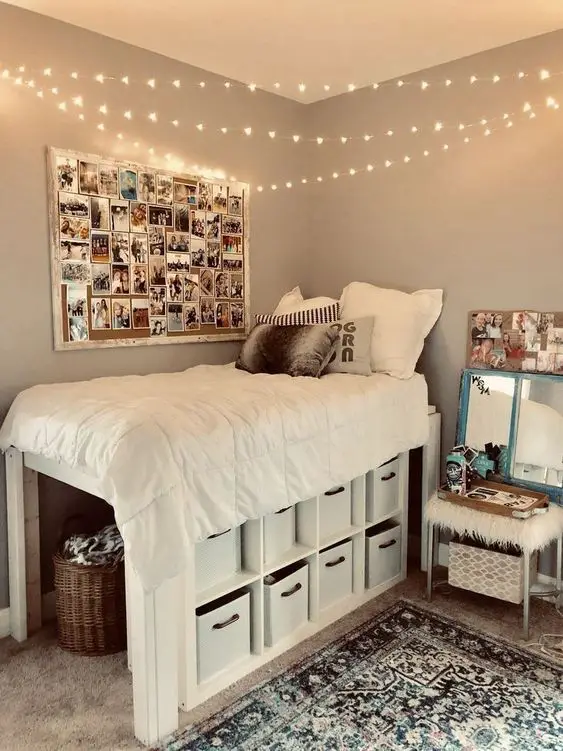
The starting point for any functional dorm room is an honest inventory of how you’ll actually use the space. Think in time blocks: how many hours a day do you spend at the desk versus in bed versus moving around the room? Most students I’ve spoken with underestimate desk time and overestimate how much living-room space they need. In practice, the most important functional requirements are a bed properly sized for sleep, a desk with enough surface area to spread out work, and a clear path to the door that doesn’t require rearranging furniture every time you leave. Start there, then layer in comfort elements once the layout logic is settled.
Personalization
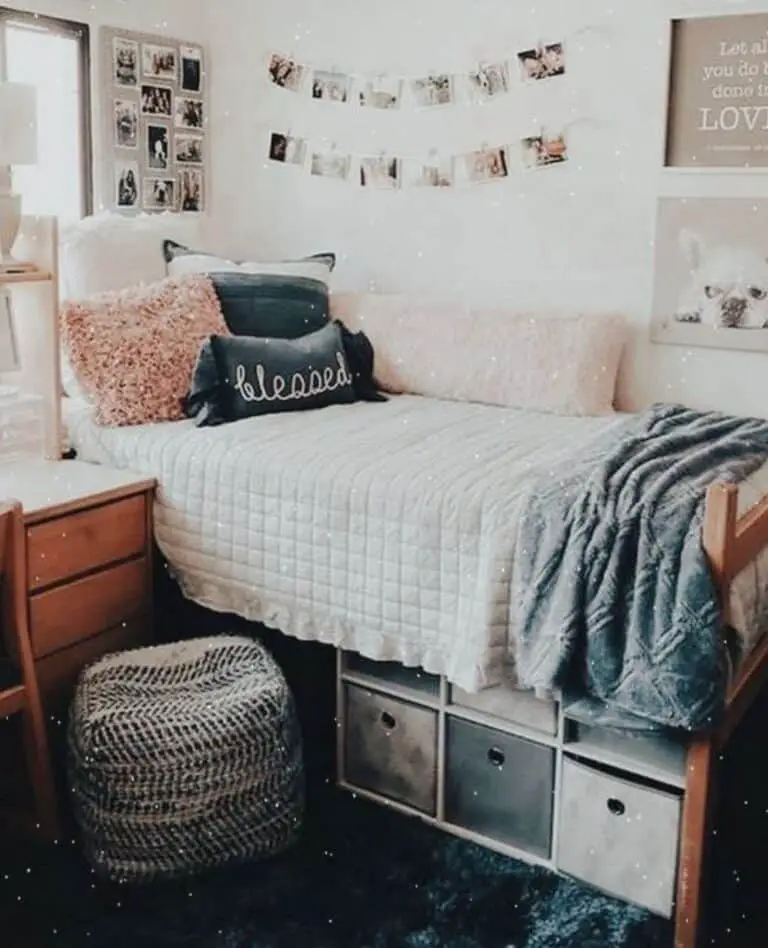
Personalization in a small space requires restraint. Not because you shouldn’t express yourself, but because every item you add takes up visual and physical space that you can’t get back. The most effective approach is to choose a few things that hold real meaning and build the rest of the room in neutral tones around those pieces. A photograph from a specific trip, a plant you’ve kept alive since high school, a print from an artist you actually follow: these do more to make a room feel lived-in than twenty generic purchases ever will. I’d rather see three considered items on a shelf than twelve random ones competing for attention.
Aesthetics and Style
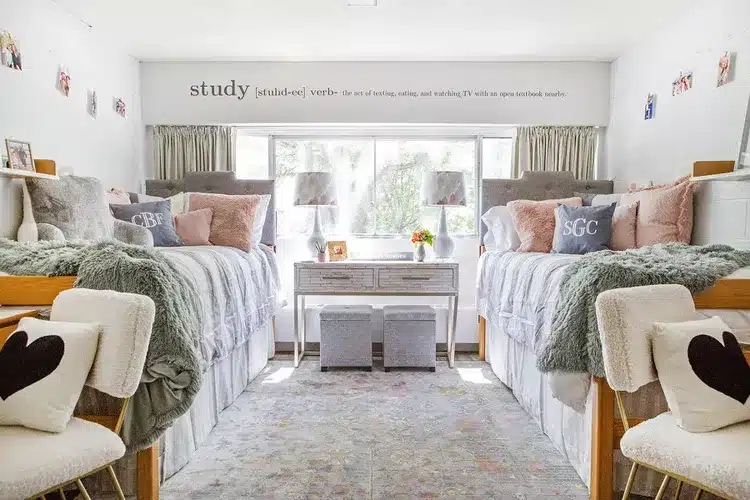
Aesthetic consistency in a dorm is harder than it sounds because most students work with a mix of hand-me-down furniture, university-issue pieces, and whatever fit in a car. The approach that works is to use a single limiting element rather than fight the mix. Pick one color and commit to it as your dominant accent, then let everything else stay neutral. A deep blue throw, a blue lamp shade, a blue desk organizer: that level of repetition creates the visual impression of a deliberate interior even when the underlying furniture situation is less than ideal. Avoid mixing more than two accent colors in a room this size, and choose removable wallpaper over permanent changes to add pattern without risking your security deposit.
Maximizing Space and Storage
Bedding Storage Solutions
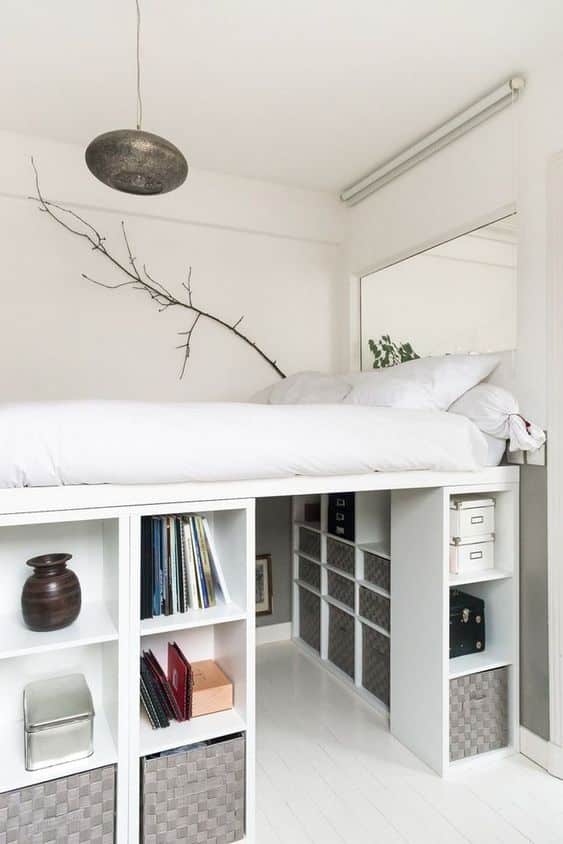
Under-bed storage is the most underused square footage in a dorm room, and almost every student I’ve encountered leaves it either empty or filled with random bags that could easily be consolidated. The more deliberate approach is to measure the clearance under your specific bed before moving in, then buy storage containers that fit that exact height. Flat rolling drawers work better than lidded boxes in most situations because you can access them without pulling everything out first. I’ve seen students gain the equivalent of a full dresser’s worth of organized storage just by switching from cardboard boxes to proper rolling containers with labeled sections.
If your bed doesn’t have much clearance, risers are the obvious fix. Most risers add four to six inches, which is enough for a standard storage drawer. There’s a secondary benefit worth noting: raising the bed also changes the visual weight of the room. A higher bed makes the ceiling feel slightly lower, which can help a tall, echoey dorm room feel less institutional. Worth considering even if you have enough storage elsewhere.
Wall-Mounted Storage
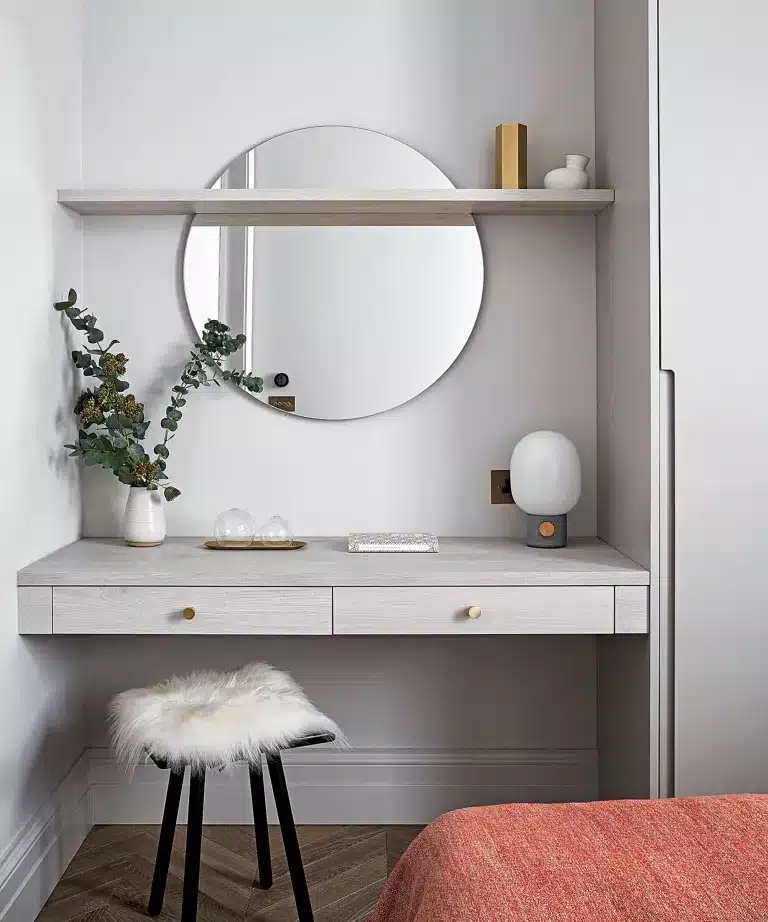
Wall-mounted storage works in dorm rooms precisely because it removes items from the floor plane, which is usually the first surface to become cluttered. Floating shelves above a desk handle books, small plants, and speakers without occupying any floor space. The critical installation note for rented spaces: use Command strips rated for the shelf weight rather than drywall anchors. Most dorm walls respond well to heavy-duty Command products when used per the instructions. I’ve seen students lose security deposits for avoidable wall damage that the right adhesive hardware would have prevented entirely.
Take advantage of the full height of your walls rather than stopping at eye level. Upper shelves that require a small step stool to reach are genuinely useful for items you don’t access daily: extra textbooks, seasonal clothing, backup supplies. Over-the-door organizers extend the same logic to closet and bathroom doors, handling shoes, accessories, and small items without touching wall or floor space.
Multi-purpose Furniture

Multi-purpose furniture in a dorm is less about buying specialty convertible products and more about choosing standard pieces that serve more than one function. An ottoman with a removable lid is the textbook example: it works as seating for a guest, a footrest, and a storage container for seasonal items. A sturdy storage cube can function as a side table, extra seating, or a nightstand. These decisions are worth making before you move in, because once you’re in the room it’s harder to see the spatial logic clearly. The same approach that works here applies to any compact living situation; the principles behind condo interior design in rooms under 400 square feet overlap significantly with what works in a well-planned dorm.
Another strong option is a foldable or convertible desk that can be stowed when not in use, freeing up meaningful floor space during off-study hours. Similarly, a desk with built-in drawers or shelves keeps the work surface clear while eliminating the need for a separate storage unit. The goal in furniture selection at this scale is always the same: fewer pieces that do more, rather than more pieces that each do one thing.
Designing Your Sleep Oasis
Comforters and Pillows
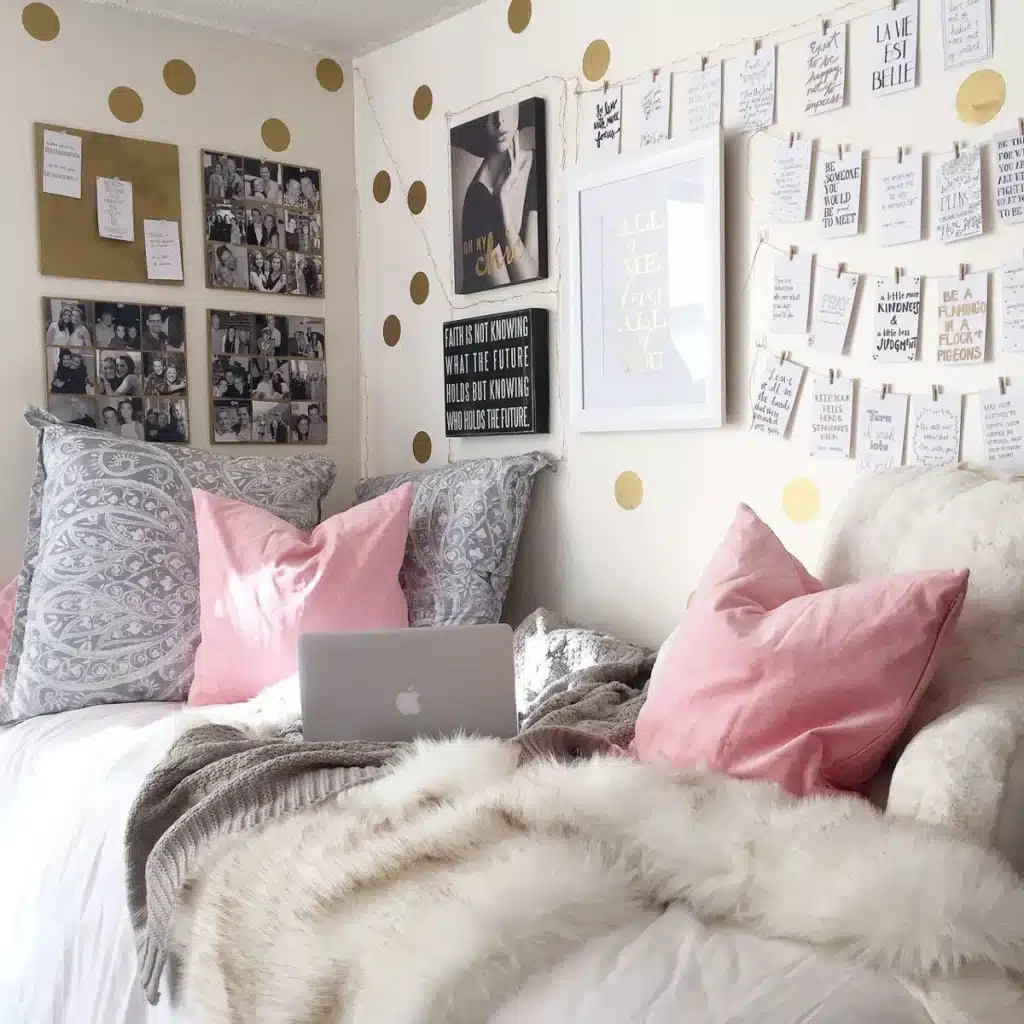
The bed is the dominant element in any dorm room, which means your bedding makes or breaks the overall aesthetic. From a practical standpoint, comforter weight matters more than most students expect. Dorm buildings in the US have notoriously inconsistent HVAC systems: some run hot all winter, others stay cold regardless of the thermostat setting. I’d lean toward a medium-weight comforter with a washable duvet cover rather than an all-season piece that might be too warm or too cold half the time.
- Lightweight comforters: The right call for students in southern schools or buildings with aggressive heating. Look for 200-thread-count cotton shells for better breathability throughout the night.
- Medium-weight comforters: The default recommendation for most campus environments. Flexible across a range of temperatures and easy to supplement with a throw blanket when needed.
- Heavyweight comforters: Best for students in genuinely cold climates or older buildings with limited heating output. Down fill at 600-fill power or higher provides warmth without adding excessive bulk.
The pillow question depends on how you sleep. Stomach sleepers need less loft than side sleepers; back sleepers fall somewhere in the middle. My recommendation is to bring one sleep pillow you already know works for your position, and add two decorative pillows that stack at the head of the bed during the day without complicating the nightly routine.
- Memory foam pillows: Higher-loft options work well for side sleepers. They hold their shape through the night without gradually flattening the way softer fills do.
- Down pillows: Softer, lower-loft fill with good breathability. A better match for stomach sleepers who need less elevation under the head.
- Latex pillows: Responsive and durable across a range of sleep positions. Worth considering if you switch positions through the night and need consistent support.
Custom Headboards
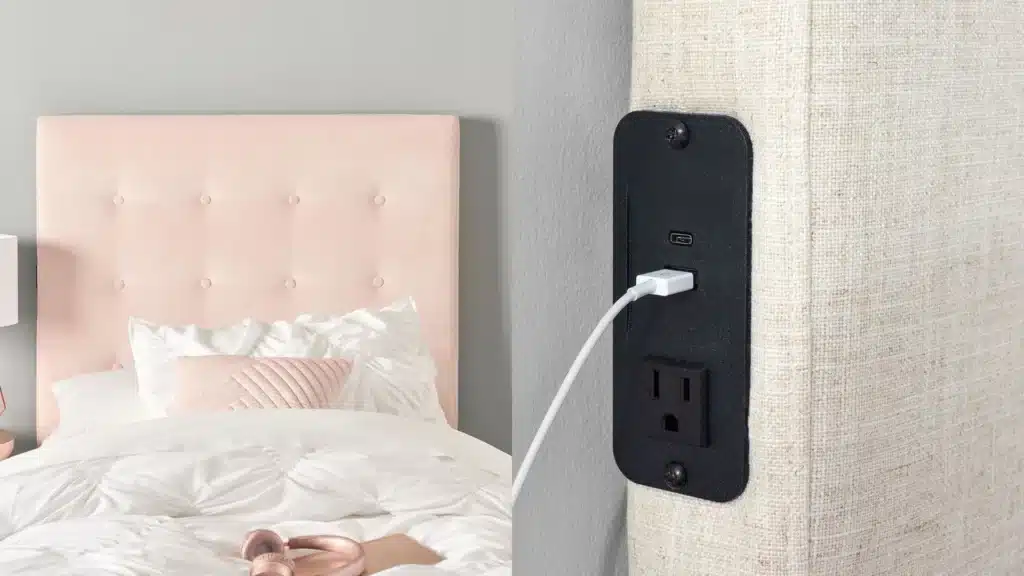
A headboard gives the bed a defined visual anchor in the room. Without one, the bed looks an object floating in space, which makes everything else harder to organize around visually. In a dorm, that means something you can install without permanent hardware. A fabric-wrapped piece of foam board fixed to the wall with heavy-duty Command strips is the version I’ve seen work most reliably: cut it to bed width, cover it with canvas or a fabric that complements your color scheme, and you have a headboard that looks intentional and comes down cleanly at the end of the year without wall damage.
Some popular headboard styles include:
- Upholstered headboards: The most versatile option for dorm use. Fabric absorbs sound slightly, softens the wall visually, and provides a comfortable surface for reading against.
- Wooden headboards: Work well in rooms with warmer, natural palettes. A flat piece of stained plywood attached to the wall looks intentional without appearing makeshift, especially in rooms with wood-tone furniture.
- Shelving or storage headboards: The best option when nightstand space is limited. A shallow shelf at bed height holds a lamp, a glass of water, and a book without requiring any additional floor footprint.
Bedskirts and Accessories
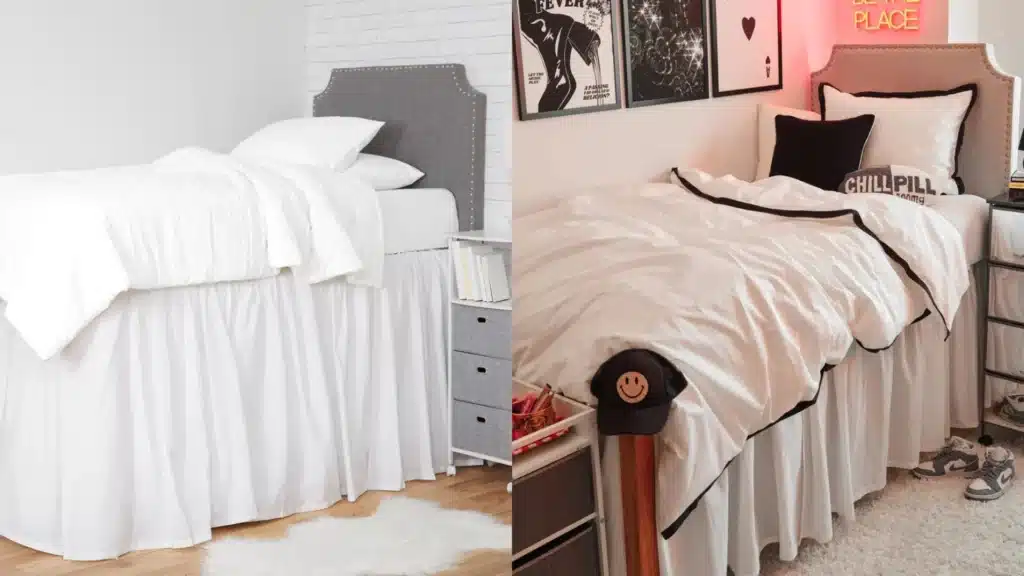
A bed skirt does something specific in a small room: it closes off the visual space under the bed, which keeps the storage there from reading as clutter even when it’s well organized. The practical effect is that the room looks neater at a glance because you’re not seeing bins and boxes every time you walk in. Choose a color that matches or closely coordinates with the comforter. A contrasting skirt pulls the eye down toward the floor, which is almost never what you want in a space where the goal is to make the room feel larger.
Consider coordinating accessories like:
- Throw blankets: Draped across the foot of the bed during the day, a textured throw adds warmth and dimension without looking purely decorative. Chunky knit or wool reads better at a distance than fleece and holds its position more easily.
- Accent pillows: Two is enough in a dorm room. More than two and you’re spending significant time moving pillows on and off the bed every evening, which becomes a friction point that most students quickly abandon.
- Bedside lighting: A clip-on or small desk lamp positioned at pillow height does more to make the sleep area feel distinct from the study area than almost any other single intervention in a small room.
Getting the sleep area right means that part of the room functions clearly as a bedroom, which makes everything else easier to organize around. That spatial clarity matters when the same room is also functioning as a study and a sitting space simultaneously.
Creating a Study Space
Choose the Right Desk Chair
The desk chair is the single piece of furniture in a dorm room that has a direct effect on academic performance, and it’s the one most students treat as an afterthought. A chair that doesn’t support a neutral spine position creates low-grade discomfort that compounds over a two-hour study session into something that genuinely limits focus and endurance. The core requirements are adjustable seat height, some form of lumbar support, and enough seat depth to sit without the front edge cutting into the back of your legs.
Before bringing a chair into a dorm, measure the desk height. Most dorm desks sit between 28 and 30 inches. Your chair should place your elbows at desk level when you’re seated with feet flat on the floor. If floor space is genuinely limited, a saddle stool or a kneeling chair takes less area than a conventional chair and tends to improve posture naturally, though neither is ideal for sessions longer than two hours.
Organize Your Study Area
The principle behind a functional study area is reduction: less on the desk surface, not more. Everything on the surface should have a reason to be there. Laptop, one set of writing tools, a notebook, a lamp. Everything else belongs in drawers, on shelves, or in a bag. Students who struggle to focus in their dorm often have desks that look like filing systems: stacks of papers in multiple categories, several notebooks for different classes, cables and chargers draped across everything. That visual complexity has a measurable effect on how easily attention drifts to something other than the task at hand.
Vertical space near the desk is worth using deliberately. A pegboard mounted above the work surface, a few floating shelves, or even a simple cup for pens keeps the desk clear while still keeping things accessible. For anyone thinking through a study setup from first principles, the approach used in small office interior design on a tight budget translates directly to dorm study zones, even though the context differs.
Lighting in a study area deserves more attention than it usually gets. Overhead fluorescent lights common in most dorms are bright enough to see by, but they create flat, shadowless illumination that’s harder on the eyes over long reading sessions. A desk lamp with a focused beam positioned to your non-dominant side eliminates shadow on the page and reduces squinting. Color temperature matters too: somewhere between 3000K and 4000K (warm to neutral white) supports sustained reading better than cool blue-white light above 5000K.
A clean, well-lit study space is not a luxury item. It’s a direct input into how well you perform academically. Treating it as a serious design priority from the first week of the semester means you won’t spend the whole year studying in the library because your room doesn’t support focused work.
Incorporating Wall Decor
Artwork and Framed Prints
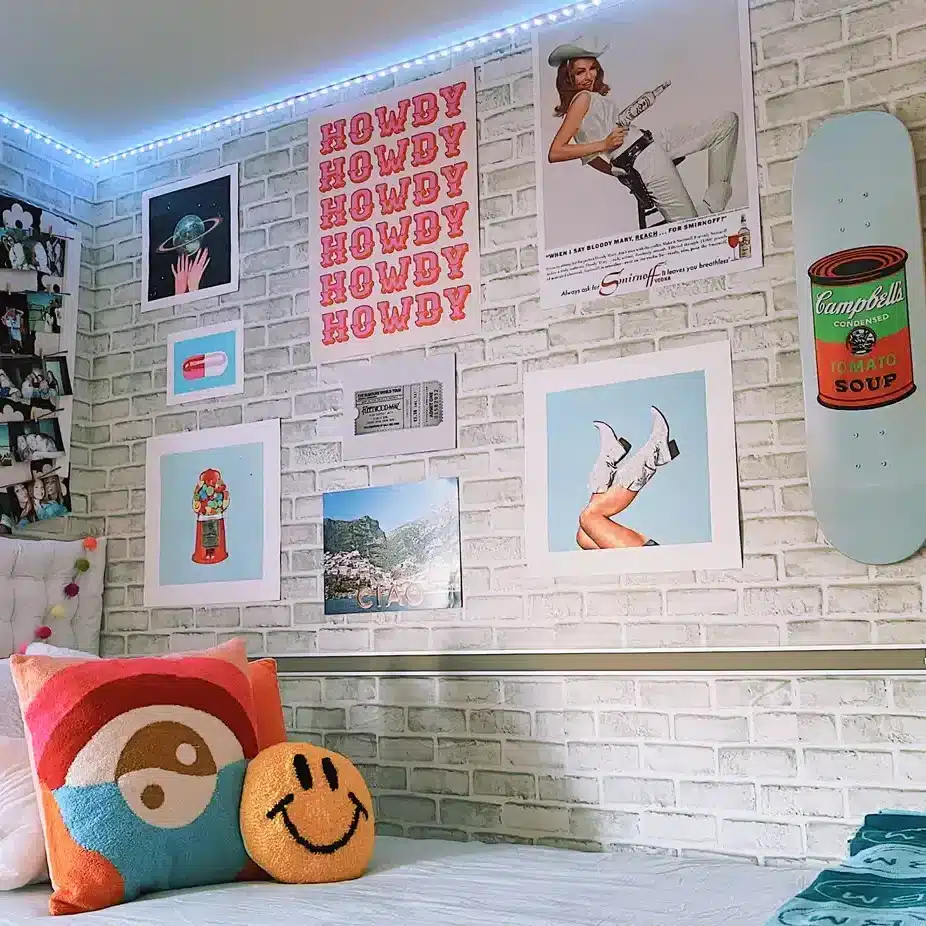
Wall decor in a dorm room is where most students either over-invest or ignore it entirely. The practical middle ground is three to five framed pieces arranged with clear intention, rather than a dozen items pinned randomly across every available surface. Framed prints read as more considered than posters even when the images are identical. Simple black or natural wood frames work across more color schemes than ornate or colored frames, and they hold up better visually when the room’s other elements are mixed in style.
Coordination with the rest of the room matters here: wall decor is most effective when it shares at least one color with your bedding or accent palette. It doesn’t need to be an exact match, but a print with warm burgundy tones and a burgundy throw on the bed creates visual coherence that’s immediately noticeable. Mixing prints, photographs, and a small mirror in one gallery cluster is a reliable approach that reads well even in small rooms, and it allows for easy updates at the end of each semester.
Removable Wallpaper and Decals
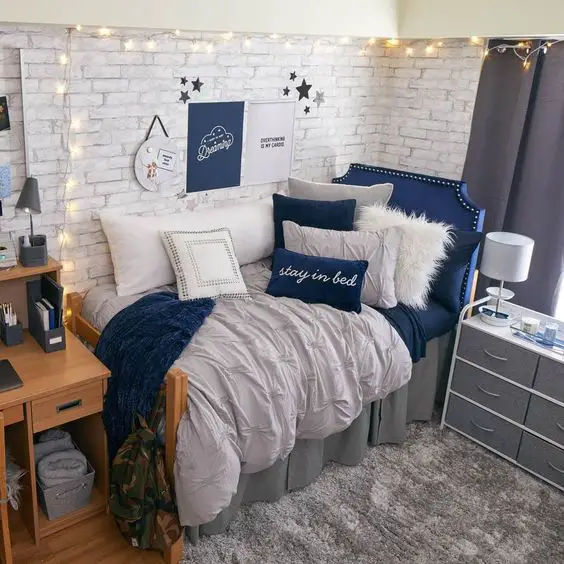
Removable wallpaper has improved substantially over the past few years, and it’s now a realistic option for dorm walls. The key is reading the surface requirements carefully: most products need a smooth, matte-painted wall to adhere and release cleanly. Textured cinder block or rough plaster, which appears in many older dorms, tends to cause adhesion problems and can pull paint on removal. Test a small section in a hidden corner before committing to a full accent wall, and keep the receipt.
Decals are more forgiving in terms of surface requirements and let you build up a composition incrementally rather than committing to a single large pattern all at once. The most effective use of decals I’ve seen in dorm rooms is a large-scale botanical or geometric on a single wall behind the bed, paired with nothing on the other walls. That restraint makes the treated wall read as a deliberate design decision rather than a collection of things pinned up over time.
The core advantage of both removable wallpaper and decals is reversibility. You can update them between semesters as your preferences shift, which matters when you’re living in a space you’ll occupy for one or two years before having more permanent options. Invest in quality products here: cheap removable wallpaper tears during application or leaves adhesive residue on removal, and the security deposit consequences are worse than simply leaving the wall blank.
Dorm Room Essentials
Organization Essentials
Organization systems are where the practical decisions happen in a dorm room. The goal is to reduce the number of daily decisions you make about where things go, because those micro-decisions accumulate into real overhead over a semester. Investing in a few specific items makes the difference between a room that functions and one that stays perpetually half-organized.
- Bed risers: Standard risers add four to six inches of clearance. Measure before buying: not all risers fit all bed frames, and some dorm bed frames have unusual leg configurations that standard risers don’t accommodate.
- Storage bins: Flat rolling drawers work better than lidded boxes for under-bed storage because you can access them without pulling everything out first. One bin per category (seasonal clothes, extra linens, off-season shoes) keeps things findable.
- Shelving units: Adjustable shelves give you the option to reconfigure as your needs shift mid-semester. Fixed-height shelving is worth avoiding in a space this size.
- Over-the-door organizers: A full-height pocket organizer on the back of a door is among the most efficient storage solutions available in a dorm. It handles shoes, accessories, snacks, and small electronics without touching floor or wall space.
Must-Have Electronics
Electronics in a dorm room require the same planning as furniture: think about where each device lives, what it needs around it, and how it interacts with the study and sleep functions of the room. The most common mistake is treating electronics as additions rather than as elements of the room’s functional layout.
- Mini fridge: Position it under the desk or in a corner where it doesn’t block a traffic path. A fridge placed in the middle of the room quickly becomes a surface for random items and a consistent source of clutter.
- Laptop or tablet: Worth keeping at a fixed location on the desk during study hours. Moving it to the bed for non-study use and back to the desk for work creates a physical habit that reinforces the functional distinction between the two zones.
- Power strip with surge protector: Cable management matters in a small room. A strip with individual on/off switches lets you cut power to devices you’re not using without unplugging everything individually, and it keeps the outlet situation from becoming chaotic.
- Bluetooth speaker: A compact speaker on a shelf or desk contributes to the room’s ambient quality without significant space investment. Position it to face into the room rather than directly at a wall for better sound distribution.
The electronics setup is worth planning before you arrive. Knowing where each device will live, what power access it requires, and how cables will route across the room means you’re not spending the first week in a half-unpacked space with extension cords running across the floor.
Coordinating with Roommates
Coordinating with a roommate on a shared dorm room is a design problem with a social dimension, and the social part is usually harder than the spatial part. The practical approach is to have a direct conversation before either person orders anything, covering three basics: which areas are shared and which are personal, whether you’re aligning on a color scheme, and what each person’s minimum requirements are for the space to function for them. Those conversations are much easier to have in August than in October.
Matching Design Styles
The most productive starting point is not “what style do you like” but “what does this room need to do for each of us.” Most roommate conflicts about decor come from unspoken functional disagreements: one person needs silence to study, the other has a different schedule. One person wants the desk near the window for natural light; the other prefers that corner for a different reason. Resolving the functional layout first usually resolves most of the aesthetic conflicts automatically, because each person ends up with their space configured for how they actually use it.
Where aesthetic coordination is actually necessary, focus on the shared visual elements: bedding colors that don’t clash (they don’t need to match, just coexist), a consistent approach to room lighting, and an agreement about the shared wall space. Beyond that, each person’s zone can operate independently. The room looks coherent when the basics align, even if one side of the room leans warmer and the other leans cooler.
Creating a Cohesive Color Palette
A shared dorm color palette works best when it starts with a neutral both roommates are comfortable with. Warm white or light gray as a base level means neither person’s accent colors will clash badly with the foundation. From there, each person can bring one or two personal accent colors into their own zone, and the room will still feel cohesive because the foundation is shared. The visual logic is the same as in any larger interior: harmony in interior design comes from shared elements with controlled variation, not from everything matching exactly.
The error to avoid is competing patterns at the same scale. Two large-scale patterned comforters in different colors will make a small room feel chaotic regardless of how well the colors work individually. If one roommate has a patterned comforter, the other should use a solid, and vice versa. This is worth agreeing on before anyone buys bedding, not after both sets are already in the mail.
Infusing Personality and Elegance
Unique Decorative Accents
The word “elegance” in a dorm context usually means something quieter than it sounds: a sense that the room has been put together with intention rather than assembled from whatever was available. Unique decorative accents contribute to that impression specifically because they’re harder to replicate. A ceramic bowl from a local market, a print from an independent illustrator, a small sculpture from a thrift store: these signal selectivity in a way that identical mass-produced decor items don’t. For example, you can incorporate:
- Artwork you could actually say something specific about when someone asks where it’s from
- A single patterned textile (rug, throw, or pillow cover) placed against a solid-color background so it reads clearly
- Lighting with a distinct form, such as a rattan pendant or an articulating desk lamp in metal rather than plastic
The test I’d apply is straightforward: if you couldn’t say anything specific about an item beyond “I thought it looked nice,” it’s probably not doing much for the room. Every object in a space this constrained should be there for a reason you can articulate.
Incorporating Plants and Greenery
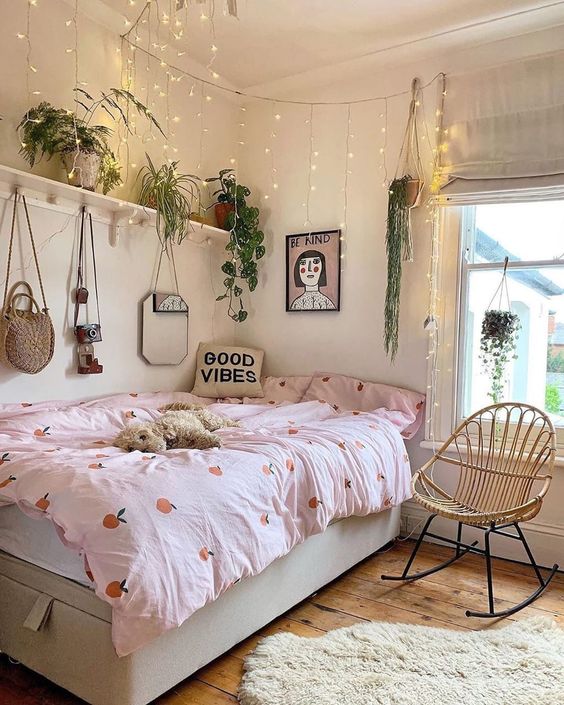
Plants in a dorm room serve a function beyond the visual: they introduce a living element into a space that otherwise has none, and there’s evidence that proximity to plants reduces perceived stress in constrained environments. From a design standpoint, a single plant at a meaningful height, on a shelf or in a hanging planter at eye level, does more for the room than three small plants clustered on a desk. Size and placement matter more than quantity here. Consider the following options:
- Low-maintenance plants like ZZ plants, snake plants, or pothos work well in lower-light conditions and survive irregular watering schedules, which matters during finals week
- A small herb garden on the windowsill is functional in addition to being decorative, and works in rooms with reasonable south-facing natural light
- Hanging plants in macrame holders at window height add vertical interest in rooms where the primary problem is horizontal density on every surface
When selecting plants, match the species to the light conditions in the specific room before you move in. A pothos handles lower light; succulents need direct sun for several hours a day. Buying a plant that requires more light than the room provides means spending the semester watching something slowly decline, which is not the decorative effect you were going for. Check the window orientation before making a selection.
Budget-Friendly Dorm Decor Tips
DIY Decorating Ideas
One genuinely effective way to save money while adding a personal touch is through DIY projects, though the specifics matter. The highest-return DIY in a dorm room is almost always the headboard: a fabric-wrapped piece of foam board costs under $30 in materials and takes an afternoon to make. After that, a painted pegboard or floating shelves with spray-painted brackets gives you the appearance of custom storage at hardware-store prices. What I’d skip: any DIY that requires significant carpentry, power tools, or construction, since the time investment rarely pays off in a space you’ll occupy for one or two years.
Furniture rearrangement is the zero-cost option most students overlook. Most dorm rooms arrive with furniture pushed against walls in a default configuration that prioritizes traffic flow rather than function. Trying the desk near the window for natural light, or rotating the bed to run lengthwise along a different wall, can change how the room feels more than any purchase. I’d spend an hour experimenting with layout possibilities before spending anything at all.
Shop Smart
When shopping for dorm decor, compare prices and look for sales specifically in late July through August, when retailers run significant back-to-school promotions on bedding, storage, and small furniture. University towns often have second-hand stores with dorm-scale pieces at a fraction of retail. A ceramic lamp, a decent area rug, or a set of shelving brackets from a thrift store is functionally identical to a new version and considerably different in price.
To make the most of your budget, prioritize functional and versatile pieces, specifically items you’ll want beyond the dorm years. A quality rug, a well-made desk lamp, and a solid storage ottoman are things you’ll use in every apartment after college. Generic dorm-specific items like branded storage cubes or theme-coordinated desk sets are harder to integrate into a later living situation and worth skipping in favor of pieces with longer utility and more neutral design.
A well-designed dorm room doesn’t require a large budget. It requires clear priorities. Knowing which three or four elements have the biggest impact on how the room functions and looks, and directing most of your budget toward those, produces a better result than spreading the same money across twenty smaller items that each do something minor.
Frequently Asked Questions
What are the must-haves for a dorm room?
Task lighting, a power strip with surge protection, under-bed storage containers, and quality bedding. Those four address the primary functional requirements: study, power access, storage, and sleep. Everything else is secondary.
How can I make my dorm room feel more personal?
Three to five items with real personal meaning will do more than a dozen generic decor pieces. Bring one or two things you could tell a story about, build the rest of the room in neutral tones around them, and resist the pull to fill every surface.
What are some creative dorm decor ideas?
Removable wallpaper on a single accent wall behind the bed, a DIY fabric-wrapped headboard, a pegboard mounted above the desk for organization, and one significant plant at eye level. These are high-impact changes that all come off cleanly at the end of the year.
If you liked this post about dorm room interior design, don’t forget to follow us on Pinterest so you don’t miss any more interior design news!