Modern Mexican Interior Design: Color, Tile, and Courtyard Thinking

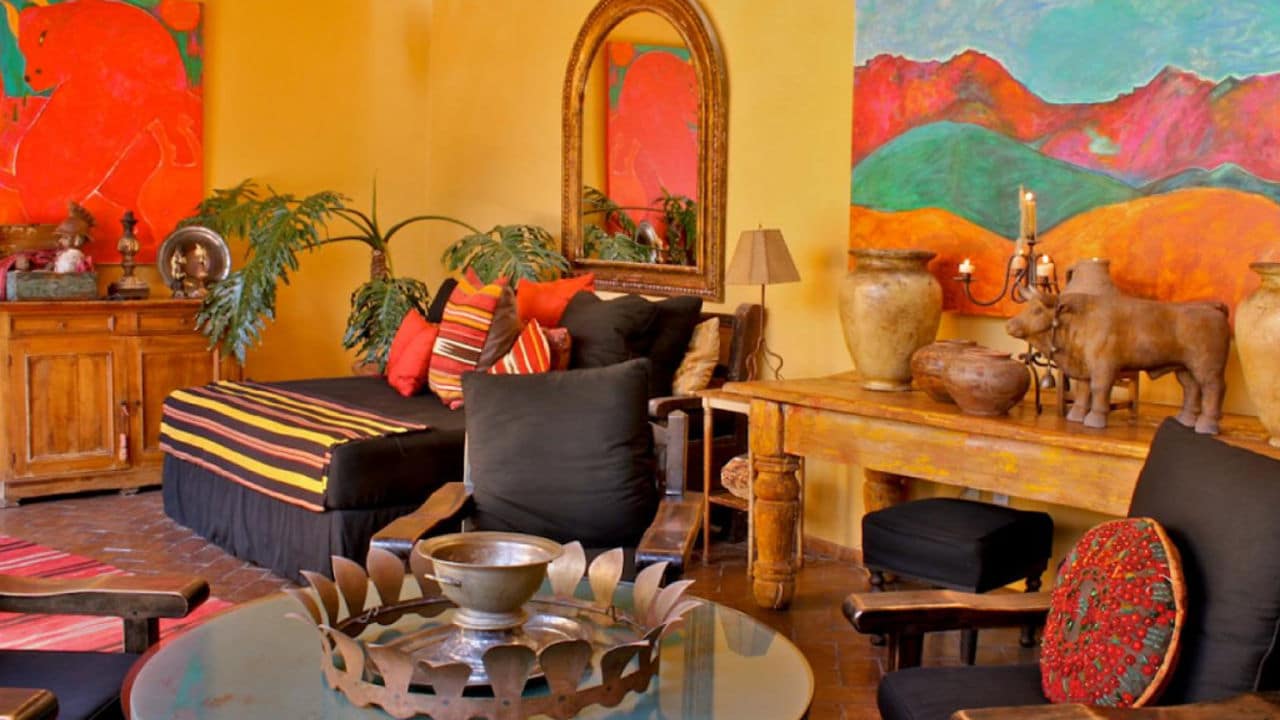
I got obsessed with modern Mexican interior design after coming across a photo of a restaurant in Oaxaca on my phone at midnight. Terracotta walls, a woven bench cushion in deep red and cream, a single clay pot with marigolds on a rough wooden shelf. I stared at it for five minutes before saving it. Three days later I was rearranging my living room.
The thing about this style is that it looks effortless in photos and slightly chaotic in practice, because most guides tell you to add more color, more pattern, more art, and then wonder why the room feels like a souvenir shop. In practice, the rooms that work are the ones that know when to stop. Here’s what I’ve figured out through a lot of trial and error in a typical apartment.
Bold Color: The Foundation of Modern Mexican Interior Design
Hot Pink, Turquoise, and Terracotta: How to Layer Without Overwhelm
The colors most closely associated with modern Mexican interior design, including hot magenta, turquoise, deep terracotta, and lime green, come from a real place. Adobe walls. Tropical flowers. Handmade glazed pottery. They’re not random choices thrown together. They have a logic rooted in the natural and architectural landscape of Mexico, and that logic is what keeps them from clashing when you use them well.
in a typical apartment, I started with a single terracotta accent wall in the living room. One decision, and the whole room shifted. The warm reddish-orange pulled the neutral furniture forward: my linen couch looked intentional, the wooden coffee table suddenly made sense in the context of the room. If you’re intimidated by color, start here. Pick one wall, one warm tone. See how the room responds before you go further.
The trap most people fall into is treating Mexican color like a free-for-all. Hot pink here, turquoise there, lime green somewhere else. What actually works is anchoring with one warm tone (terracotta, deep ochre, or warm sand), bringing in one cooler accent (turquoise or cobalt blue), and saving the bright pinks and greens for small pops. A throw pillow. A glazed ceramic bowl. A row of painted cups on a kitchen shelf. The hierarchy matters more than the specific colors you pick.
A few related Pinterest references in the same visual family as the section above.
Textiles and Patterns: Where Modern Mexican Style Actually Lives
Serape Runners and Otomi Prints: What to Look For
Textiles carry the most cultural weight in modern Mexican interior design, and they’re also where most people oversimplify. A serape-pattern throw from a big-box store doesn’t read as design. It reads as decoration. The distinction matters a lot when you’re trying to get this style right rather than just referencing it.
What I look for: weight, texture, and the quality of the weave. Mexican handwoven wool pieces, particularly from Oaxaca, have a thickness and warmth that synthetic reproductions don’t. They also have slight irregularities that make them feel handmade because they are. Etsy is genuinely useful here. Search “Oaxacan textile” or “Mexican wool runner” and you’ll find the real thing, usually in the $40-120 range for a runner. That’s a reasonable investment for a piece that belongs in the room every day.
Otomi embroidery, those colorful hand-stitched animal and floral patterns on white or cream fabric, has become popular enough that cheap imitations are everywhere now. The originals come from San Pablito in Puebla, and you can feel the difference in the stitching texture if you know what to look for. The budget version works fine on a decorative pillow. If you want it as a tablecloth or wall hanging, the real thing is worth finding. I have a small Otomi pillow cover that I picked up for about $35 at a market in San Marcos, and it’s the most-commented-on object in a typical apartment.
Talavera Tiles: How to Use Them Without Overdoing It
Talavera pottery, the distinctive hand-painted ceramic tiles and vessels central to Mexican folk art, works brilliantly when used with restraint and becomes overwhelming fast when you don’t. A kitchen backsplash in Talavera tile transforms a room. Four framed Talavera tiles on a white wall also transforms a room. The backsplash version just costs considerably more and requires a commitment most renters can’t make.
My approach: use Talavera as accent, not as the whole statement. A painted ceramic flower pot in a window. A Talavera bowl as a fruit centerpiece. A coaster set on the coffee table (I picked up a set at a market in San Antonio for under $20). These small pieces do real design work without requiring you to tile anything. If you do have kitchen flexibility, even a single row of Talavera tiles above the stove changes the whole register of the room.
A few related Pinterest references in the same visual family as the section above.
Furniture: Getting the Modern-Rustic Balance Right
Heavy Wood and Wrought Iron: Understanding Why They Work
The furniture most associated with modern Mexican interior design is heavy, natural, and built with permanence in mind. Dark mesquite or pine wood dining tables with rough edges. Wrought iron bed frames and candle holders. Leather chairs in warm caramel tones. These are not minimalist pieces. They have physical presence, and that presence is the point.
The design logic here is contrast. A heavy mesquite wood dining table reads beautifully against a smooth white plastered wall with a few hanging Talavera plates. The roughness of the natural material against the clean surface is doing real compositional work. You’re not trying to match the table to the wall. You’re setting them in deliberate tension, and that tension is where the room gets interesting.
What to avoid: going too rustic everywhere. If every piece is chunky, hand-carved, and ancient-looking, the room tips into museum territory. The “modern” in modern Mexican design needs to show up somewhere. Usually in the sofa (low profile, solid color, neutral fabric), the light fixtures (clean metal or cement), or the flooring. Contrasting contemporary pieces against traditional ones is how this style stays alive rather than feeling like a recreation.
Mixing Contemporary Furniture Without Losing the Aesthetic
A concrete floor with a handwoven Mexican rug on top. A clean-lined charcoal sofa with a serape runner draped over one arm. A white shelving unit holding an arranged collection of colorful pottery. These combinations work because the contemporary pieces give the traditional ones space to read clearly. The modern elements are the frame; the traditional elements are the painting.
The most common mistake is treating every surface as an opportunity. Modern Mexican interior design at its best is selective. It makes three or four strong choices and then trusts negative space to hold the rest. Contrary to what most mood boards suggest, a half-empty room with excellent choices often looks better than a fully decorated room with average ones. More is not always more here, and that’s something most people have to learn the hard way.
A few related Pinterest references in the same visual family as the section above.
Wall Art and Statement Pieces
Art That Adds Cultural Depth Without Becoming a Theme
Frida Kahlo prints are everywhere, and I understand why. They’re iconic, recognizable, and immediately signal the aesthetic. But if your wall art is all Frida, you’ve made a theme, not a design choice. The room becomes a reference to Mexican culture rather than something that lives in its own right. I made this mistake in my first apartment and it took me a while to figure out why the room felt like a poster shop.
What I find more interesting: contemporary Mexican artists working within or alongside the tradition. Amate bark paintings, still made by Nahua and Otomi artists in Puebla, have an extraordinary visual quality. The black silhouettes on natural bark paper are graphically strong and connect to a living tradition rather than a museum exhibit. Photography from Mexican street photographers also works well for large-format pieces. Black-and-white photography of Mexican architecture provides graphic punch without adding more color to an already saturated palette.
Floating shelves stacked with small folk art figures (alebrijes are the most recognizable), pottery, and a few framed photos read better than a full gallery wall of same-size prints. Editing is the real skill here: five to seven well-chosen objects look curated, fifteen objects look collected, thirty objects look cluttered. The line between them is thinner than most people think.
Flowers and Plants: The Fastest Way to Pull the Style Together
One thing that surprised me when I started paying attention to actual Mexican interiors rather than Pinterest versions of them: flowers are everywhere. Not as decoration, but as a daily habit. Big bunches of marigolds in clay pots. Bougainvillea spilling over a tiled ledge. Bird of paradise fronds in a tall ceramic vase. Greenery is not an afterthought in this aesthetic. It’s structural.
In a rental where you can’t paint walls or install tile, plants and fresh flowers are the fastest way to get that layered, alive quality that modern Mexican design has in its best versions. A $12 bunch of orange marigolds in a terracotta pot on your kitchen counter does something that no decorative object can replicate. For something more permanent, a large monstera or rubber tree in a dark clay or concrete planter works in almost any room. The scale matters: one large plant is a design statement, six small plants on a windowsill is just a collection.
A few related Pinterest references in the same visual family as the section above.
Room-by-Room: Where to Put Your Energy First
The Living Room: Where Mexican Style Makes Its Biggest Statement
The living room is where modern Mexican interior design lands with the most impact. A terracotta or deep ochre accent wall. A handwoven rug on concrete or wood floors. A wooden coffee table with two or three Talavera pieces on top. A plant in a clay pot in the corner. That’s genuinely enough to make the room feel like it has a point of view. You don’t need to add more from there.
If you rent and can’t paint, go with a large wall textile or woven hanging mounted floor-to-ceiling on the main wall. It creates the same anchoring effect as paint, costs less than a rug, and comes down when you move. Layer in cushions with Mexican patterns on your existing sofa, add a wooden side table if you don’t have one, and let the plants do the rest. This approach also works for anyone who wants to test the style before committing to bigger changes.
The Kitchen: The Natural Home for Talavera and Color
If there’s one room where Talavera tile makes sense at a larger scale, it’s the kitchen. A backsplash in hand-painted blue-and-white or multi-color Talavera is a defining choice. The kind that makes the room feel designed rather than decorated. If that level of commitment isn’t realistic, even a single row of Talavera tiles above the stove, or a painted ceramic canister set on the counter, carries the aesthetic forward. For a deeper look at applying this style room by room, styling a modern Mexican design kitchen covers it in much more detail.
Mexican style also shares a lot of DNA with modern hacienda interior design, which uses many of the same materials (terracotta, heavy wood, wrought iron) with a slightly more architectural emphasis. If you find yourself drawn to the structural side of this aesthetic, hacienda is the direction to explore next. For the broader principles connecting Mexican style to other Mediterranean traditions, Spanish interior design is worth a read as well.
Frequently Asked Questions
Can I do modern Mexican interior design on a limited budget?
Yes, and the budget actually works in your favor here. Terracotta pots, handwoven runners, and Talavera ceramic accessories are genuinely affordable. A coat of terracotta-colored paint on one wall and a few well-chosen textiles from Etsy or a local market can get you 80% of the look for under $200.
How do I use Talavera pottery without overdoing it?
Treat Talavera as an accent, not a theme. Two or three pieces in different functions (a bowl, a pot, a coaster set) spread through a room add real character. Using Talavera in every corner turns the room into a craft fair display rather than a designed space.
What furniture works best in modern Mexican interior design?
Heavy natural wood (mesquite, pine), wrought iron accents, and leather in warm caramel tones are the most authentic choices. The key is pairing at least one of these with a contemporary piece (a clean-lined sofa, modern light fixtures) so the room stays in the present tense rather than feeling like a period recreation.
How is modern Mexican interior design different from Spanish colonial style?
Modern Mexican design emphasizes folk art, vibrant color, and handmade materials in ways that Spanish colonial style doesn’t. Spanish colonial tends toward more formal symmetry and muted terracotta and cream tones. Mexican modernism is looser, more colorful, and more directly influenced by indigenous textile and pottery traditions.