Flowers in Home Decor: Arrangements That Last and Rooms That Benefit

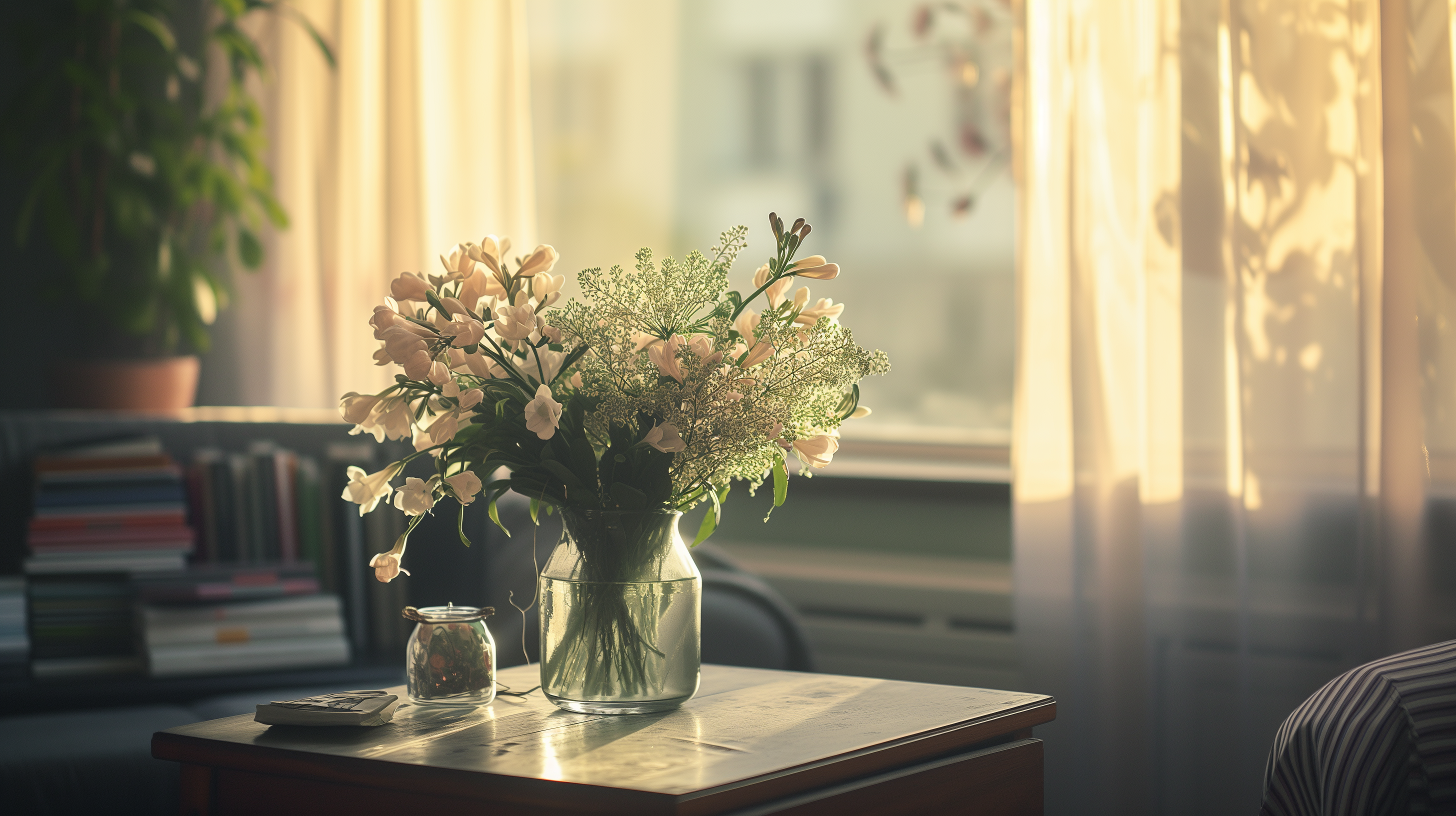
I didn’t start caring about flowers in home decor until I moved into my second apartment in Austin and realized the whole place felt oddly incomplete. I’d picked out a nice rug, had the gallery wall sorted, and the furniture made sense. But something was missing. A neighbor brought over a simple bunch of sunflowers as a housewarming gift, and within a day, the kitchen felt like a completely different room. That was it for me.
Since then I’ve tried a lot of things that didn’t work: arrangements that wilted in three days, flowers that clashed with my furniture, peonies in a vase that was way too tall for the table. Here’s what I’ve actually figured out.
Choosing the Right Flowers for Your Space
Most advice about flowers in home decor starts with what looks pretty. That’s useful but incomplete. The first question is really about your space and your lifestyle, not just aesthetics.
Seasonal Flowers vs. Year-Round Picks
Going seasonal is the easiest win. Spring gives you daffodils, hyacinths, and ranunculus. Summer opens up to peonies, lavender, and zinnias. Fall is for dahlias, marigolds, and dried amaranth. Winter works beautifully with evergreen branches, hellebores, and amaryllis.
The practical advantage is freshness: seasonal flowers are cheaper at the grocery store or farmers market because they’re actually in supply, and they tend to last longer since they didn’t travel across the globe to get there. I’ve bought grocery store tulips in April for $6 that lasted ten days. In November, the same tulips looked sad after three.


When a Single Stem Is Enough
I used to think more flowers meant more impact. It doesn’t. In a small bathroom, a single lily in a bud vase does more than a full arrangement would. The simplicity reads as intentional rather than afterthought. The same goes for a home office desk: one small vase with three stems keeps things calm while still bringing something alive into the space.
Single-stemmed flowers work especially well in minimalist rooms where a large bouquet would compete with everything else. Orchids are the best example: one white phalaenopsis in a clean ceramic pot looks architectural. A mixed bouquet in that same room looks chaotic.

Low-Maintenance Options Worth Knowing
If you’re not someone who enjoys flower care, that’s a valid constraint, not a personality flaw. Succulents with small flowers (like echeveria when it blooms) or potted orchids are genuinely low effort. A phalaenopsis orchid from IKEA or Trader Joe’s runs about $10 to $15, blooms for two to three months, and needs watering once a week. That’s a better deal than cut flowers on most weeks.
Dried flowers are the other low-maintenance route, and they’ve gotten genuinely good-looking in recent years. Pampas grass, dried peonies, and bunny tail grass in a textured ceramic vase can anchor a corner shelf for months. If you want to go deeper on styling plants and flowers as part of your interior design, there’s a whole approach to making it feel cohesive rather than random.
Color, Texture, and the Furniture Problem
The most common mistake I see (and made myself for years) is picking flowers based on the flowers alone. A bunch of pink peonies is beautiful in the shop. But put it on a brown leather sofa in a very warm-toned room, and suddenly it looks off in a way that’s hard to identify. The flowers aren’t the problem; the pairing is.
Matching Flower Texture to Furniture Material
This is the rule I wish someone had told me early: rough materials want rough flowers. Smooth, formal materials want refined blooms.
A raw wood dining table or rattan chairs pair well with dried lavender, sunflower heads, or wildflower bunches. The visual texture matches. A marble countertop or velvet sofa calls for something cleaner: white roses, calla lilies, or sculptural orchids. Mixing rough with polished creates tension that reads as intentional, but if you’re not deliberate about it, it just looks like a mismatch.


Getting the Height Right in Each Room
Height is one of those things that sounds obvious until you get it wrong. The most common version: a tall vase with tall flowers on a dining table, which means everyone seated across from each other is looking through stems. Low, spreading arrangements work on dining tables for exactly this reason. You want to see the person across from you.
On the other hand, a kitchen island or side table next to a sofa benefits from height. Something like a tall bunch of gladioli or delphiniums draws the eye up and makes the ceiling feel higher. I’ve used this in my current place, which has low ceilings, and it genuinely changes how the room feels. Not dramatically, but noticeably.


Using Flowers to Create a Focal Point
A large floral display in an entryway works because the foyer table is the first thing you see. The flowers have nowhere to compete. The same principle applies to a fireplace mantle or the center of a coffee table. Pick one spot per room to give flowers the spotlight. Spreading small arrangements everywhere makes a room feel cluttered, not lush.
For the bathroom, I keep it minimal: one small stem in a bud vase next to the sink, or a potted plant on the window ledge. Anything larger starts competing with the towels and the mirror, and the room is already working hard enough visually.


Flowers That Do What They Promise
Some flowers show up in every mood board and most grocery stores. Here’s an honest take on what they actually do in a room, not just what they look like in a photo.
Roses and Peonies for a More Polished Look
Roses are the flower I default to when I want a room to look put together without trying too hard. Deep red roses on a dark wood table feel intentional and warm. Blush roses in a matte white vase feel clean and edited. The stem shape is forgiving: you can bunch them tightly or spread them out and both work.
Peonies are the splurge pick. They’re expensive (especially out of season), they don’t last long, and they drop petals. Despite all of that, I buy them every May because nothing else looks quite like a fully open peony. If you’re going to spend $20 on flowers, peonies in late spring are where that money goes furthest.


Orchids and Hydrangeas for Modern and Transitional Spaces
Orchids feel intimidating but they’re genuinely low effort. The phalaenopsis variety (the one with arching stems and large flat blooms) lasts months when potted, needs almost no attention, and looks expensive in any container. I’ve had one sitting on my home office shelf for four months. I water it once a week. It still looks great. The trick is not to overwater: most orchids die from too much attention, not too little.
Hydrangeas are the more forgiving cut flower option for similar spaces. Their rounded, full shape works in a wide-mouthed vase without needing any arrangement skill. They dry beautifully in place (just let the water evaporate and don’t add more once they start to fade), so a bunch you bought fresh can become a dried arrangement over a few weeks without you doing anything.


When You Want Color: Sunflowers, Dahlias, and Tulips
Sunflowers are the easiest color injection you can buy. They’re almost always available, they’re cheap (usually $1 to $2 per stem at Trader Joe’s or the farmers market), and they work in any casual space: kitchen, breakfast nook, covered patio. The one thing they can’t pull off is formal elegance, but that’s what roses are for.
Dahlias are what I reach for when I want something a bit more considered. The variety in size and color is better than almost any other cut flower. You can go very bold with a dinner-plate dahlia or subtle with a small pompom variety. They don’t last as long as roses (about five days in water), so I treat them as a weekend splurge rather than a week-long arrangement.
Tulips are the best budget option for a burst of color during spring months. They keep opening as they age, which means the arrangement looks different on day one versus day four. The downside is they droop quickly in warm rooms. If you have a cool space like a dining room that doesn’t get afternoon sun, tulips can last two weeks. In a warm kitchen, probably four days.


Mixed Bouquets: Better Than They Look on the Label
Mixed bouquets get dismissed as grocery store flowers, but in my experience the quality has genuinely improved. Most supermarkets now carry bouquets with eucalyptus filler, spray roses, and seasonal accents for under $15. The trick is stripping the greenery that comes pre-arranged (it usually looks cheapening) and rebuilding in a plain vase. I remove about half the filler greenery and spread the flowers to show space between them. The same $12 bouquet looks like a considered arrangement rather than a last-minute grocery run.

Making Cut Flowers Last Longer
Most people do about 60% of what’s needed to keep flowers alive. Here’s the part that actually makes the difference.
The Stem Cut and Water Change Routine
Cutting stems at a diagonal angle under running water is the single most effective thing you can do. The diagonal cut increases surface area and the running water prevents an air bubble from forming at the base, which blocks water uptake. Do this when you first bring them home and again every two to three days when you change the water.
The flower food packet that comes with grocery store bouquets is worth using. It contains a sugar source, acidifier, and biocide. If you don’t have it, a small pinch of sugar and a drop of bleach in the vase water does roughly the same thing. Keep the vase away from direct sunlight and away from fruit bowls (ripening fruit gives off ethylene gas which ages flowers faster).
Why I Started Keeping Dried Flowers in Certain Spots
The honest truth about dried flowers is that I resisted them for a long time because they felt like a concession. Like fresh flowers but for people who can’t commit. I was wrong. Dried pampas grass in the corner of my living room has been there for eight months and I’ve gotten more compliments on it than any fresh arrangement I’ve ever bought. It’s also where I would have put a lamp I didn’t need.
The spaces where dried flowers work best: high shelves, dark corners, and any spot that’s hard to water (like a bookcase where you’d have to move everything to reach a vase). For spots where you interact with the arrangement regularly (kitchen counter, bedside table), fresh flowers still win on mood and scent.


Floral Accessories That Extend the Look
Floral prints and accents are an underrated way to bring flowers in home decor into spots where a vase doesn’t make sense. A floral-printed throw pillow on a sofa or a small potted plant on a hallway console extends the visual theme without requiring maintenance every few days. If you already have fresh flowers in the living room, a matching floral element in the hallway ties the spaces together without doubling your effort. For more seasonal approaches to this, fall interior design covers a lot of ground on layering floral and botanical elements in the cooler months.


Creative Display Ideas Beyond the Standard Vase
The vase you use matters more than people admit. I’ve put the same flowers in three different vessels and gotten three different reactions. The flowers didn’t change; the context did.
Budget Vessels That Look Like a Design Choice
Mason jars are genuinely good vases. They’re wide enough to support stems without needing floral foam, they’re the right height for medium arrangements, and their slight industrial quality reads as intentional in a farmhouse or cottagecore space. The budget version here is honestly better than a cheap glass vase from a discount store: mason jars look like you chose them on purpose.
For a more playful setup, unexpected vessels like old tin cans (painted or raw), ceramic mugs, or even rubber boots work well when the context matches. I’ve had a pair of small rubber boots holding dried grasses on my porch for a whole season. Every person who visits comments on them. They cost $2 at a garage sale.


Centerpieces That Actually Work at the Table
The multiple-vase approach for dining tables is worth trying. Instead of one large arrangement, use three small vases at different heights with the same or complementary flowers spread between them. It’s more forgiving to arrange (no skill required), keeps the sightlines lower, and can be moved aside easily when you actually need the table for food.
Pressed-flower candles are an underrated centerpiece option for anyone who wants something that lasts months rather than days. You can buy them from Etsy sellers for $15 to $20, or make them at home with pillar candles and dried flowers. The candle becomes a botanical object even when it’s not lit. For more seasonal centerpiece inspiration, DIY Thanksgiving decorations covers a lot of ground on table-setting flower and botanical arrangements.


Frequently Asked Questions
How do I know if the flowers I’m buying are fresh?
Look for firm, closed or barely-open petals, green and upright leaves, and clean stems with no sliminess at the base. Avoid flowers already showing brown edges or drooping heads at the shop.
What are the best flowers in home decor for beginners?
Start with tulips, sunflowers, or potted orchids. All three are widely available, affordable, and forgiving: tulips and sunflowers for cut flower arrangements, orchids for a low-maintenance potted option that lasts months.
How long do cut flowers typically last?
Most cut flowers last five to ten days with proper care: diagonal stem cut, fresh water every two days, and placement away from direct sunlight and fruit bowls. Roses and carnations are on the longer end; tulips and peonies on the shorter end.
Can I mix fresh and dried flowers in the same arrangement?
Yes, and it often looks better than either alone. Fresh flowers add color and life; dried flowers add texture and structure. Try a base of dried pampas or bunny tail grass with a few fresh stems tucked in. Replace the fresh stems as needed while the dried base stays.
What flowers work best in a room with low natural light?
Orchids, peace lilies (as potted plants), and dried flowers are your best options. For cut flowers in low-light rooms, avoid sunflowers and opt for roses, carnations, or hydrangeas, which tolerate shade much better.
If you found this useful, follow us on Pinterest for more interior design inspiration.