Garage Interior Design: Floor, Light, and Dual Use


Most garage design content starts with “imagine what this space could be.” I want to start somewhere more useful: most garages are actively bad at their job. Not because homeowners don’t care, but because nobody taught them the sequencing. You fix the flooring last. You plan storage first. You build the workbench before you decide where the lighting goes.
I’ve helped design a converted garage home office in a walk-up neighbourhood and worked with Someone in a city neighbourhood who turned a two-car garage into a functional workshop with a corner bar. The principles that make those projects work aren’t complicated, but they are specific. This guide covers garage interior design from the floor up, in the order you should actually tackle it.
The Foundation: Floors, Walls, and What Actually Holds the Space Together
The first mistake I see in every DIY garage project: people install beautiful cabinets on top of concrete that hasn’t been treated. The floor cracks, the cabinets shift, the whole system degrades within a few years. Floor and wall finish decisions come first, before anything else gets bolted down. This is the part most design guides skip because it isn’t photogenic. It matters more than the rest of the list combined.
Epoxy Flooring: The Finish That Earns Its Price Tag
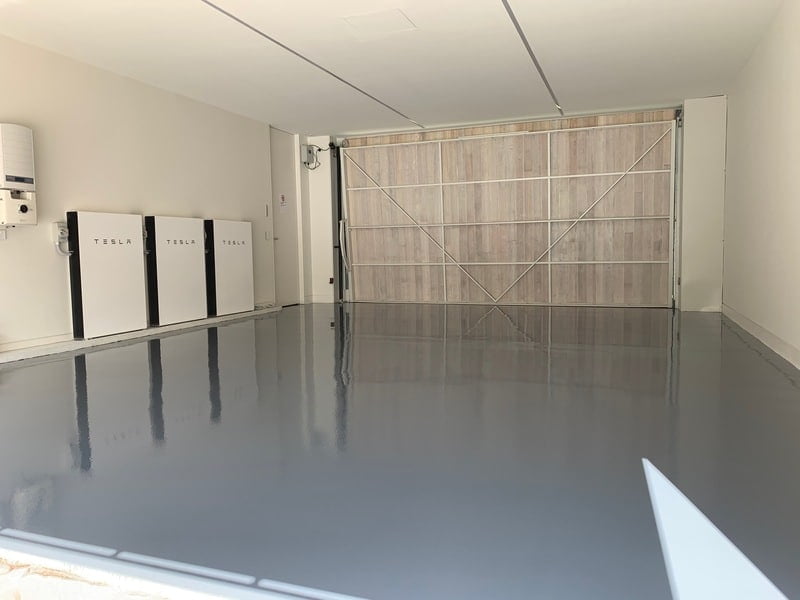
Epoxy is the most durable residential garage floor finish available, and the pricing reflects that. A professional two-car install runs $1,500 to $3,000, depending on the preparation needed and the color options you choose. What you’re paying for isn’t the epoxy itself. It’s the prep: grinding the concrete, filling cracks, ensuring the coating actually bonds to the slab. Cheap DIY kits skip this step, and they peel within two years. I’ve recommended Rust-Oleum EpoxyShield to several clients as a mid-range option for serious DIYers. It stays convincing, but the surface prep requirements are the same as a professional install. Budget the time, not just the product cost.
Concrete Stain: Character Without Half the Cost
Concrete stain is the underrated option in garage interior design. It runs roughly half the cost of epoxy, penetrates the slab rather than sitting on top of it, and produces a mottled, almost stone-like finish that looks intentional rather than industrial. The limitation is practical: it doesn’t protect against oil stains the way epoxy does. If you’re parking a car and expecting drips, seal over the stain with a penetrating polyurethane. If you’re building a home gym or a workshop where cars aren’t coming in, stain alone is perfectly adequate. Most people overlook it because it doesn’t photograph as dramatically as a glossy epoxy floor. That’s exactly why it’s worth a closer look.
Rubber Mats: The Ergonomic Upgrade Nobody Mentions
Here’s what most flooring guides leave out: if you spend more than two hours standing on epoxy or bare concrete, your lower back will make its opinion known. Anti-fatigue rubber mats in 3/4-inch thickness solve this immediately. I include them in every serious workshop setup I design, specifically in the zones where people stand and work, regardless of what’s on the rest of the floor. They’re not the most photogenic option in garage interior design. They are the one that keeps you working longer without discomfort. For gym conversions, 3/4-inch horse stall mats from a farm supply store are the best value I’ve found: cheaper than branded gym tile, more durable than foam, and they hold up under dropped weights.
Related garage setups in the same functional family: storage, work zones, and finishes that keep the space usable rather than decorative.
Storage That Makes the Work Easier
The core principle in garage storage design: get things off the floor. A wall system that uses vertical space efficiently makes a 400-square-foot garage feel twice as usable. The question isn’t whether to add storage. It’s what type, in what order, and with what logic behind the placement.
Wall-Mounted Storage: Why I Recommend Slatwall Over Standard Pegboard
Something that might surprise people who’ve read too many workshop guides: standard pegboard is often the wrong choice for a garage. The 1/8-inch variety flexes, the hooks fall out when you pull anything with weight, and it looks dated within five years. What I recommend instead: 4-inch slatwall panels in PVC or metal. They run $80 to $120 per panel, which is more expensive up front, but the hooks lock in place, the system handles heavier loads, and you can reconfigure it without re-drilling into the wall. If budget is a real constraint, 3/4-inch plywood painted in a matte finish beats standard pegboard on every practical dimension. The key principle here is that the storage system has to be more reliable than the work habits it’s supposed to support.
Related garage setups in the same functional family: storage, work zones, and finishes that keep the space usable rather than decorative.
Cabinets Over Open Shelving: When to Make That Call
For a garage that doubles as a workshop or an occupied living space, I nearly always recommend closed cabinets over open shelves. The reason is practical: open shelves collect dust. In an active garage, that means cleaning every item before you can use it, which adds friction to every task you sit down to do. Cabinets with solid doors keep tools, chemicals, and seasonal items clean and ready to use. The design consideration is door style and hardware: a flat-panel industrial door fits a workshop aesthetic. A two-panel or shaker door looks more residential, which matters if the garage is visible from an adjacent living space. for a home who like the look of open storage, glass-front cabinet doors split the difference without the dust problem.
Garage cabinet systems that keep tools behind doors so the floor stays clear for work.
Overhead Storage: The Ceiling as Usable Real Estate
Four-by-eight platforms suspended from the ceiling joists are one of the highest-return moves in garage interior design. They’re not complicated to build, don’t require professional installation in most single-story cases, and free up significant floor and wall space for active use. The practical rule: put only items you access less than twice per year up there. Seasonal decorations, camping gear, rarely-used sports equipment. Things you need regularly belong at arm height or below. The ceiling is for archiving, not active storage. If you try to put frequently used items overhead, the friction of retrieval means they’ll stop going back up, and the platform becomes a pile.
Workshop Design and Tool Organization
The workshop is where garage interior design gets personal. What you build depends entirely on what you make. A woodworker needs different infrastructure than a mechanic, which needs different infrastructure than someone who just wants a place to do home repairs without spreading tools across the kitchen counter.
Building a Workbench That Actually Supports the Work
I’ve helped three separate clients build workbenches, and the question everyone asks first is usually the wrong one. “How big should it be?” matters less than “what am I doing at it?” A woodworker needs a flat, level surface with good clamping access along the front edge. A mechanic needs height calibrated to engine work, not hand-planing. The near-universal requirements: 34 to 36 inches high for standing work, structural enough to withstand mallet blows without walking across the floor, and more electrical outlets than you think you’ll need. Wire in dedicated circuits and put outlets every four feet along the bench wall. Extension cords strung from the far wall are how workshops catch fire and how good work gets interrupted.
Related garage setups in the same functional family: storage, work zones, and finishes that keep the space usable rather than decorative.
Tool Organization by Frequency: Why Random Placement Fails
Organization by frequency of use is the principle that separates a functional workshop from one where you spend ten minutes hunting for a 3/4-inch wrench before every job. Tools you reach for daily go at eye level, front and center. Tools you use weekly go at arm’s reach. Tools you pull out monthly go in a drawer. When I set up the workshop in the a walk-up neighbourhood project, the owner and I catalogued every tool into a category before anything went on the wall. The result was a garage where he could walk in and be working in under thirty seconds. Random placement, which is how most people approach it, produces random retrieval time. It adds up to significant frustration across a year of projects.
Related garage setups in the same functional family: storage, work zones, and finishes that keep the space usable rather than decorative.
Turning the Garage into a Functional Second Space
The conversion question in garage interior design is really a zoning question. The garage isn’t a single-purpose space by nature. What limits the conversion is usually mechanical: power supply, insulation, and plumbing determine what’s physically possible. Once the infrastructure is in place, the layout follows the same principles as any other room.
The Garage Home Gym: What’s Worth the Investment
The equipment question is yours to answer, but the design principle for a garage gym is consistent: vertical storage for everything that isn’t in active use. Wall-mounted weight racks, folding workout benches, hook systems for resistance bands and jump ropes. A garage gym should be ready to use in under two minutes, not after fifteen minutes of moving things around to clear space. The flooring is the one decision that has a right answer: rubber, 3/4-inch minimum, covering the full workout area. Everything else is personal preference. For the same functional-first design logic applied to a different space, the approach overlaps significantly with what we cover in our guide to masculine interior design.
Garage zones that stay organized enough to host equipment without losing car space.
The Garage Home Office: Harder Than It Looks, Worth Doing Right
Designing one of these, and the thing nobody warns you about is temperature regulation. A garage that swings from 20 level Fahrenheit in January to 105 in August needs a mini-split system. A space heater and a box fan are not a solution for full-time work. The climate control investment comes before anything aesthetic. After that, the design is straightforward: insulate the walls and ceiling, drywall over the insulation, and treat it like any other home office from an ergonomics standpoint. The advantage over a bedroom-to-office conversion is ceiling height, which allows better overhead lighting and a less compressed feel. If you’re working with a tighter budget, our guide to low-budget small office interior design covers where to prioritize spending.
Bike Storage That Doesn’t Look Like an Afterthought
Wall-mounted horizontal hooks are the most common bike storage solution, and they work in a narrow technical sense. They also scratch frames, they’re awkward to load when you’re alone, and they take up more wall width than most people realize before they install them. My preference for a household with more than one serious cyclist: a two-bike vertical rack in a corner, one wheel up and one wheel down. It occupies about two feet of floor space and looks deliberate rather than a storage problem that got solved at the hardware store. For more than three bikes, a ceiling pulley system at $80 to $150 per unit is worth the installation cost. The bikes move overhead and the floor stays clear for everything else.
Related garage setups in the same functional family: storage, work zones, and finishes that keep the space usable rather than decorative.
The Garage as Living Space: Bar, Bedroom, and Bathroom Conversions
A garage can function as a genuine extension of your living space. The design requirements for each conversion type are different, and the order of operations matters more here than anywhere else in garage interior design. The common thread: infrastructure before aesthetics, every time.
The Garage Bar: Where Function Meets Personal Style
A garage bar is one of the more forgiving interior design projects on this list. The tolerance for imperfection is higher in a bar than in a kitchen, the materials can be raw, the hardware can be industrial, and surfaces can be reclaimed without looking like a mistake. What actually matters: counter height (42 inches for bar seating, 36 inches for table-height service), the drainage situation if you’re adding a sink, and enough dedicated power for a mini-fridge and under-counter lighting. The personal touches, the memorabilia and the custom signage and the specific stool choice, are what make it feel specific to the person who uses it. They come after the counter height is right and the outlets are in the right place.
Converting to a Guest Room: What You Cannot Skip
I want to address this conversion honestly: turning a garage into a guest room is not a weekend project. The minimum work involves insulating the walls and ceiling, drywalling over the insulation, installing climate control, and ensuring adequate ventilation and natural light. If any of those feel like optional steps, it’s not the right project for right now. Done correctly, it’s a genuine guest room that happens to be adjacent to the driveway. The comfort gap between a properly converted garage bedroom and a barely-converted one is significant enough that guests notice immediately. Once the structure is right, our guide on how to make a guest room actually comfortable covers the design decisions that follow.
Related garage setups in the same functional family: storage, work zones, and finishes that keep the space usable rather than decorative.
Adding a Bathroom: When It Actually Makes Financial Sense
The math on a garage bathroom is more interesting than most people expect. Adding a half bath (toilet and sink, no shower) typically costs $5,000 to $15,000, depending on how far the new plumbing has to run from the main supply lines. For a workshop garage where you spend long days, it eliminates the constant walk back into the house. For a garage that’s been converted into a guest suite or full living space, it’s close to mandatory. The design detail that consistently pays off: tile that shares a tonal family with the garage floor finish. Not the same tile, but the same color register. It makes the bathroom read as part of the space rather than something that was added later and doesn’t quite belong.
Frequently Asked Questions
What is the best flooring for a garage interior design project?
Epoxy coating is the most durable option and works best for garages where vehicles are parked. Concrete stain is a lower-cost alternative that looks good in gym or workshop conversions. Rubber mats in 3/4-inch thickness are essential for any standing work area, regardless of what else is on the floor.
Is pegboard the best wall storage for a garage?
Standard 1/8-inch pegboard is not the best choice for most garages. Slatwall panels in PVC or metal are more durable, hold heavier loads, and allow hooks to lock in place. If budget is a constraint, 3/4-inch plywood with a matte paint finish outperforms pegboard on every practical measure.
What do I need to convert a garage into a home office?
Temperature regulation is the non-negotiable first step: a mini-split system for climate control, not a space heater and a fan. After that, insulate the walls and ceiling, drywall over the insulation, and approach the layout the same way you would any other home office space.
What is the most cost-effective storage upgrade in a garage?
Ceiling-mounted overhead platforms are among the highest-return storage investments in garage interior design. They free up floor and wall space for active use and can be built without professional installation in most single-story garages. Reserve overhead space for items you access less than twice per year.
Do I need permits to convert a garage into a living space?
In most municipalities, yes. Requirements typically cover insulation, electrical, egress windows, and HVAC. A half-bath addition always requires a plumbing permit. Check with your local building department before starting any conversion project that involves habitability changes.