Van Interior Design: Storage, Motion, and Daylight

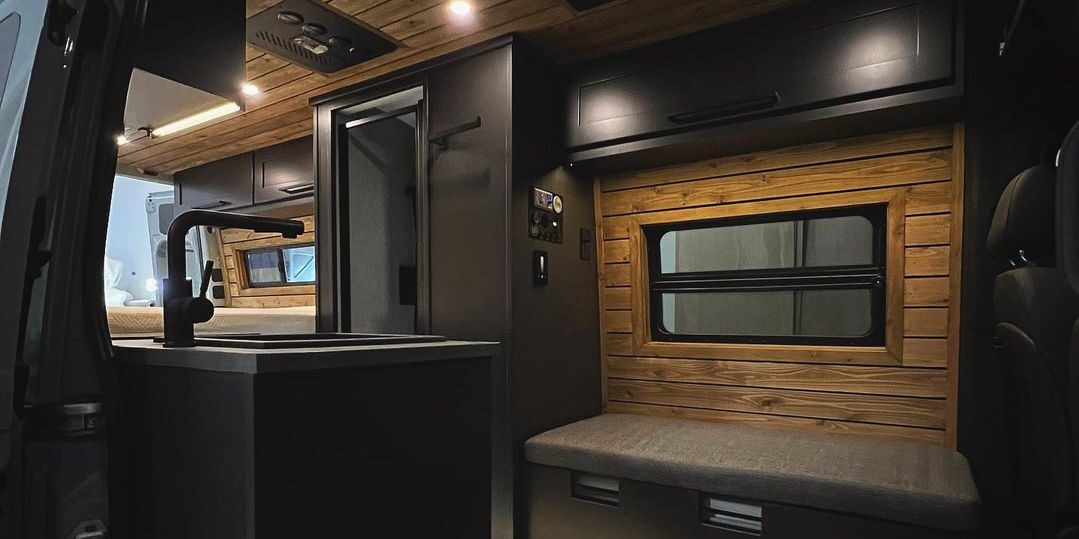
Van interior design is one of the most constrained design disciplines I work in, more constrained than a studio apartment and arguably harder than a boat refit. You have roughly 80 square feet to fit a sleeping zone, kitchen, bathroom, workspace, and all the storage a full life requires. Every decision you make in the planning phase determines what becomes possible or impossible six months down the road. Designing spaces from 400-square-foot condos to open-plan ranch houses in open country, but nothing demands the systems thinking that van conversion does.
The difference between a van that works and one that just photographs well comes down to planning sequence. Most people start with aesthetics and retrofit the function around it. That produces beautiful vans that are frustrating to live in. This guide works through the actual sequence: platform selection, floor plan, essential systems, and only then the details that make a space feel like it belongs to someone.
The Van Platform Is a Design Decision
Most people treat van selection as a practical step to get past before the real design work begins. That framing is wrong. The van you choose determines ceiling height, usable interior width after insulation, wheel arch intrusion, and the electrical ecosystem you’ll be working with. All of these shape every interior decision that follows. Understanding the trade-offs before you commit is the first real act of van interior design.
Why the Mercedes Sprinter Remains the Standard Build Platform
The Mercedes Sprinter high-roof gives you 6’1″ of standing headroom, which sounds minor until you’ve spent a week crouching in something shorter. That ceiling height changes what you can build: full-height cabinets, a wet bath with actual room to move, kitchen countertops at a proper working height. Looking at a Sprinter build where the ceiling height alone made a lighting and cabinet configuration possible that no other platform would have allowed. The Sprinter’s interior width of around 70 inches also creates a useful constraint: it forces tighter, more resolved layouts. The builder ecosystem is also the most mature of any conversion platform, with more third-party mounting solutions and documented problem-solving resources than the Transit or ProMaster.

Ford Transit and Ram ProMaster: When the Sprinter Is Not the Right Choice
The Ford Transit offers better fuel economy on long hauls, which compounds significantly over tens of thousands of miles. If range and efficiency are the primary concern, the Transit is a defensible choice. The Ram ProMaster has the widest interior of the three platforms, roughly 75 inches at floor level, which makes a transverse (side-to-side) bed genuinely comfortable for taller people and for couple builds where both occupants want room to actually turn over during the night. I’ve steered taller clients toward the ProMaster specifically for this reason.

A few related Pinterest references in the same visual family as the section above.
Space Planning Before You Touch a Single Tool
The most expensive mistake in van conversion is finalizing finishes before resolving systems. I’ve seen cedar plank ceilings torn out to route electrical that wasn’t planned for, and kitchen counters cut before anyone accounted for wheel arch intrusion. The floor plan is not a starting point you refine as you go. It’s the entire project.
Going From Empty Box to Resolved Floor Plan
Before buying a single piece of lumber, spend time in Vanspace 3D, a free van-specific layout tool that models your exact vehicle at actual scale. The two things most first-time builders underestimate: wheel arch intrusion (4 to 6 inches on each side at floor level) and insulation thickness (1.5 to 2 inches per wall, reducing width by 3 to 4 inches per side). Both are measurable before you cut anything. The same spatial logic that applies to compact condo interior design applies here: corrections in a van are expensive and often irreversible.
The Bed Orientation Decision That Determines Everything Else
This is the question I get asked about more than any other in van interior design. Longitudinal beds run front-to-back, require a narrower mattress, and free the full rear for storage. Transverse beds run side-to-side, allow a wider sleeping surface, but create an awkward dead zone behind the platform. For solo builds, the longitudinal layout is almost always more functional because it creates a natural corridor. For couple builds in a Ram ProMaster, the transverse layout works genuinely well. The critical point: this decision drives kitchen placement, which drives storage configuration. Make it first, not last.
The Three Systems That Define Van Life Quality
Every van has three systems that need to work together: kitchen, sleep zone, and bathroom. Most builds get two of the three right. Getting all three right requires making at least one real space trade-off early in the process.
Kitchen: Compact Without Being Compromised
A few related Pinterest references in the same visual family as the section above.
A good van kitchen is not a reduced home kitchen. It’s a purpose-built food preparation station designed around what you actually cook, not what a home kitchen is supposed to include. Most builds default to replicating home kitchen features at smaller scale, which produces undersized appliances crammed into inadequate layouts. The better approach: write down the five meals you cook most often, then design around what those meals require.
For the fridge, I consistently recommend the Dometic CFX series. It runs at $800 to $1,100, which seems steep until you factor in the efficiency gain. A quality compressor fridge draws significantly less power than budget alternatives, which directly reduces the battery bank size and solar array you need to support it. Spending more on the fridge often means spending less overall on the electrical system. Counter depth matters more than counter length in a van kitchen: a 24-inch deep prep surface next to the stove beats a long narrow shelf every time.
The Sleep Zone: Ventilation Matters More Than the Mattress
A few related Pinterest references in the same visual family as the section above.
Sleep quality in a van depends less on the mattress and more on the ventilation system. A dense foam mattress on a solid plywood platform with no airflow produces condensation within weeks. Build a slatted base to allow air circulation underneath. A Maxxair or Fan-Tastic roof vent with thermostat control handles moisture removal overnight and temperature regulation on warm days. This is the highest-impact improvement available to most builds and costs under $400 installed. For the mattress, 4-inch high-density foam cut to your exact platform dimensions is the right call. Custom foam cutting services add $50 to $100 and the sleep quality difference is real.
Bathroom: The Space Trade-Off Most Builders Regret
A few related Pinterest references in the same visual family as the section above.
A fully plumbed wet bath in a van, shower, toilet, and sink in one enclosed compartment, consumes roughly 25 to 30 square feet. In a standard cargo van, that’s close to 35 percent of the total interior. I’ve spoken to multiple builders who installed a full wet bath and then spent months wishing they had that space back. This is the most common regret I hear from people who’ve been living in their vans for more than six months.
For most builds, a Natures Head composting toilet and an outdoor shower is the more functional approach. An outdoor shower rigs up in a minute, uses less water, and eliminates the wet wall and waterproofing problem entirely. For full-time builds in cold climates, a small wet bath with an on-demand water heater is worth the space cost. But decide based on actual use, not on the assumption that a “real” bathroom is necessary.
Storage as Architecture, Not an Afterthought
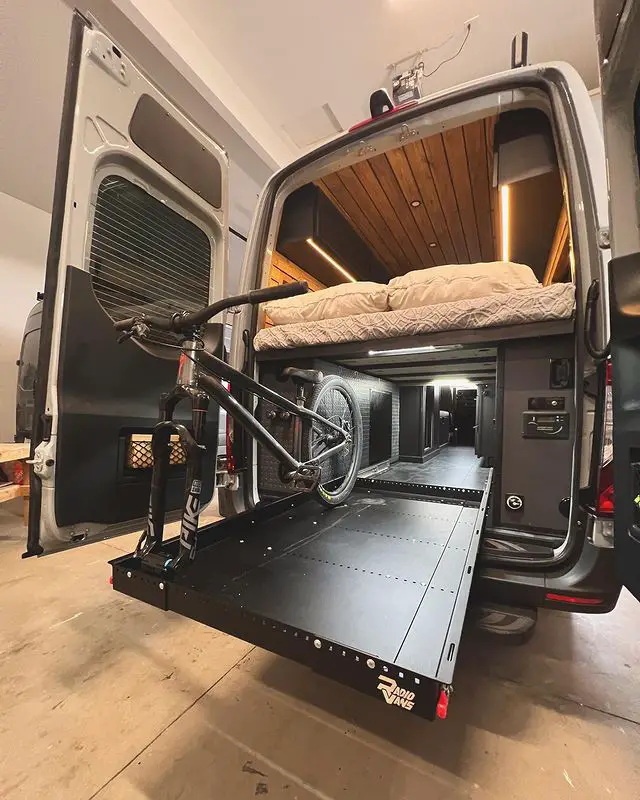
Good storage in a van is invisible when not in use. Every drawer, cabinet, and bin should have a specific assigned category before it’s built. The principle is the same one I apply to garage interior design and any other dual-purpose space: specificity per zone beats generic capacity. An oversized cabinet with no defined purpose ends up holding a few items rattling around, which wastes both space and mental energy every time you need to find something.
Overhead Cabinets and the Vertical Space Most Builders Ignore
Related garage setups in the same functional family: storage, work zones, and finishes that keep the space usable rather than decorative.
A 12-inch deep overhead cabinet running the length of the van above the bed platform can hold bedding, clothing, tools, and provisions with no floor area cost. Use push-to-open magnetic catches rather than handles. Handles in a van create head-strike hazards that most builders don’t think about until someone catches one at 2 AM. For cabinet materials, 12mm birch plywood is standard for good reason: it cuts cleanly, holds screws reliably, and doesn’t add unnecessary weight. Avoid MDF entirely. It delaminates in humid environments, and vans produce significant moisture through respiration, cooking, and temperature cycling.
The Rear Gear Garage: External Access, Internal Order
A rear garage, a storage compartment accessible only from outside and typically located under the bed in a longitudinal layout, solves the most persistent van storage problem: gear that needs daily access without being dragged through the living space. Bikes, wet shoes, cooking equipment for outdoor meals, and tools all belong here. For overland builds, combining a rear garage with a Rhino-Rack or Front Runner roof system adds significant carrying capacity without reducing any interior living area.
Workspace and the Multipurpose Living Zone
The Swivel Seat Setup That Changes the Front Cab
A few related Pinterest references in the same visual family as the section above.
A Scopema swivel adapter for the passenger seat, $200 to $350 depending on van model, changes the usability of the front cab completely. Swiveled to face the rear, the passenger seat becomes part of the living space and creates a two-seat configuration that occupies no additional floor area. For anyone doing remote work from the van, this is the best value ergonomic modification available. I’ve seen van builds where the swivel seat is the first modification made and the one people mention most consistently as worth it.
A Dinette Setup That Works in Both Bedroom and Living Modes
A few related Pinterest references in the same visual family as the section above.
The Lagun table mount attaches with a single bolt, extends to a full dining or work surface, and folds completely away when not needed. At around $250, it eliminates the need for a permanently built table and keeps the floor clear in sleep configuration. The key benefit is that the transition between modes takes under 30 seconds. Fixed furniture that serves only one purpose is a liability in a space this size. The core basics of interior design around scale and multipurpose function apply directly to van work.
The Finishing Layer: Lighting, Decor, and Personal Objects
12V Lighting That Changes the Entire Mood
12V LED strip lighting under cabinets and along the ceiling perimeter costs almost nothing and changes the quality of the interior at night more than any other finish decision. Warm white at 2700K is the right choice for living areas. Cool white at 5000K creates a clinical atmosphere regardless of how well the rest of the build is executed. A dimmer on the main circuit covers both task lighting and relaxed evening use without any additional cost.
Personal Objects Without Visual Clutter
A few related Pinterest references in the same visual family as the section above.
Small, functional objects that reflect actual use are what make a van interior feel like it belongs to someone. A specific coffee setup, a few well-worn books, a trailing pothos. The instinct to keep every surface clear is correct as a starting point, but taken too far it produces an interior that looks staged. One or two personal objects per surface zone is the practical threshold. The same principle holds for boat interior design and any compact vehicle space: curate for meaning, not volume.
Frequently Asked Questions
Decorating tips for vans interior design
Start with the floor plan before choosing colors or materials. Use warm white LED strip lighting (2700K) under cabinets for evening ambiance. Limit decorative objects to items that serve a function or have personal meaning.
Challenges of living in a van
Moisture management, storage discipline, and adapting to a smaller footprint are the three consistent challenges. Roof ventilation is essential for moisture control. The space adjustment takes most people two to three months to feel natural.
Realistic van living expectations
Expect at least one system you’d redesign in retrospect. Plan your electrical system with 20 percent more capacity than your estimates, because actual daily consumption runs higher than calculations suggest.
Boho van costs
A boho-style conversion with natural materials and warm textiles typically runs $8,000 to $15,000 for a complete DIY build. Prioritize insulation and a reliable compressor fridge before spending on aesthetic finishes.
Van interior design kits options
Pre-built kits from Vandoit, Luno Life, and Ready.Set.Van offer a faster build path with less fabrication skill required. The trade-off is reduced customization, since most kit vans follow similar layouts regardless of your specific needs.
If you liked this post about van interior design, don’t forget to follow us on Pinterest so you don’t miss any more interior design news!