Japandi Bedroom: Where Minimalism Meets Warm Imperfection

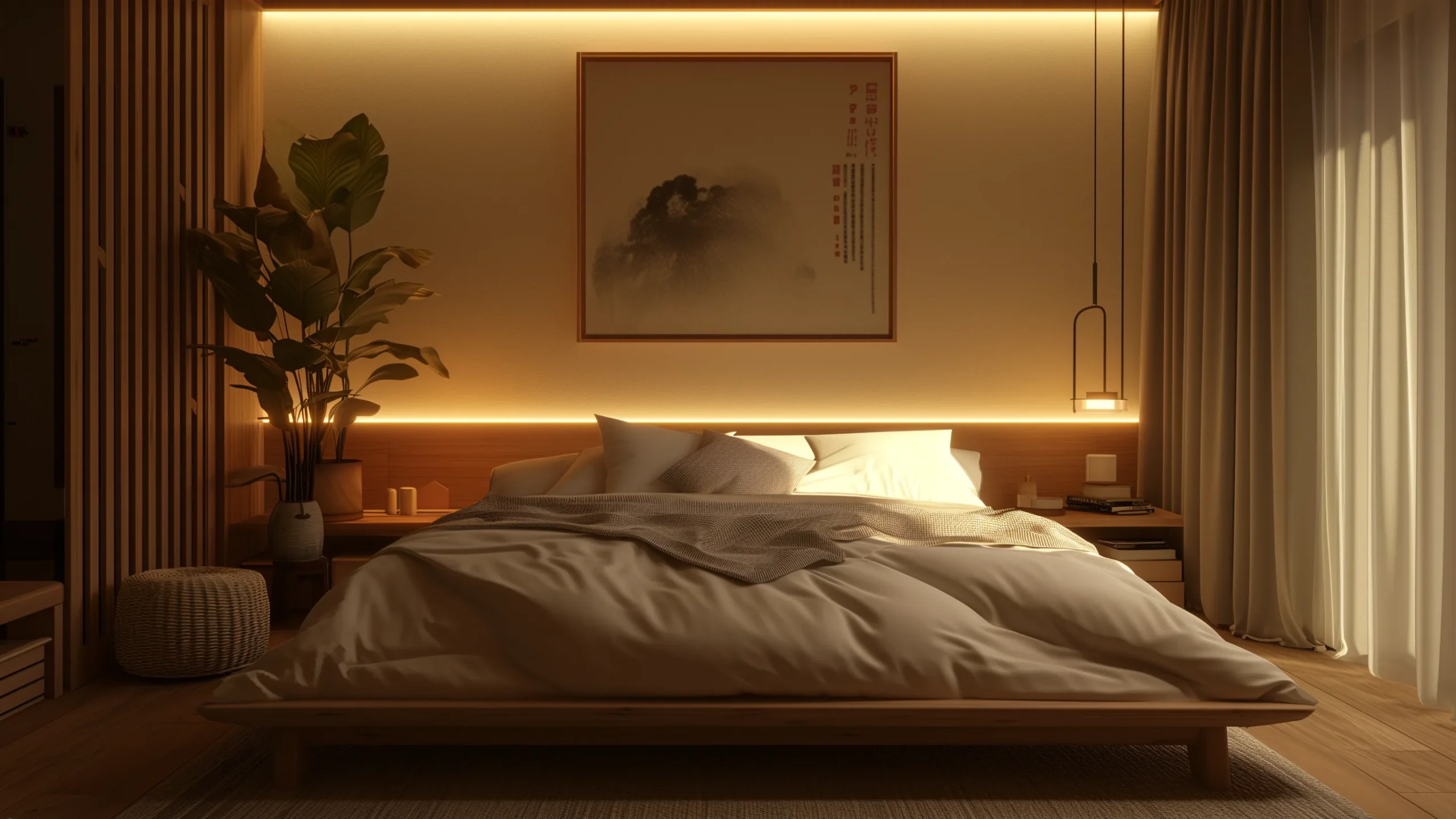
Japandi bedroom essentials got obsessive for me after I spent three days rearranging my bedroom in a typical apartment and still couldn’t figure out why something felt off. I had the neutral palette. I had linen bedding. I had a small bamboo plant doing its best in the corner. But the room kept looking cluttered despite being, by any reasonable measure, not that cluttered. The issue, I eventually realized, was that I was approaching Japandi the same way I approach everything: by adding things. Japandi is a style built almost entirely around subtracting them.
It sits at the intersection of Japanese minimalism and Scandinavian design thinking, which sounds like conflicting inputs until you realize both traditions share one core belief: unnecessary things are a problem, not a solution. If you want to explore the Japanese half of this equation in more depth, the guide on Zen Japanese interior design is worth reading first. But if you already understand the general idea and want to know how it actually translates to a bedroom, that’s what this is for.
The Palette Problem (And Why Neutrals Hit Differently Here)
There’s a specific kind of beige that shows up in every Japandi mood board. It’s not the muddy beige of a builder-grade apartment or the chalky white of a freshly painted rental wall. It’s warmer and more grounded than either, usually made up of soft taupes, warm greys, and tones that pull from natural things: weathered wood, unbleached linen, river stone.
Why Muted Tones Work (And Bright White Usually Doesn’t)
The key principle here is that the palette should feel like a physical material, not a paint choice. When I repainted my bedroom in a cooler shade of off-white a few years back, it looked clean but also a bit clinical. The room needed the bedding, the rug, and the furniture to warm it up. When I switched to a warmer greige, the walls started doing some of the work themselves. The bedding and the rug could be quieter because the room was already carrying more. The cooler the palette, the harder everything else has to work.
If you’re choosing paint for a Japandi bedroom, skip pure whites and look for anything described as “warm white,” “greige,” “clay,” or “driftwood.” In the mid-range price bracket, Benjamin Moore’s “White Dove” and Sherwin-Williams “Accessible Beige” are the closest I’ve found to the Japandi reference image standard without ordering custom samples. Both read warmer in morning light, which is exactly what you want.
The One Accent That Changes the Room
A lot of Japandi bedrooms stay almost entirely within the neutral range but include one intentional natural color note: muted sage green, dusty terracotta, or the kind of blue-grey that looks like it came off a smooth stone. Not bright, not saturated. More like the color of dried herbs than fresh ones. In practice, this note almost always comes from a plant, a textile, or a ceramic object, not a paint color. Painting an accent wall in Japandi tends to look wrong because it introduces a deliberate decision where Japandi prefers something that seems to have grown there naturally.
Furniture Choices That Define the Look
Japandi furniture follows two principles worth understanding separately before applying them together. The first is low profile: beds, tables, and storage should sit close to the floor to create openness. The second is functional honesty: every piece should do something clearly useful, with minimal decoration that doesn’t serve a structural or practical purpose. Most people have an easier time with the second than the first, because going lower than you’re used to feels like a real commitment.
The Platform Bed Decision
The low platform bed is probably the single most impactful piece in a Japandi bedroom. I resisted it for a while because I was worried about getting in and out of bed on early mornings, but the reality is that even a standard bed frame positioned low enough to see the floor beneath it changes a room’s proportions significantly. You lose the sense that furniture is dominating the space. The floor becomes part of the visual again.
For budget options, IKEA’s NEIDEN and UTÅKER series are genuinely good starting points. They’re not Japandi pieces by design, but their clean low profiles and light wood finishes work well enough that the styling around them can do the rest. If you’re willing to spend more, Article and Floyd both make solid bed frames in the $600-$900 range that fit the aesthetic without requiring creative interpretation. Worth the splurge if you’re going to keep the bed for more than a few years.
Nightstands and the Logic of Multifunctional Pieces
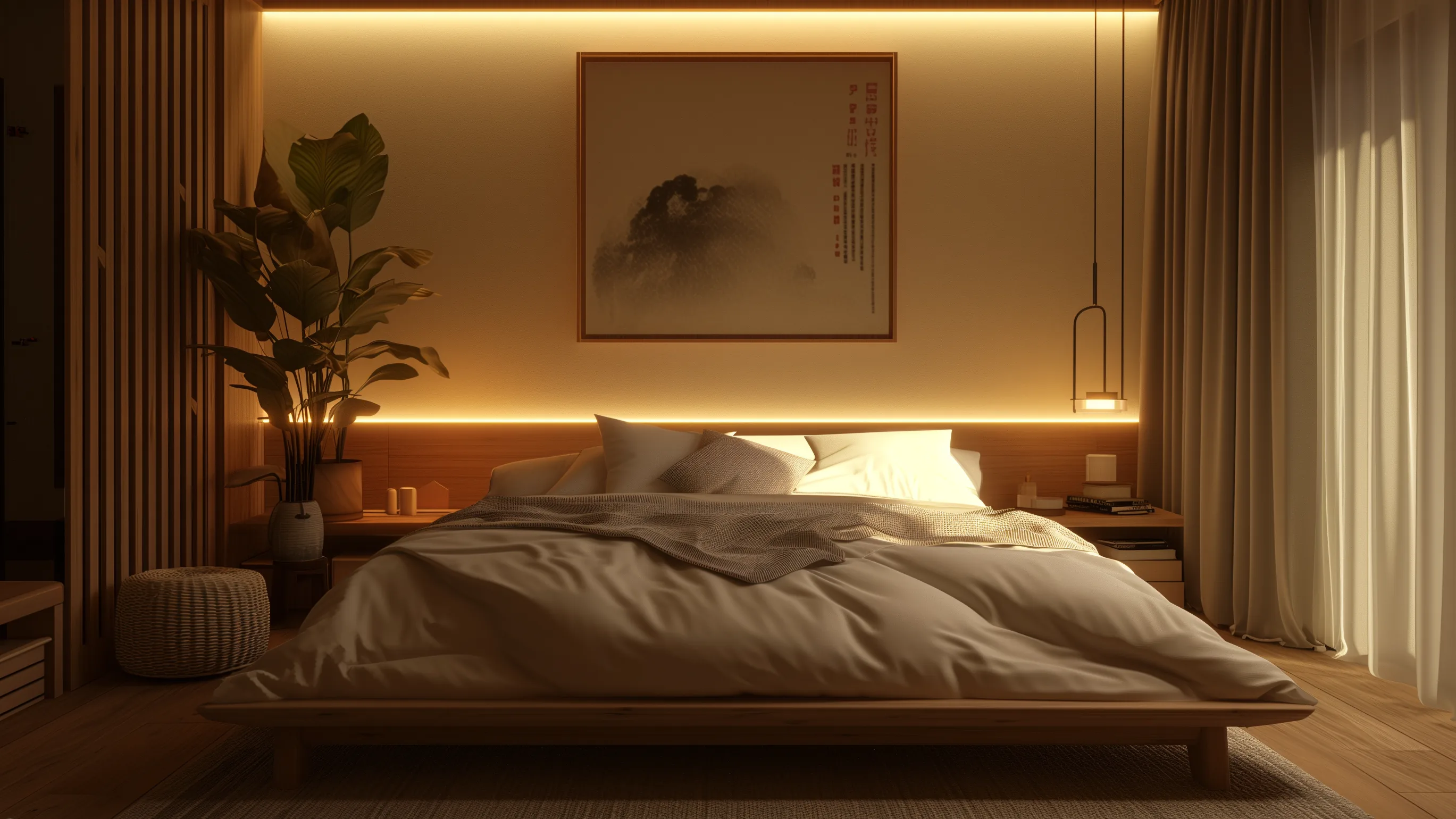
The first thing I’d change in most people’s bedside setup is the nightstand itself. Japandi nightstand selection is really about function: one flat surface for a lamp and a book, one drawer or shelf for what you need within reach overnight. That’s it. Nothing decorative sitting on top. No hardware that draws the eye. No design feature that requires explanation.
I’ve seen this work best with small floating shelves instead of traditional nightstands in narrower bedrooms. Two wall-mounted shelves at bed height, in raw oak or white oak veneer, cost almost nothing at IKEA and disappear into the wall in a way a traditional nightstand never does. The floor stays visible, the room breathes, and you haven’t spent $400 on a piece of furniture that does exactly the same job.
Storage That Disappears Into the Room
Japandi storage is essentially invisible storage. This doesn’t mean you need built-in cabinetry, though that helps. It means choosing pieces with flush fronts, simple or no pulls, and a finish that closely echoes the wall color. A wardrobe in matte white against a white wall stops registering as an object after a while. It becomes a wall with function rather than furniture in a room. That shift in perception is almost entirely responsible for the calm that Japandi bedrooms project.
Textiles Without the Mistakes I Made
Textiles are where most Japandi attempts go wrong, including mine. The instinct is to layer, to add warmth through volume. But Japandi requires restraint with textiles: fewer pieces, better quality, nothing competing with anything else. Contrary to what a lot of design posts suggest, adding more throws and pillows doesn’t make a Japandi bedroom feel warmer. It makes it feel like a different style entirely.
Linen Over Cotton for Bedding
The practical difference between cotton and linen bedding matters more in a Japandi bedroom than in most other styles. Cotton, especially percale cotton with a high thread count, looks finished in a way that reads as slightly too precise. Linen has texture. It has been washed many times. It carries a slightly relaxed quality that is exactly what the style calls for. Parachute and Cultiver both make linen bedding in natural tones that hit this note well, in the $150-$250 range for a full set. If that’s outside the budget right now, linen-cotton blends from IKEA’s BERGPALM or Casaluna lines get close enough while you’re saving up for the real thing.
The Rug Sizing Issue (That Nobody Talks About Enough)
I made this mistake in my previous apartment. Buying a 5×7 rug for a room with a queen bed, placed it under the lower half of the bed and the nightstands, and it looked small and out of proportion. The correct approach in a Japandi bedroom is to go larger than feels intuitive. An 8×10 under a queen, or a 9×12 under a king, where the rug extends far enough past the bed to leave at least 18 inches of visible rug on the sides and foot. A larger rug that sits mostly under furniture grounds the room. A smaller rug floating in the middle of the floor makes the whole thing look like staging.
For texture: the right choice in a Japandi bedroom is almost always a flat-weave or low-pile wool rug in a solid natural tone, not a patterned one. The moment you introduce a strong pattern, everything else has to work twice as hard to maintain the calm. You can find flat-weave wool rugs from Rugs USA and Loloi in the $200-$400 range for an 8×10 in natural tones. At this price they last for years without becoming a visual problem.
Plants, Ceramics, and Knowing When to Stop
The decorating decision I find hardest in Japandi is knowing when the room is done. There’s no natural “finished” signal the way there is in maximalist styles. A well-done Japandi bedroom, from the outside, looks like it was barely decorated at all. The discipline required to leave blank space that could hold another object is genuinely difficult. Most of us have to practice it actively.
Plants That Work Without Competing
Not every plant works in a Japandi bedroom. Ferns and trailing vines have a quality that pulls toward botanical or cottagecore more than Japandi. The plants that work best in this context are architectural: a single large Monstera, a snake plant, or a ZZ plant in a simple ceramic or stone pot. One plant, substantial enough to be meaningful, works better than three small plants that make the room feel like a garden center. The plant is not decoration. It is a natural material, like the wood and the linen.
Ceramics as the Only Real Ornament
The one genuine decoration I’d budget for in a Japandi bedroom is a good ceramic piece. Not a collection. One bowl, or one vase, or one handbuilt mug sitting on the nightstand. The wabi-sabi philosophy that runs through Japanese aesthetics is about finding beauty in imperfection and in objects that carry a sense of being handmade. A ceramic with slight unevenness, a glaze that pools differently on one side, a form that suggests a real person built it: that is the opposite of the mass-produced decorative objects that end up cluttering most bedrooms.
Etsy is the best source for this. Search for “wabi-sabi ceramic vase” or “handbuilt ceramic bowl” and filter by your approximate size and glaze color. Budget $40-$80 for something that will outlast every other piece in the room and improve as it ages.
Wabi-Sabi and Making Japandi Liveable
The piece of Japandi philosophy that actually makes the style liveable is wabi-sabi. Most introductions to it describe it as “finding beauty in imperfection,” which is true but too vague to be actionable. The more useful way to think about it, for bedroom purposes, is this: objects that look like they have a history are appropriate here, and objects that look like they were purchased yesterday and need to stay perfect are not. If that framing sounds different from what you’ve read elsewhere, the fuller guide on wabi-sabi interior design goes deeper into the philosophy and how it translates to real rooms.
What Wabi-Sabi Means for Your Bedroom Specifically
In practice this means the slightly battered wooden tray on the nightstand stays. The small scratch on the bed frame that you keep meaning to fix stays. The linen pillowcase that’s been washed enough times to soften and slightly fade stays. Japandi is not interested in the pristine. It is, in a way I found genuinely surprising the first time I encountered the concept, interested in the used.
This is also where Japandi parts ways with a lot of minimalist interior design content online, which tends to fetishize the brand-new and the untouched. The minimalist ideal is often a room that looks like no one lives in it. The Japandi ideal is a room that looks like someone lives in it thoughtfully. Those are different things.
Adapting Japandi to the Room You Already Have
Contrary to what most redesign posts suggest, you don’t need to clear the room and start over. The first thing I’d change in almost any bedroom is the decorative items: remove anything that’s there for decoration alone and store it somewhere out of sight for two weeks. If you don’t miss it, it doesn’t go back. That single step makes almost any bedroom look closer to Japandi than any amount of new furniture. It costs nothing and takes an afternoon.
After that, the next highest-impact changes are: linen bedding, a neutral rug if you don’t have one, and removing any furniture that doesn’t have a clear purpose. A bedroom with four solid pieces of furniture in the right materials looks more Japandi than a bedroom with twelve pieces, even if the twelve-piece room has better individual items. The Scandinavian interior design approach offers a useful parallel framework here: buy less, buy better, accept that empty space is part of the design.
If you want to take it further, swapping out curtains makes a bigger difference than most people expect. Heavy drapes or anything with a pattern will fight the rest of the room. Sheer linen curtains in off-white or natural flax, hung as high as the ceiling allows, let the window breathe and make the room look taller than it is. In a rental where you can’t repaint, this is often the single most effective change available.
Frequently Asked Questions
What are the essential japandi bedroom essentials for someone starting from scratch?
Start with the bed frame, bedding, and rug before anything else. A low-profile bed in natural wood, linen bedding in a warm neutral, and a flat-weave wool rug in a solid natural tone will account for most of the visual impact. Add one plant and one ceramic object, and stop there until the room settles.
How do I create a japandi bedroom on a limited budget?
Start by removing rather than adding. Take out any purely decorative items and store them for two weeks. If you don’t miss them, they don’t go back. Then prioritize linen bedding (linen-cotton blends from IKEA work well) and a neutral flat-weave rug. Both have more impact per dollar than new furniture.
Do japandi bedrooms have to be all beige and grey?
No. The palette should be neutral and nature-based, but that includes warm taupes, soft sage greens, dusty clay tones, and muted terracottas. The principle is that colors should feel like natural materials rather than paint choices. Avoid anything bright or saturated.
What plants work best in a japandi bedroom?
Snake plants, ZZ plants, and Monstera are consistently good choices because they are architectural and low-maintenance. One larger plant in a simple stone or ceramic pot works better than several small plants grouped together. The plant should feel like a natural material, not a decoration.
Is japandi the same as minimalism?
Related but different. Minimalism is about reduction as a goal in itself and can result in rooms that feel cold or sterile. Japandi allows for warmth, texture, and natural objects as long as they are intentional. The wabi-sabi element specifically embraces imperfection and use, which minimalism often avoids.