Neutral Minimalist Bedroom: What the Look Actually Requires

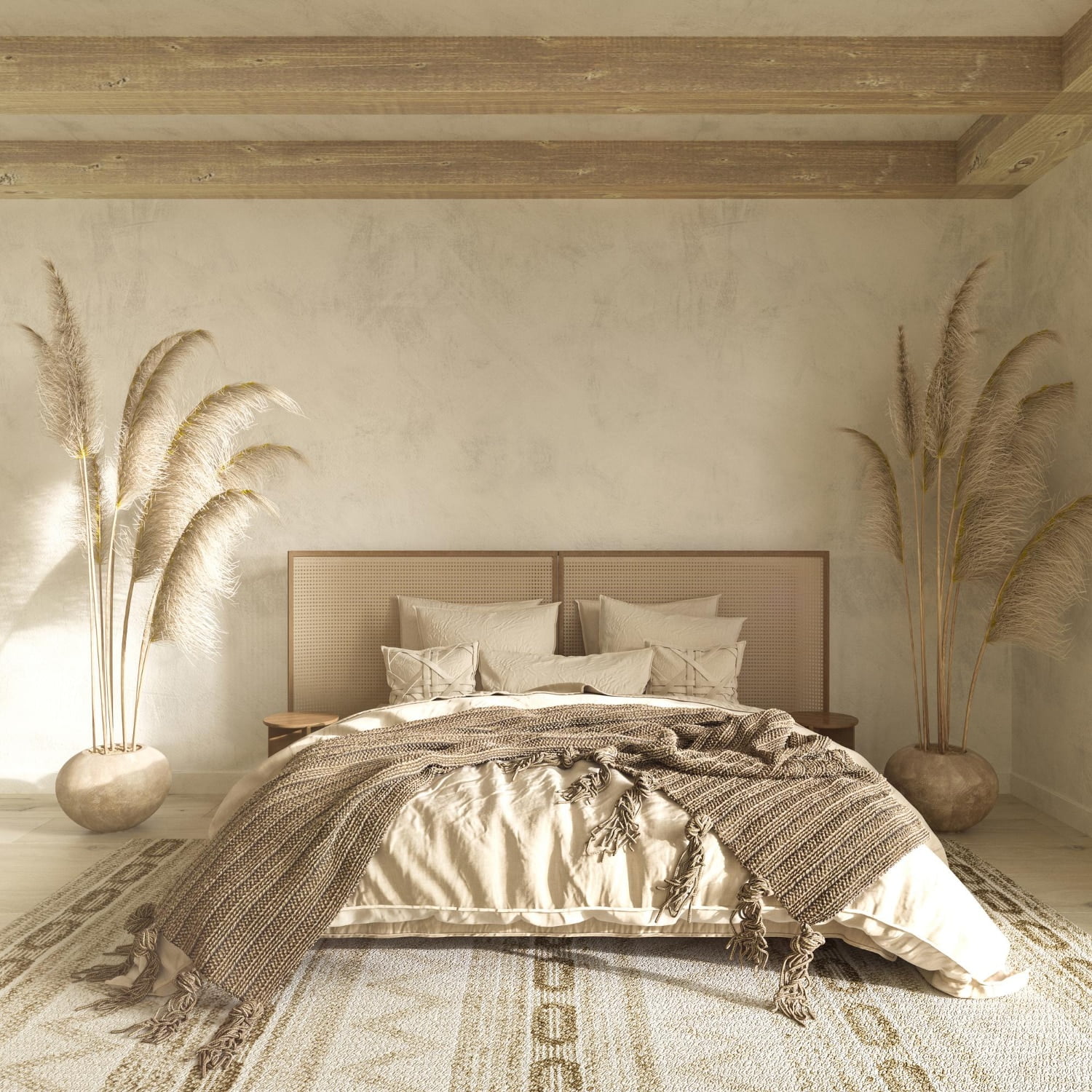
Neutral minimalist bedrooms have been on my radar for a long time, partly because clients always ask for them and partly because I’ve designed enough of them to know what separates the ones that work from the ones that just look like a hotel nobody would want to stay in. The style has specific principles behind it, and understanding those principles is the difference between a bedroom that feels genuinely restful and one that feels cold.
The key principle here is constraint. Not deprivation, not austerity, but deliberate constraint: fewer pieces, each chosen carefully for both function and form. I’ve seen this work when a client in Lincoln Park replaced a room full of furniture she’d accumulated over a decade with four well-chosen pieces. The room got twice as useful and three times as calm. That’s what neutral minimalism does at its best.
Key Takeaways
- A neutral color palette (off-whites, warm grays, stone tones) provides the visual stability that makes a minimalist bedroom feel settled rather than sparse.
- Furniture selection is about restraint: every piece should justify its presence through function, scale, or both.
- The quality of textiles and light sources matters more in a minimalist bedroom than anywhere else, because there is nothing else to carry the room visually.
Fundamentals of Neutral Minimalist Bedroom
The fundamentals come down to three things: color, structure, and editing. Get these right and the rest follows. Get them wrong and no amount of careful accessorizing will fix the room.
Color in a neutral minimalist bedroom is not simply “pick white.” White is actually one of the harder choices because not all whites read the same. Benjamin Moore’s Simply White has yellow undertones that read warm against wood. Chantilly Lace is cooler and crisper. The difference matters when the room has limited visual complexity, because the wall color becomes a dominant presence rather than a background.
Structure refers to the furniture’s visual weight and profile. Low, horizontal pieces keep the eye calm. A platform bed sits lower than a traditional frame, which reduces the visual mass in the upper half of the room. This is a mechanical decision, not just an aesthetic one: less visual mass in the upper third of a room makes the ceiling feel higher and the space feel less crowded.
Editing is the most important and the hardest. A neutral minimalist bedroom requires you to remove things you might actually like. A lamp that is perfectly functional but slightly ornate belongs in a different room. I’ve had clients get stuck here, trying to find a way to keep a piece that breaks the logic of the room. The answer is almost always no. The room will tell you when something doesn’t belong.
The fourth element, which doesn’t get discussed enough, is material honesty. Neutral minimalism works best when materials are what they appear to be: wood is wood, linen is linen, concrete is concrete. Faux materials introduce a visual ambiguity that the style cannot absorb well.
Color Palette and Walls
Neutral Tones and Paint Colors
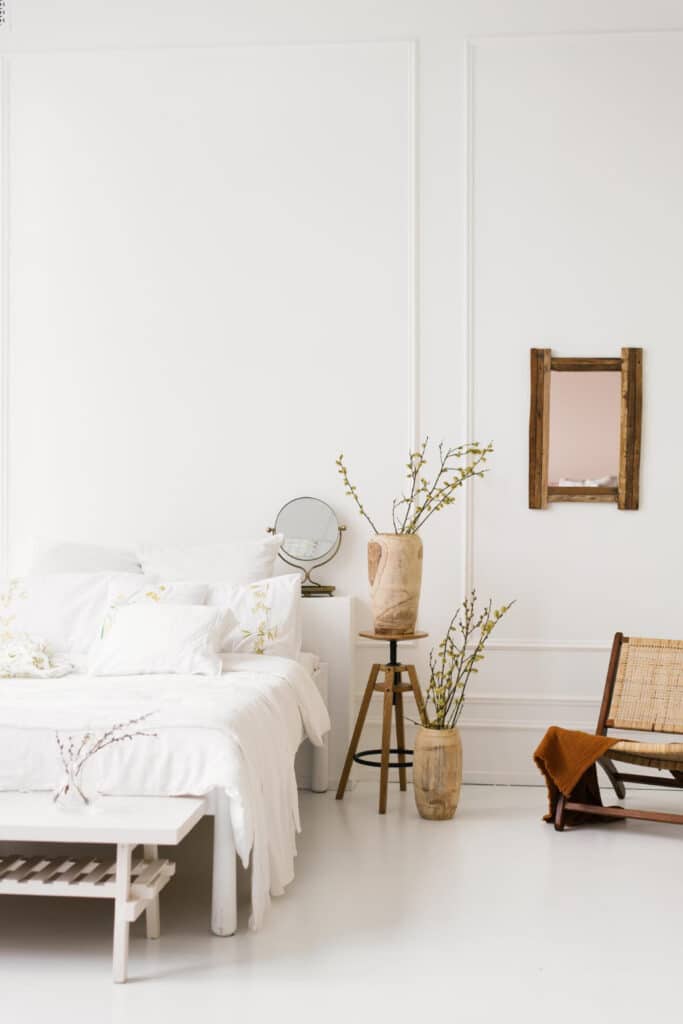
The practical range for a neutral minimalist bedroom runs from off-white to warm mid-gray, with the occasional foray into greige or stone. These are not interchangeable. Off-white reads as clean and spacious. Warm gray reads as settled. Stone and greige introduce an earthiness that works especially well in north-facing rooms where natural light comes in cool. When selecting paint, I recommend sampling at least three options and living with them through a full day, morning to evening. A color that looks right at noon can shift significantly under incandescent lighting at 10pm, which is when most people actually spend time in their bedrooms. For a useful reference range, neutral-colored bedroom inspiration is a good starting point, but the color has to be evaluated in your specific room and light conditions.
Colors in your neutral palette should read consistently across the room’s surfaces. If the wall color has warm undertones, the linens and furniture finishes should share that warmth rather than pulling cool. One undertone direction throughout the room is what creates visual cohesion. Mixing warm and cool neutrals in the same space produces a room that feels off without the reason being immediately obvious.
Accent Wall and Wall Sconces
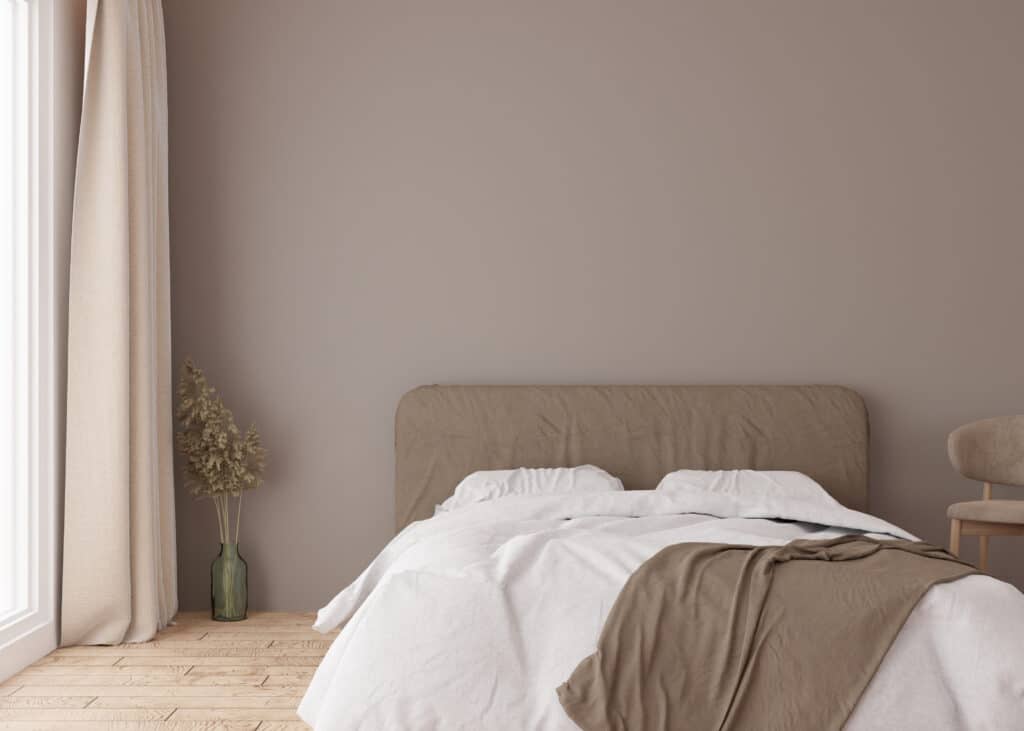
An accent wall in a neutral minimalist bedroom is worth doing only if it serves a clear visual purpose: establishing the head of the bed, defining the room’s proportional center, or introducing a material shift rather than just a color difference. Venetian plaster or limewash in a coordinating tone, for example, creates visual interest through surface quality rather than contrast. A slightly darker neutral on the wall behind the headboard is the most reliable approach. It frames the bed without demanding attention from across the room.
Here are some ideas for accent walls in a neutral minimalist bedroom:
- Monochromatic with value shift: A warm gray accent wall against off-white side walls adds depth without visual disruption. The key is keeping the undertones consistent across both colors.
- Textured material: Venetian plaster or limewash in a coordinating neutral shade introduces visual interest through surface quality rather than color contrast.
- Paneling: Vertical or horizontal wood panels in a natural finish add warmth and a tactile quality that flat paint cannot achieve. Keep the panel profile simple and the finish matte.
Wall sconces at the bedside are more practical than table lamps in a minimalist bedroom because they eliminate two surfaces of clutter. The mounting height matters: sconce center should sit roughly 60 to 65 inches from the floor for comfortable reading while seated in bed. Choose a fixture with a simple shade or a direct arm design, and keep the finish consistent with the other metal in the room.
Bedroom Furniture
Choosing the Bed
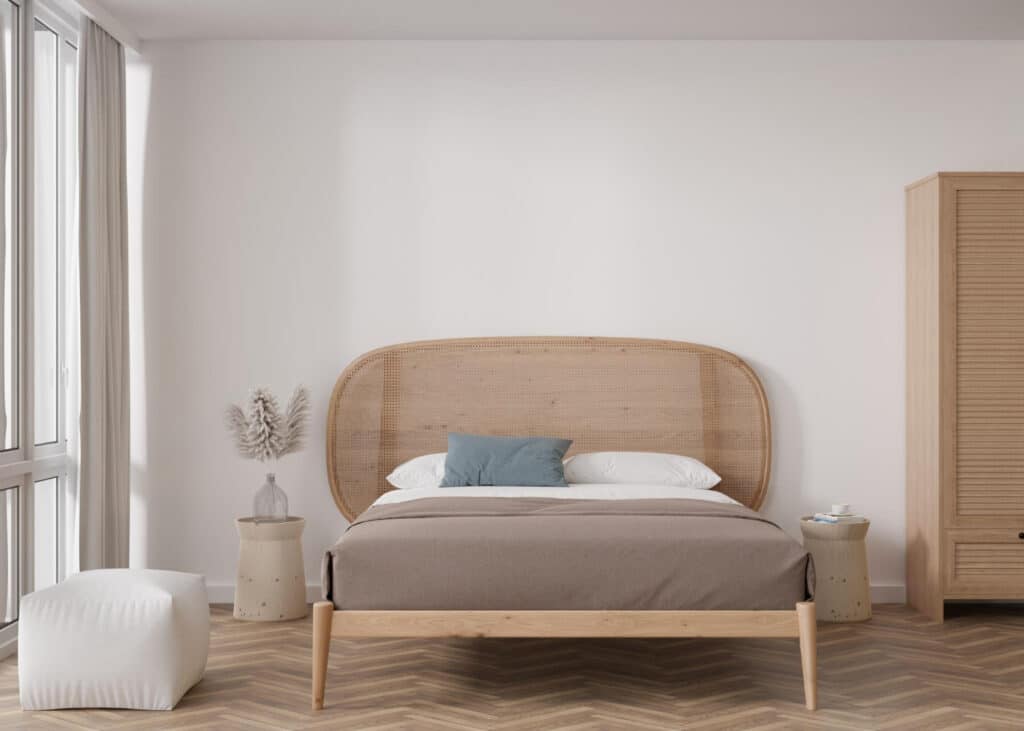
The bed is the room’s primary visual anchor, and in a minimalist bedroom it carries more weight than usual because it’s essentially uncompeted. A platform bed or a low-profile frame with a clean headboard is the right structure. I’d steer away from upholstered headboards with deep tufting: they’re comfortable but they introduce too much visual complexity for a minimalist room. A simple linen-wrapped panel headboard or a solid wood slab headboard achieves the right balance. Keep bed linens in the neutral palette. One or two accent pillows is enough. The design logic here is similar to what you find in mid century modern bedroom design: restraint in the primary piece makes everything else in the room work harder and read better.
Nightstands and Dressers
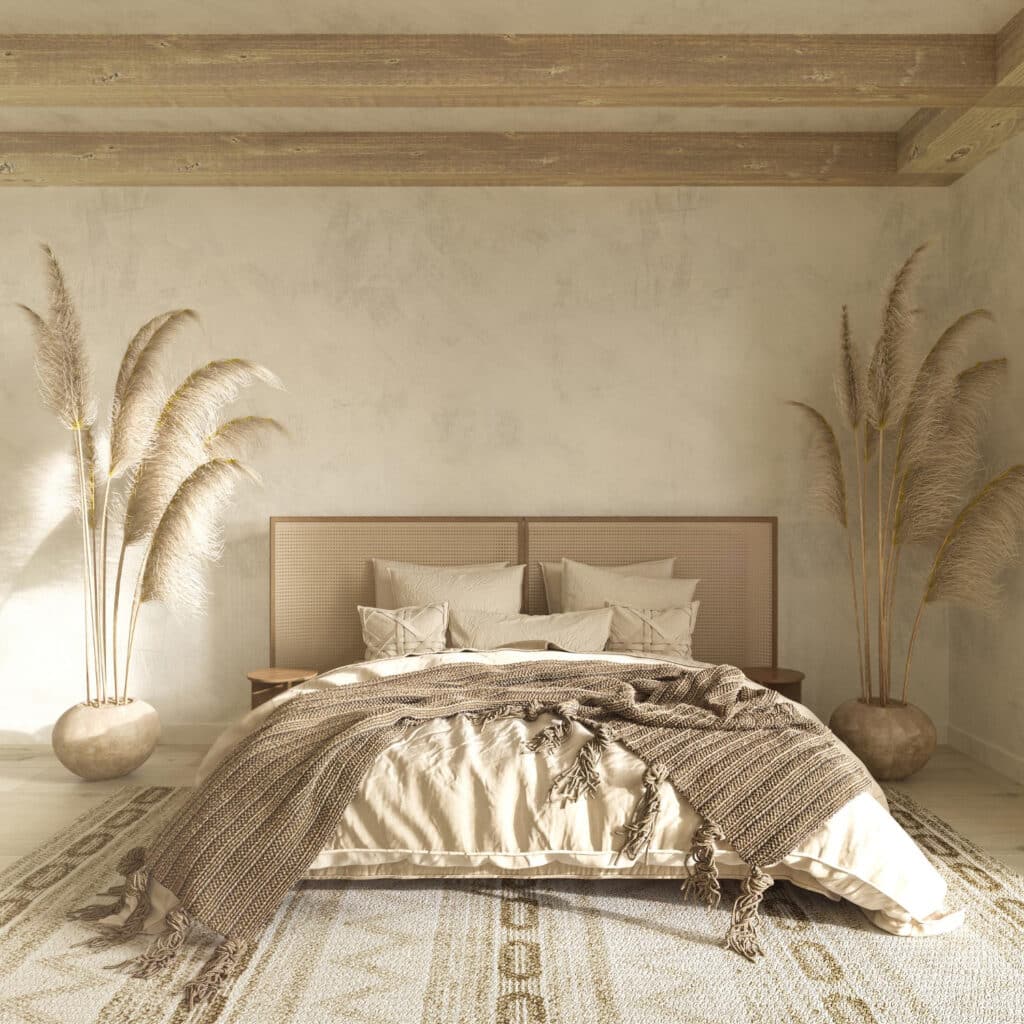
Nightstands in a minimalist bedroom function as edited surfaces, not storage dumps. The goal is to keep the visible surface to two or three items: a lamp, a book, maybe a glass of water. This means the nightstand needs real storage: a drawer or a shelf below. A floating shelf mounted to the wall works if the room is small, but it limits storage to whatever is on the surface, which means nothing can be hidden.
Dressers should be proportional to the room. An oversized dresser with six drawers and ornamental hardware reads as heavy in a minimalist space. Look for designs with flush or recessed pulls and clean edges. The Scandinavian furniture tradition has produced some of the most useful minimalist storage forms, and understanding why those proportions work is worth the time. The approach to restraint in Scandinavian interior design directly informs how minimalist bedroom furniture should be selected and scaled.
Key features for minimalist nightstands and dressers include:
- Low profile with proportional height relative to the bed frame
- Flat or recessed hardware, no ornamental pulls or decorative edging
- Adequate drawer storage to keep surfaces clear
- Natural material or matte finish, no high-gloss surfaces or faux textures
Closets and Closet Doors
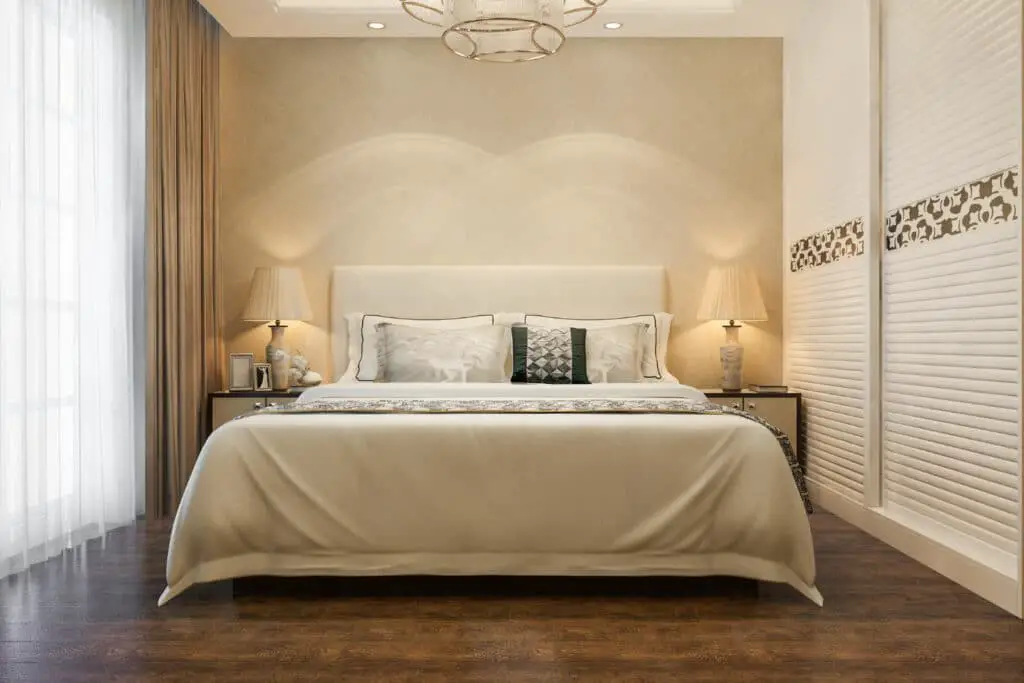
A minimalist bedroom needs good storage infrastructure because the style depends on keeping things out of sight. Built-in closets are better than freestanding wardrobes, which tend to dominate a wall regardless of their design. If you have freestanding wardrobes, choose ones that run floor to ceiling rather than stopping mid-wall: the visual continuity reads as significantly calmer.
Sliding doors or floor-to-ceiling panel doors work best. Bifold doors with visible hinges and tracks look messy in a room that relies on clean lines. A mirror panel on the closet door is worth considering, not primarily as a design gesture, but because it borrows light from the windows and makes the room feel larger. I used this approach in a 280-square-foot studio bedroom once, and the effect on the room’s perceived depth was substantial.
Remember to:
- Use uniform hangers to reduce visual noise inside the closet when the doors are open
- Choose closet doors that align with the room’s wall color or the floor-to-ceiling paneling system
- Install interior lighting so the closet is functional in low-light conditions, not just tidy in daylight
- Avoid piling items on the closet floor: use dedicated storage bins or drawer inserts instead
Minimalist Bedding and Textures
Simple and Crisp Bedding
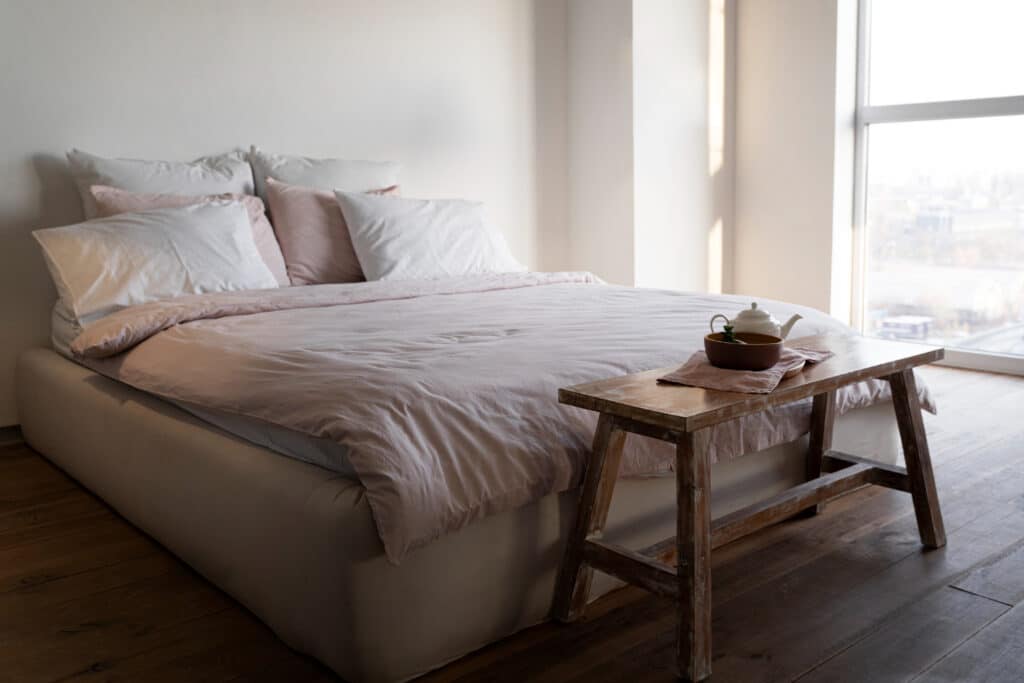
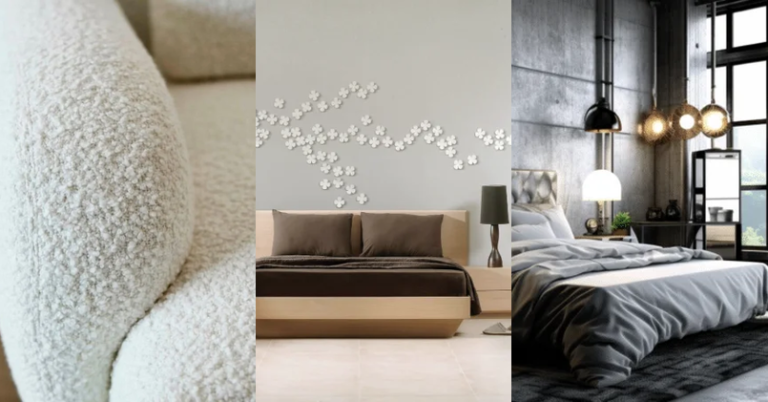
Bedding in a neutral minimalist bedroom does more visual work than it does in most other styles, because it’s one of the few design-active surfaces in the room. This means material quality matters more than it might elsewhere. Classic cotton sheets in a high-thread-count percale hold their own as a design element at off-white or warm linen tone. The same color in a cheaper fabric reads as an afterthought rather than a choice.
Stick to one or two colors in the bedding, and keep patterns to a minimum. A subtle woven texture in a linen duvet cover adds surface interest without visual complexity. I’ve tested this repeatedly with clients: a room with monochromatic bedding and varied texture holds attention better and reads as more considered than a room with patterned bedding in multiple colors. The minimalist logic is consistent even at the textile level.
Accent Pillows and Throws
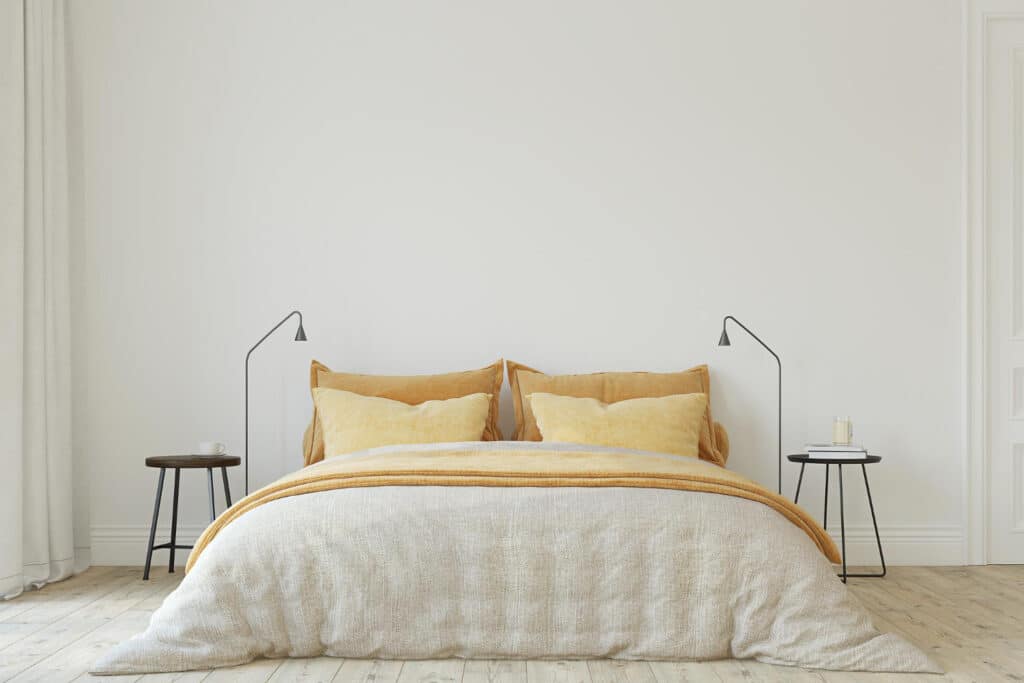
Accent pillows are where most people over-decorate a minimalist bedroom. Two or three carefully chosen pillows is the right number. More than that and the bed starts to look like a retail display. The pillows should differ from each other in texture rather than in color: a smooth linen pillow next to a heavier knit creates more visual interest than two different-colored smooth pillows placed side by side.
A throw placed at the foot of the bed serves a practical purpose alongside its visual one. It should be folded or draped in a way that reads as intentional, not dropped on casually. Cashmere and heavyweight linen are good material choices. Thin decorative throws in synthetic fabrics look exactly as inexpensive as they are, and in a room with limited visual complexity, that registers immediately.
Stick to throws that use simple patterns if you use patterns at all: thin stripes, herringbone, or a single-color weave. Bold graphic patterns pull attention in a way that disrupts the room’s visual logic. The throw is a comfort piece that should support the room’s calm, not compete with it.
Decorating and Patterns
Patterns in a neutral minimalist bedroom are a tool for adding visual depth without adding visual noise. Used correctly, they contribute structure. Used incorrectly, they become the dominant element in a room that’s supposed to be calm. In practice, this means keeping patterns to textiles and rugs, keeping scales modest, and sticking to geometric forms rather than organic or figurative ones.
Geometric and Striped Rugs
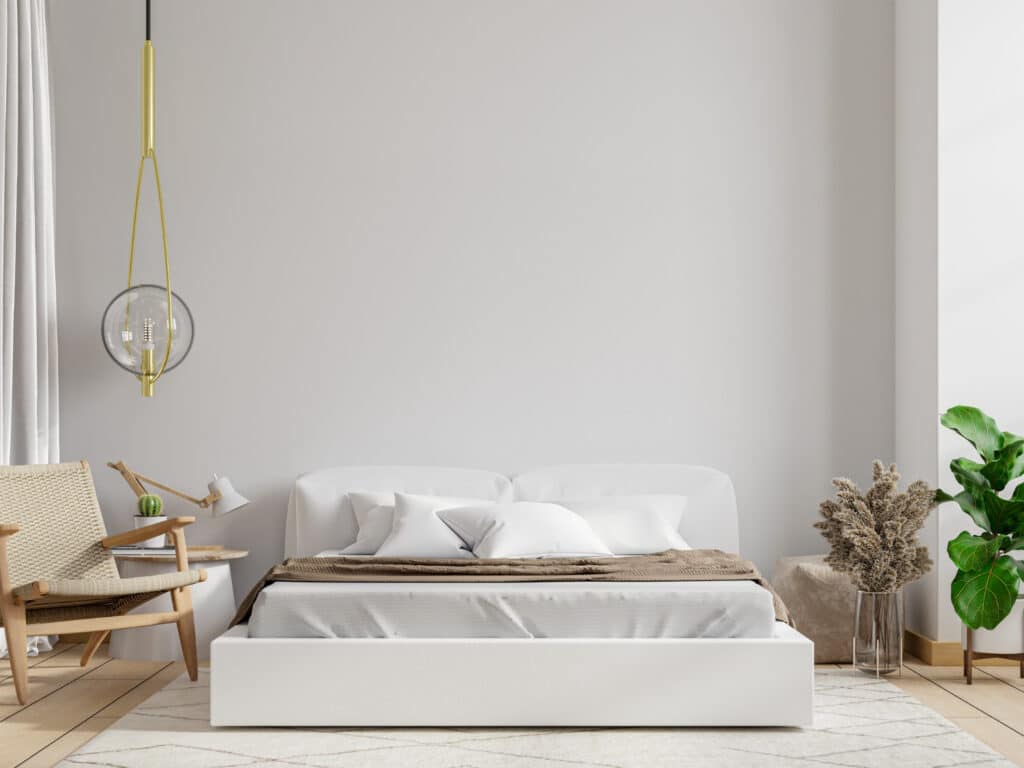
A rug in a minimalist bedroom grounds the bed and defines the floor zone without requiring extra furniture to do that work. The size matters as much as the design: a rug that’s too small looks lost, and a rug that’s too large eliminates the visual contrast between floor and textile that makes the piece work. A common and reliable guideline is to place the front legs of the bed on the rug with the rug extending 18 to 24 inches on either side. A simple area rug in a geometric or striped pattern adds warmth and texture without competing with the room’s primary surfaces.
Geometric designs:
- Circles
- Triangles
- Rectangles
- Diamonds
Striped designs:
- Vertical stripes
- Horizontal stripes
- Diagonal stripes
- Zigzag patterns
Keep the rug’s color range within the room’s existing palette. A rug that introduces a new color, even a neutral one that seems close, creates a visual event that competes with the bed as the room’s center of gravity. The goal is a consistent color palette from floor to ceiling.
Art and Prints
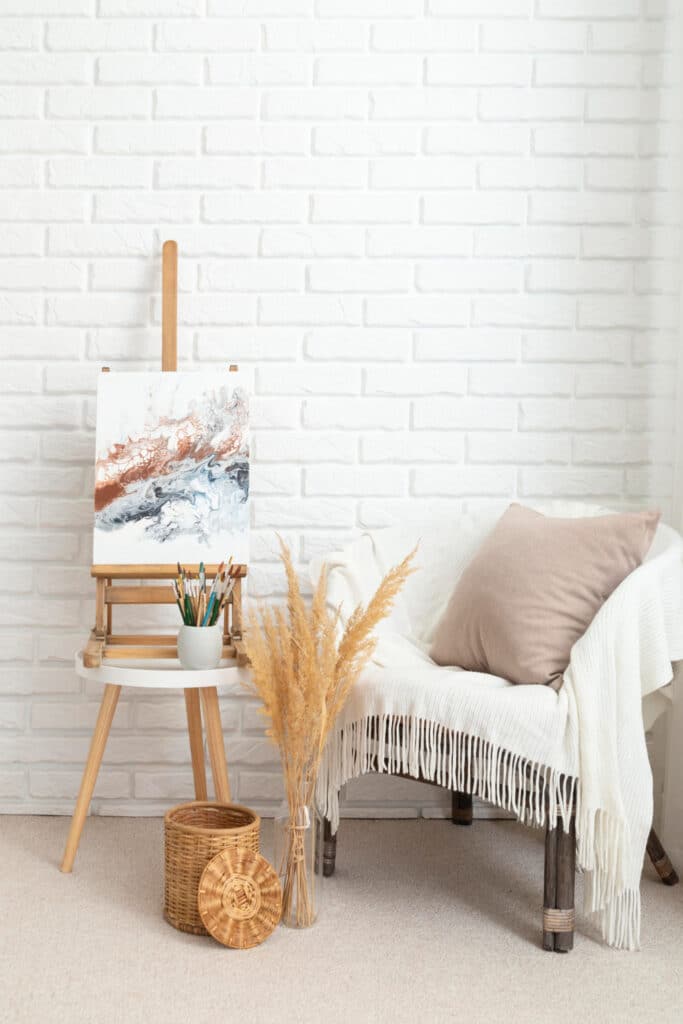
Art in a minimalist bedroom works best as a singular statement rather than a grouped arrangement. A single work, properly sized and placed, reads as an intentional design choice. Multiple smaller works grouped together read as decoration, which is a different category with different results. One piece above the dresser or on a side wall, properly scaled for the wall it occupies, is usually enough.
- Abstract work with a limited palette drawn from the room’s existing colors
- Nature photography with strong compositional restraint and significant negative space
- Line drawings or prints with substantial white space relative to the mark-making
Additionally, a few curated books on a bedside surface or floating shelf add the layer of inhabitation that makes a minimalist bedroom feel like a home rather than a showroom. Small details like this signal taste without requiring additional visual processing from anyone looking at the room.
A quiet room is not the same thing as an empty room. The distinction matters. Thoughtful selection of art and a few personal objects adds the necessary layer of inhabitation. Without it, even a well-designed minimalist bedroom can read as staged rather than lived in.
Lighting and Windows
Natural Light and Window Treatments

Natural light functions as a material in a neutral minimalist bedroom, not just a convenience. The quality and direction of light affects how every surface reads throughout the day, which makes window treatment choices load-bearing design decisions rather than decorative ones. Sheer linen or cotton curtains hung at ceiling height, not at window height, make the most of available light and create the impression of taller ceilings. This is one of the most cost-effective changes you can make in a bedroom. Roller shades in a neutral, light-filtering fabric are a practical alternative where privacy is a primary concern. The principle underlying harmony in interior design applies directly here: window treatments need to work with the wall color and floor material as a system, not just function on their own.
Natural light also affects how the room’s neutral palette reads at different times of day. A white wall that looks clean and crisp at midday may shift warm at golden hour and distinctly cool in early morning. Designing for this range, rather than for a single lighting condition, is what separates a room that works all day from one that only photographs well at a specific hour.
Artificial Lighting Options
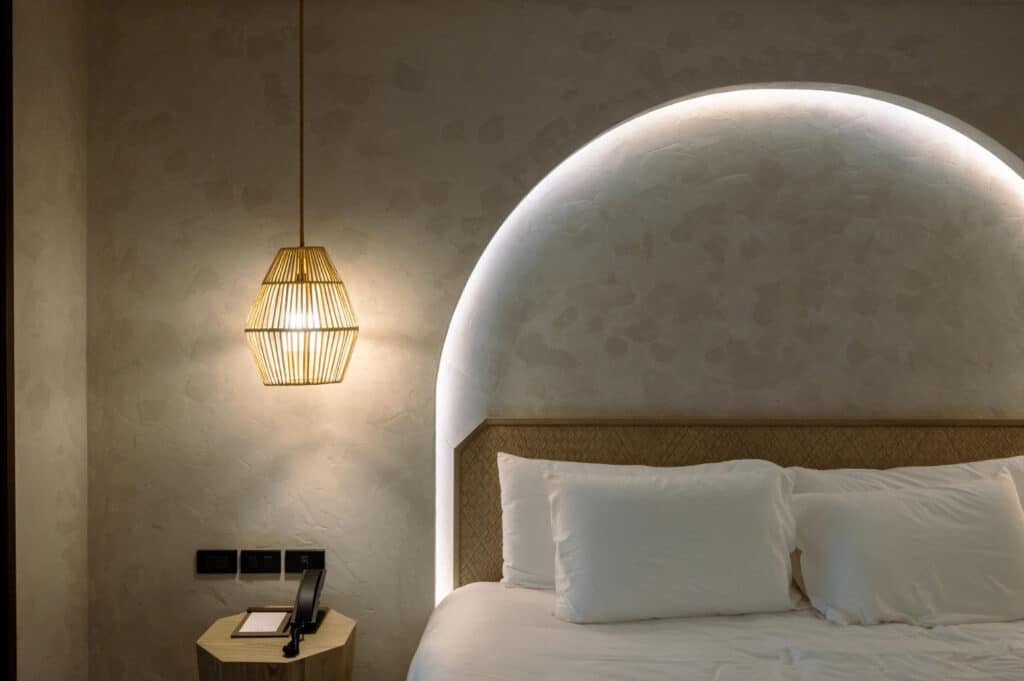
Artificial lighting in a minimalist bedroom requires a layered approach: ambient light for the overall room, task light for reading, and a dimmable source for transitional evening use. Wall sconces on either side of the bed handle task lighting while keeping the nightstands clear of table lamps. This is a practical gain and a visual one: fewer objects on surfaces means fewer things the eye catches when the room is supposed to be at rest.
Recessed downlights on a dimmer are a clean ambient solution, though they require ceiling depth to accommodate the fixture housing. In rooms where recessed lighting isn’t possible, a single pendant with a linen or paper shade hung from the ceiling at approximately 60 inches from the floor provides ambient light without visual clutter. The fixture material should be consistent with the room’s material palette. A brass pendant in a room with chrome hardware creates a conflict that quietly undermines the room’s visual unity.
By combining natural light, appropriate window treatments, and a layered artificial lighting plan, you create a room that responds correctly to different times of day and different uses. That adaptability is part of what makes a well-designed neutral minimalist bedroom feel livable rather than just photogenic.
Accessories and Details
Adding Pops of Colors
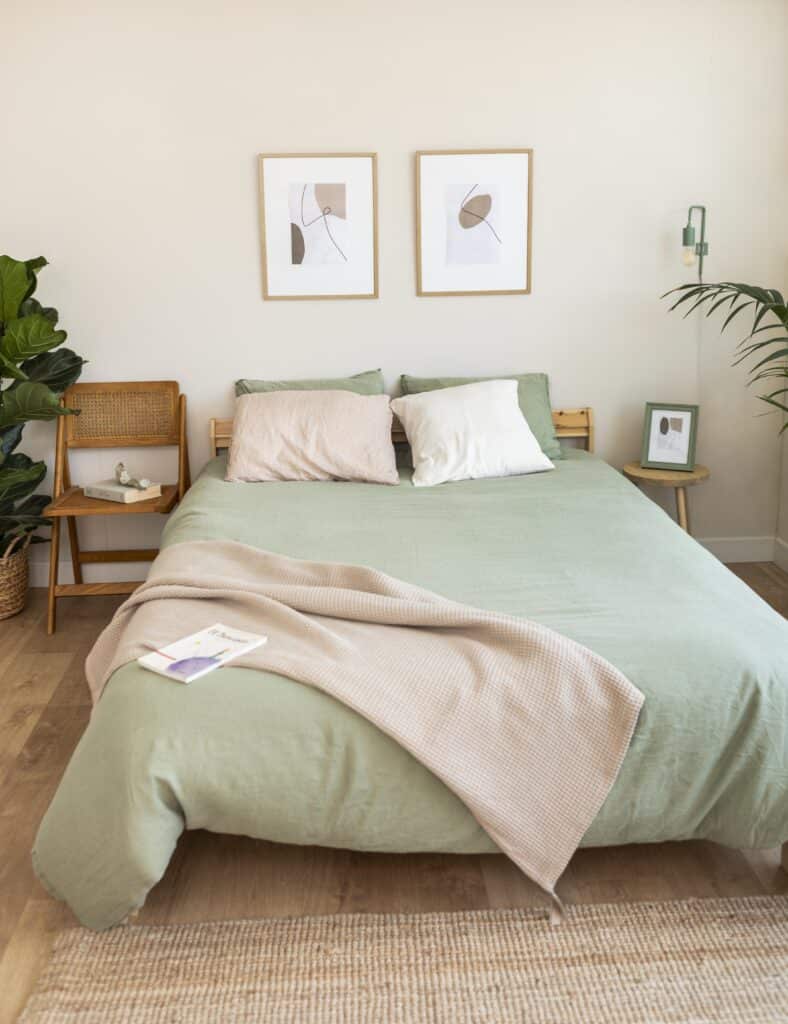
Color accents in a neutral minimalist bedroom work best when restricted to a single value range: either warm (terracotta, rust, dusty olive) or cool (slate blue, sage, muted forest green), not both simultaneously. A terracotta throw pillow and a dusty sage plant pot in the same room create a visual argument that the neutral palette cannot mediate. Pick a direction and commit to it. The pops of color should feel like a considered addition, not an afterthought.
Plants and Floral Accents
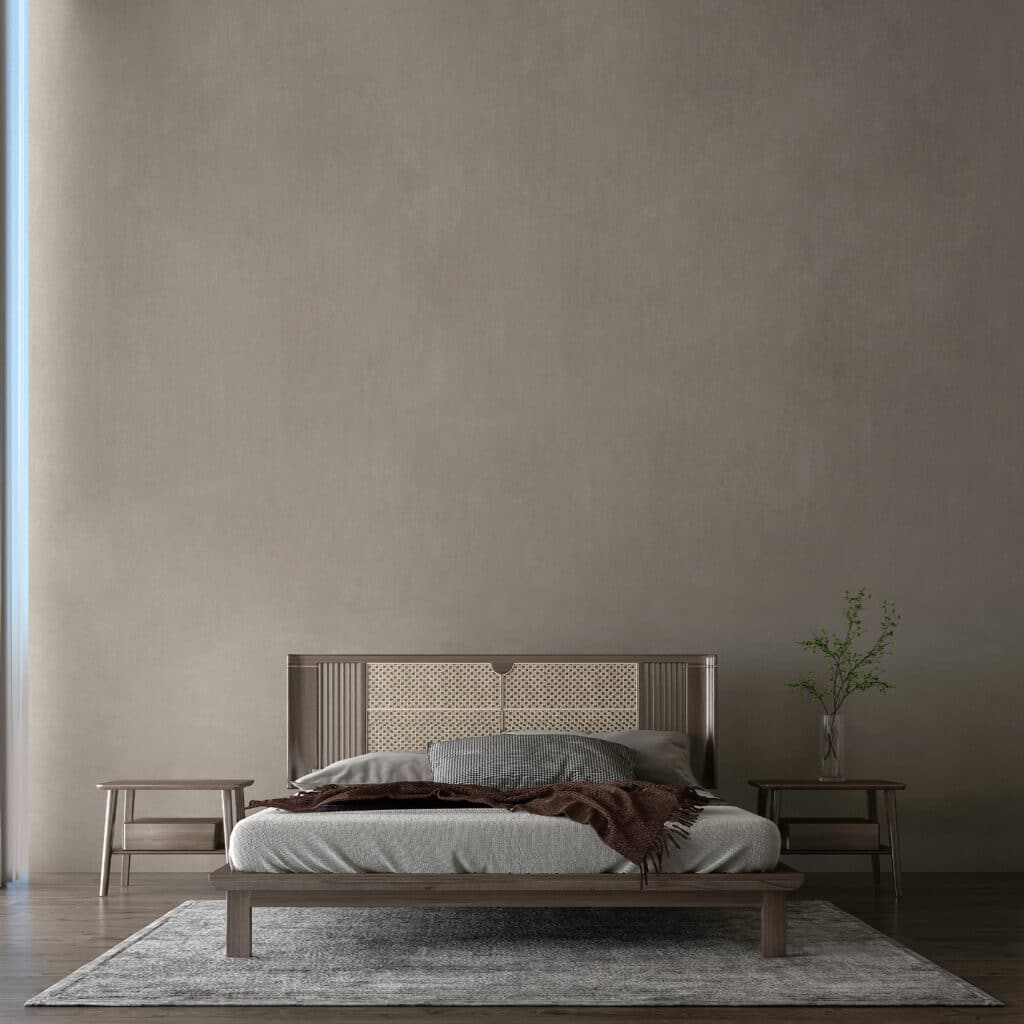
Plants are one of the few additions to a minimalist bedroom that justify their presence on functional grounds: organic form, variable texture, and in some cases measurable air quality improvement. I keep a rubber plant in my own bedroom specifically because the large, simple leaf form reads as architectural rather than decorative, which fits the room’s logic. Snake plants and pothos work similarly: they add life without requiring complex visual processing.
Floral accents work in limited quantities. A single dried stem arrangement or a small ceramic with a neutral floral design can introduce a natural reference without tipping into botanical-themed decor. The distinction matters in minimalism: a reference to nature is different from a nature theme, and the latter tends to overtake a room that has limited visual competing elements.
Keep the layout clean and organized before introducing any plant or accessory. The best additions in a minimalist room are ones that look deliberate, and deliberate is much harder to achieve in a space that hasn’t been properly edited first. Accessories are the last layer, not the first fix.
Creating a Relaxing Space
Achieving a Sense of Calmness
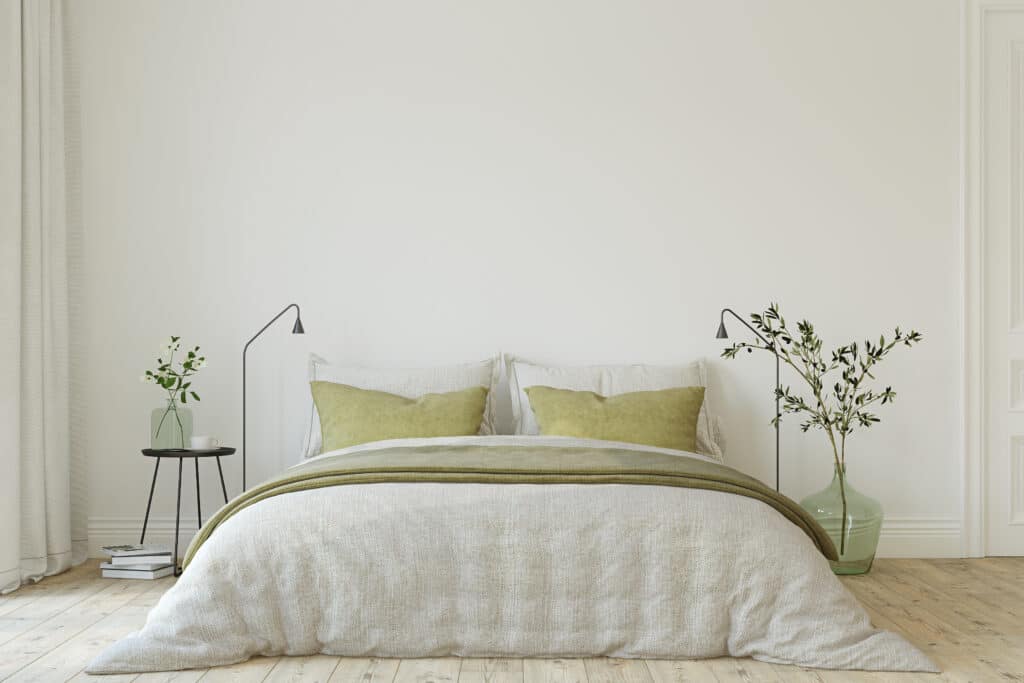
The calm that a neutral minimalist bedroom produces is a result of reduced visual load, not of any particular color choice. The key principle here is that the brain processes a room continuously, even when you’re not consciously looking at it. A room with fewer competing visual elements requires less processing. That’s not abstract; it’s just how visual attention works, and it’s why the style has consistent practical value for people who need their bedroom to function as actual rest space.
In practice, this means that a neutral color palette sets the foundation, while comfort choices like a quality mattress, good linens, and a reading chair by the window complete the picture. I’ve worked with clients who were skeptical of minimalism as an aesthetic but chose it because they weren’t sleeping well. After the room was redesigned, the feedback was consistent: the room felt easier to be in. Prioritizing both visual restraint and physical comfort is what makes the style work beyond the photographs.
Decluttering and Storage Solutions
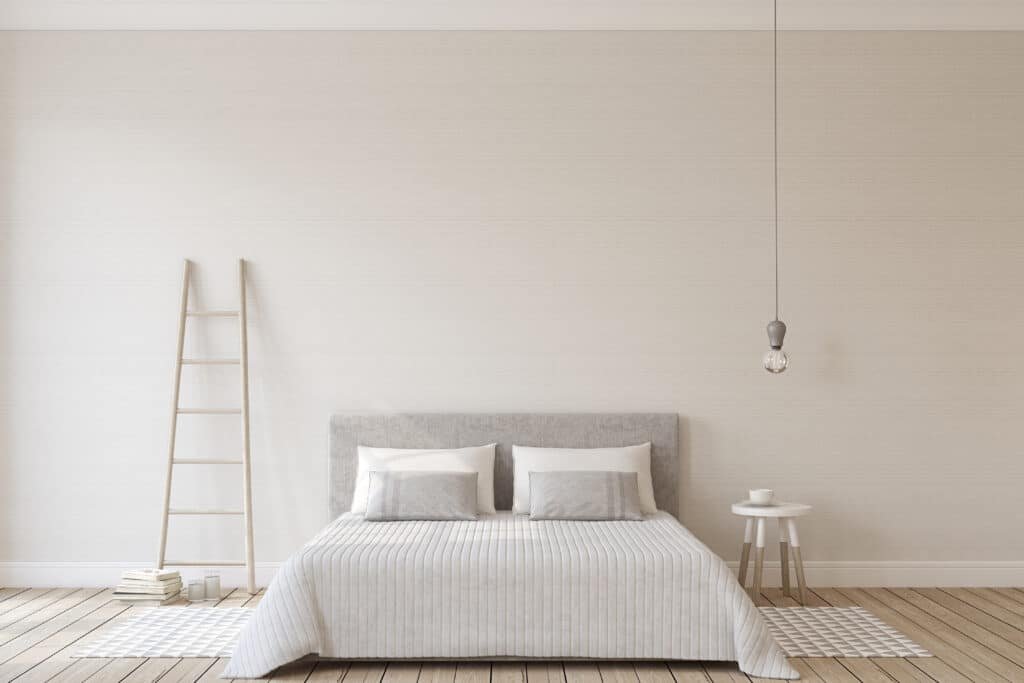
Decluttering a bedroom is not a one-time event; it’s a maintenance practice. The reason neutral minimalist bedrooms in aspirational photos show no visible personal items is that the style requires continuous editing. Things come into the room and need to leave regularly. This is a lifestyle choice alongside a design choice, and it’s worth understanding that before committing to the style.
Smart storage makes the maintenance practice easier. Implementing storage solutions through built-in cabinetry with concealed hardware is better than freestanding furniture because it reduces visible surfaces. Under-bed storage is useful if the bed frame allows it, though visible storage containers under a low-profile bed look messy in practice. Built-in drawer bases are significantly cleaner. Multi-functional furniture like a bed frame with integrated drawers or a storage ottoman reduces the total number of pieces in the room without reducing function.
The result of doing this correctly is a room that maintains its visual calm with minimal daily effort. The storage system needs to work for how you actually live, not how you imagine you might live in an ideal scenario. That honest version of planning is what neutral minimalist design asks of you, and it’s why the style rewards careful thought before the first piece of furniture is moved.
Conclusion
A neutral minimalist bedroom is worth designing carefully because the style is unforgiving of compromises. Every element is visible and every element carries weight. When it works, the room reads as intentional, calm, and well-proportioned. When it doesn’t, it reads as empty or cold, which is the failure mode most people are trying to avoid.
The furniture selection process is where most rooms succeed or fail. The right pieces at the right scale, in the right material, create a room that looks designed rather than assembled. Selecting a simple bed frame with built-in storage, for instance, solves a clutter problem while contributing to the room’s visual logic rather than complicating it.
Natural light deserves more attention than it usually gets in bedroom design. How the room reads at different times of day, in different weather conditions, is a real consideration. The window treatments are a significant design lever. Leaving windows unobstructed or using light-filtering treatments keeps the room connected to the day’s changing light rather than insulated from it.
A few well-chosen plants and accessories complete the room without compromising the style. The approach shared between neutral minimalism and Japandi design is worth understanding: the Japandi bedroom shares significant design logic around material honesty and visual restraint, and the two styles offer useful precedents for each other.
The goal is a bedroom that functions well, looks considered, and doesn’t require much from you at the end of the day. That’s a specific and achievable outcome, and the design decisions described in this guide are how you get there.
Frequently Asked Questions
What is a neutral minimalist bedroom?
A neutral minimalist bedroom is a sleeping space built around a restrained color palette (off-whites, warm grays, beiges, stone tones) and a deliberate reduction of furniture and decor to what is functional and well-proportioned. The goal is to reduce visual load so the room supports rest rather than competing for attention.
How do I create a neutral minimalist bedroom?
Start with the largest decisions first: wall color, bed frame, and flooring. These establish the room’s foundation. Then select supporting furniture for function and scale. Edit anything that breaks the room’s visual logic, even if you like the individual piece. Material quality matters more in minimalist rooms because there is less to distract from what’s there.
What are the benefits of a
neutral minimalist bedroom?
The primary benefit is reduced visual load, which has a measurable effect on how demanding the room feels. Secondary benefits include ease of maintenance (fewer surfaces to clean and organize), longer design longevity (neutral rooms don’t read as dated the way trend-driven rooms do), and greater flexibility to make small changes without disrupting the overall composition.
If you liked this post about neutral minimalist bedroom, don’t forget to follow us on Pinterest so you don’t miss any more interior design news!