Mid-Century Modern Living Room Furniture: What Matters Most

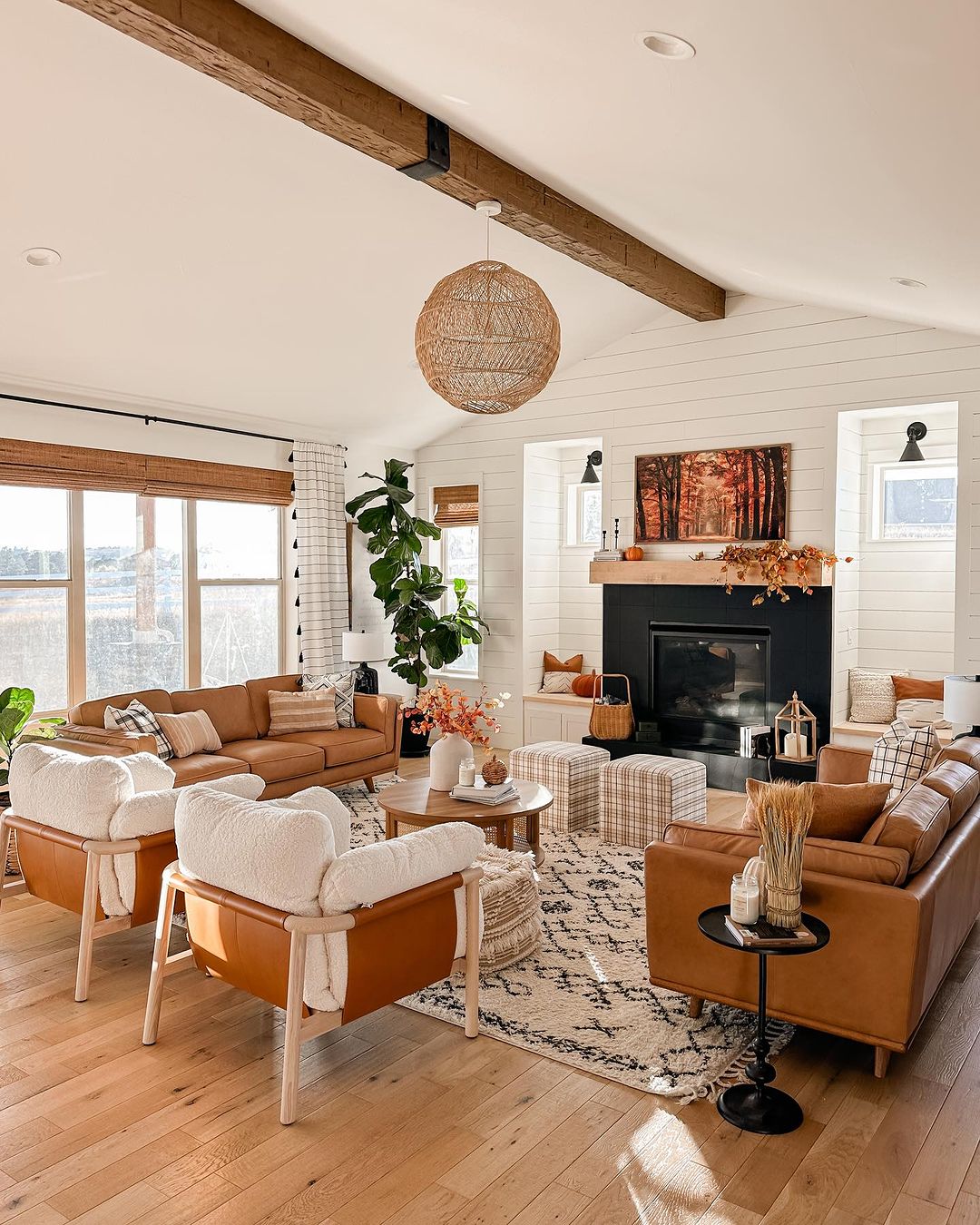
Mid century modern living room furniture is, at this point, everywhere. Every furniture retailer has a “MCM-inspired” line, every design blog has a round-up, and yet most living rooms that attempt this style still feel off. They have the right pieces and the wrong result. I’ve seen this pattern enough times in client consultations to know exactly what causes it: people treat mid century modern furniture as a collection of individual objects rather than a system with its own internal logic.
The key principle here is that MCM furniture was designed in response to a specific idea about how people actually live. It prioritizes clear sightlines, functional forms, and the visible relationship between materials. When you understand that, every decision becomes easier. This guide covers what to actually buy, what to skip, and how to make mid century modern living room furniture work in a real space.
The Sofa Defines Everything Else
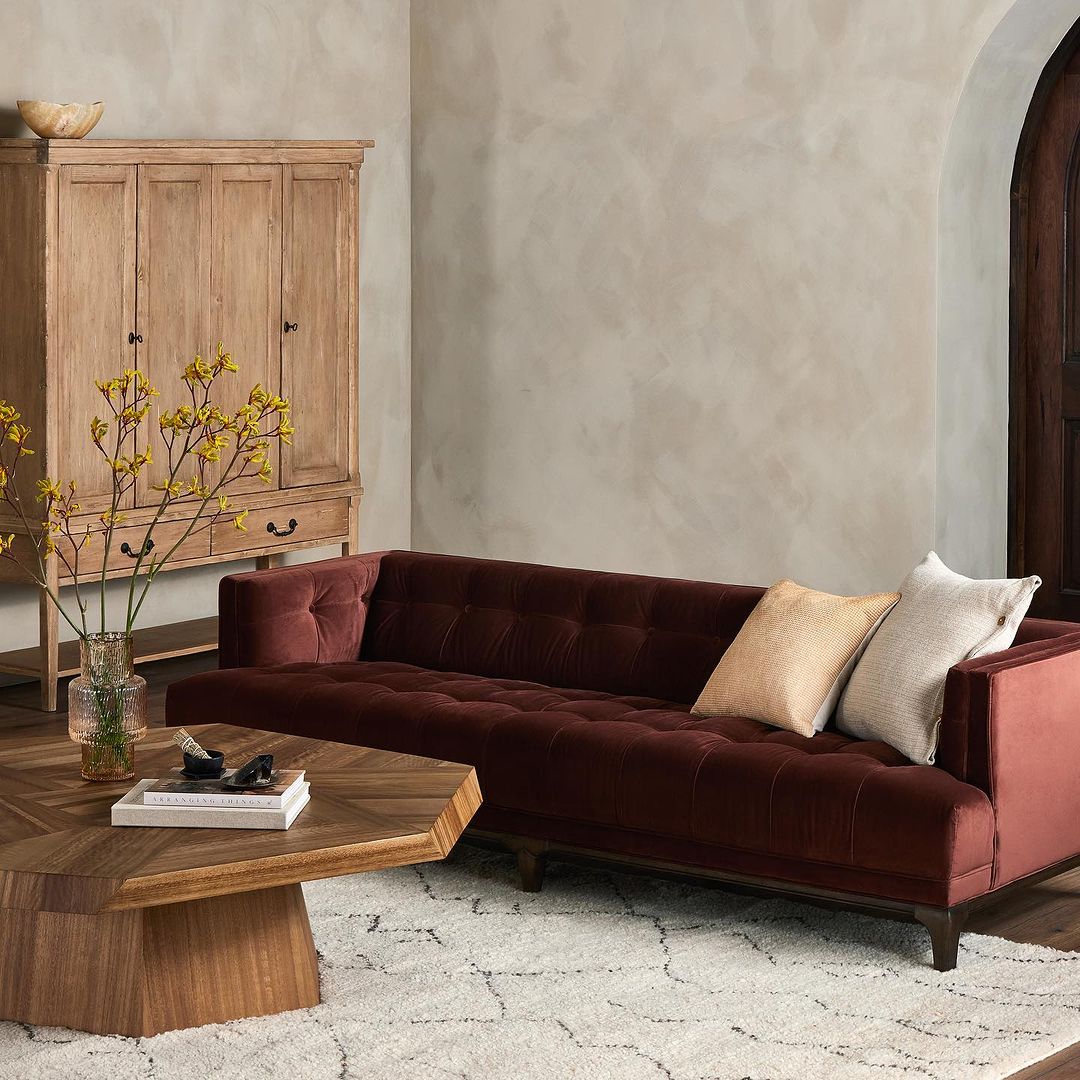
When Someone asks me where to start with mid century modern living room furniture, the answer is always the sofa. It’s the largest piece, it sets the proportions for everything around it, and it’s the most expensive mistake to reverse. Get this right and the rest of the room has a foundation to build on.
Why a Low Profile Is Non-Negotiable
The defining characteristic of an MCM sofa is its low seat height, typically 15 to 17 inches from floor to cushion. This isn’t arbitrary. Low-profile furniture keeps the visual weight close to the ground and opens up the upper half of the room, which is exactly why MCM living rooms feel spacious even when the square footage is modest. One example: a couple who bought a beautiful walnut-framed sofa but chose a version with high back cushions. The room felt compressed. The moment they switched to a lower-backed version with the same frame, the entire proportion of the room changed. That’s what the profile does.
A few related Pinterest references in the same visual family as the section above.
The Right Width for an MCM Living Room
Most MCM sofas look better at 84 to 90 inches than at 96 or more. A very wide sofa on thin legs starts to look like it’s floating too aggressively. The visual tension between cushion mass and leg delicacy works best when the mass is contained. If the room needs more seating, a separate accent chair handles that better than stretching the sofa.
Velvet, Leather, or Boucle: What Actually Works
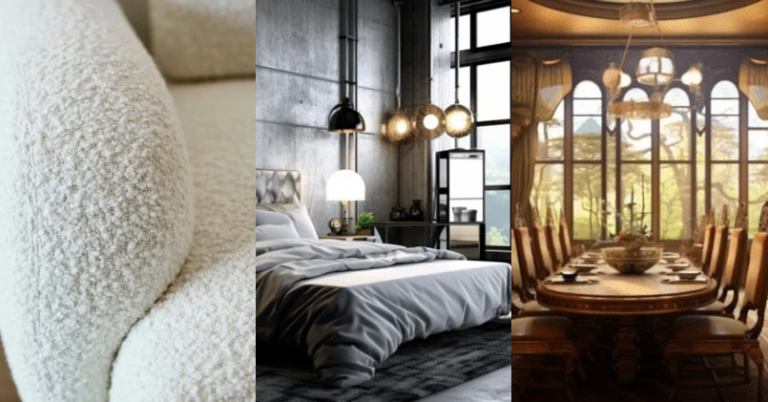
Leather is the obvious MCM choice, and it’s correct. A cognac or caramel leather sofa with walnut legs is hard to get wrong. That said, I’ve had clients successfully use velvet in mustard or forest green, which is period-appropriate and introduces color without requiring you to commit to a painted wall. Boucle is having a moment right now, but I’d approach it with caution in a strict MCM context: the texture sits closer to 1970s Nordic than 1950s American MCM. If you want boucle, pair it with cleaner-lined wood furniture and let the contrast be intentional rather than accidental.
Chairs That Earn Their Place
MCM living rooms typically work with one or two accent chairs rather than a second sofa. The chair is where the style gets to show specificity: while the sofa provides mass and anchoring, the chair is where you introduce a sculptural form, a contrasting material, or a different silhouette. Here’s how to make that choice well.
The Accent Chair Needs a Reason to Be There
When I studied at IIT, one of my professors had a phrase he used constantly: “every piece justifies its presence.” It took me several client projects before I understood what he meant in practice. An accent chair belongs in the room when it completes a seating conversation, provides a visual counterpoint to the sofa, or fills a corner that would otherwise be awkward. A barrel chair with a curved back next to a linear sofa creates that counterpoint. A tulip chair in a corner by a floor lamp turns dead space into a reading area with its own logic. What doesn’t work: a second chair that simply duplicates the sofa’s posture and scale on the opposite side of the coffee table. That’s furniture as symmetrical filler, not design.
A few related Pinterest references in the same visual family as the section above.
The Eames Lounge Chair: A Genuine Caveat
Contrary to what most MCM guides recommend, I’d suggest skipping the Eames lounge chair unless the rest of your room is already settled. It’s a beautiful piece, and I own one. But it functions more as a statement than as furniture, and a living room that’s been arranged around one statement chair hasn’t really been designed yet. Use it once you have a complete room and need a final, considered piece. If it’s the first thing you buy, everything else becomes a backdrop for it, which limits your options considerably.
A few related Pinterest references in the same visual family as the section above.
When an Ottoman Replaces the Coffee Table
MCM ottomans work as coffee table replacements when they’re firm enough to hold a tray and when their dimensions match what a coffee table would do: typically 18 to 20 inches high and wide enough to serve the whole seating area. The advantage is flexibility. The risk is that a soft, overstuffed ottoman in the center of an MCM room signals transitional style rather than period-appropriate MCM. If you go this route, choose an ottoman with a wood or metal base that keeps it grounded.
A few related Pinterest references in the same visual family as the section above.
Coffee Tables and the Discipline of Negative Space
The coffee table is where a lot of MCM living rooms go sideways. People either choose something too large, which crowds the seating, or something so minimal that it disappears. The table should be roughly two-thirds the length of the sofa, about 18 inches high, and have enough visual weight to anchor the center of the room without blocking the sightlines underneath it. Tapered legs and a clear or smoked glass top accomplish that last part well.
A few related Pinterest references in the same visual family as the section above.
Vintage vs. Reproduction: What to Actually Buy
The Noguchi table is beautiful, and I recommend it when clients have the budget. But the reproduction market is dense, and a lot of what’s sold as “Noguchi-inspired” misses the proportions by enough to read as generic. If you’re buying new, Article’s Svelti oval coffee table hits the correct profile at a price that makes sense. If you’re buying vintage, look for tables with drawer-less surfaces and leg joints that show hand-finishing rather than machine uniformity. The MCM period predates CNC manufacturing, and good vintage pieces have a slight irregularity that modern reproductions rarely replicate.
Side Tables: One Rule Worth Following
Side tables in an MCM living room should be at seat height or just above it, and they should have a visual language that connects to at least one other piece in the room. Matching the side table legs to the sofa legs in material or angle is the simplest version of this. What you want to avoid is a side table that looks imported from a different style entirely. I’ve seen MCM rooms undermined by a heavy marble-and-brass side table that read as hotel contemporary next to a walnut sofa frame. The materials didn’t belong to the same conversation.
Why MCM Rooms Need More Empty Floor Than You Expect
This connects to balance and harmony in interior design more broadly: MCM furniture is designed to be seen from a distance as well as up close. The proportions of a tapered leg, the line of a sofa back, the curve of a lounge chair shell: none of these read correctly when the furniture is packed together. A living room done right in this style will feel slightly underfurnished to someone used to maximalist arrangements. That’s intentional. The empty floor is part of the composition.
Storage Without Visual Weight: The Credenza Problem
The MCM sideboard or credenza is one of the most useful pieces in a living room. It provides horizontal storage, a surface for styling, and a strong horizontal line that grounds the room. The problem is that most people either skip it entirely or choose something too ornate. Here’s what works.
A few related Pinterest references in the same visual family as the section above.
The Credenza vs. the Media Console
A walnut credenza gives an MCM living room its backbone. A media console with integrated cable management serves the same structural function, but look for one where the hardware and leg detail match the period: recessed pulls, hairpin or dowel legs, and a flush-mounted drawer face rather than an overlay. The difference between a convincing MCM media console and a generic one is almost entirely in those details.
Related garage setups in the same functional family: storage, work zones, and finishes that keep the space usable rather than decorative.
What to Put on Top of a MCM Sideboard
The styling rule for a MCM sideboard top is: fewer items, larger scale. One ceramic vessel, one framed artwork leaned against the wall, a small sculptural object. The surface should read as curated, not collected. What you want to avoid is filling the surface completely, which negates the horizontal line that makes the credenza worth having. Think about the negative space on the surface the same way you think about the floor space in the room: the emptiness is doing work.
A few related Pinterest references in the same visual family as the section above.
Open Shelving in an MCM Living Room
Open shelving works in MCM living rooms when it’s built-in and when it respects the same proportions as the other furniture. Freestanding open shelving units tend to look either too casual or too retail. If you’re considering open shelving, look at how MCM bedroom design handles wall storage for the same logic applied to a different room: the principle is that the shelving should recede rather than compete with the furniture in front of it.
Rugs, Lighting, and the Pieces That Finish the Room
What the Rug Needs to Do
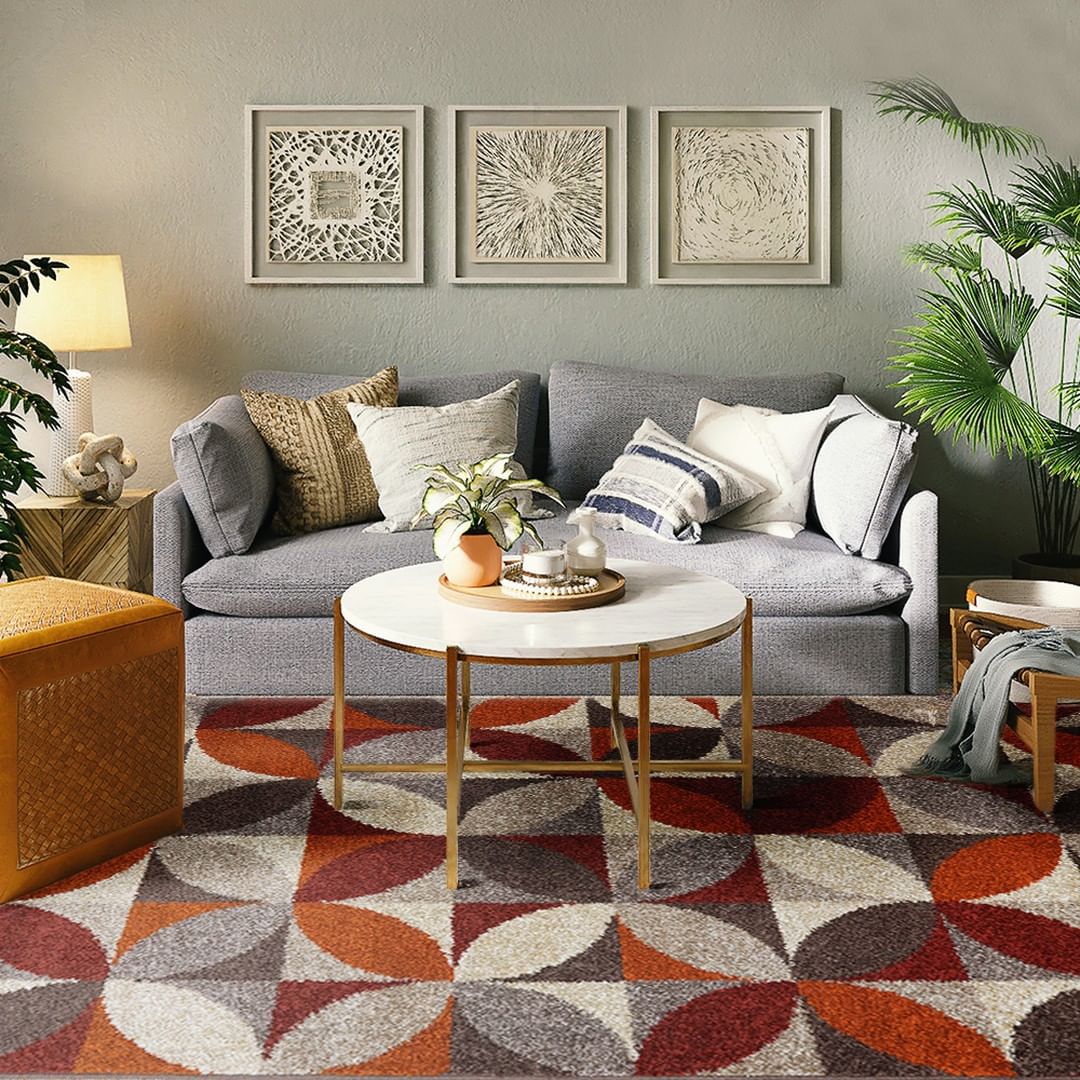
The rug in an MCM living room defines the seating area and introduces texture without mass. A flat-weave wool rug in a geometric pattern, or a solid color low-pile in ochre, rust, or teal, handles both. Size matters here: the front legs of the sofa and chairs should sit on it. A rug that’s too small makes the furniture look disconnected from the floor plane. I’ve seen this mistake in half the MCM rooms I’ve been asked to review, and it’s one of the easier things to fix.
Arc Lamps and Where They Belong
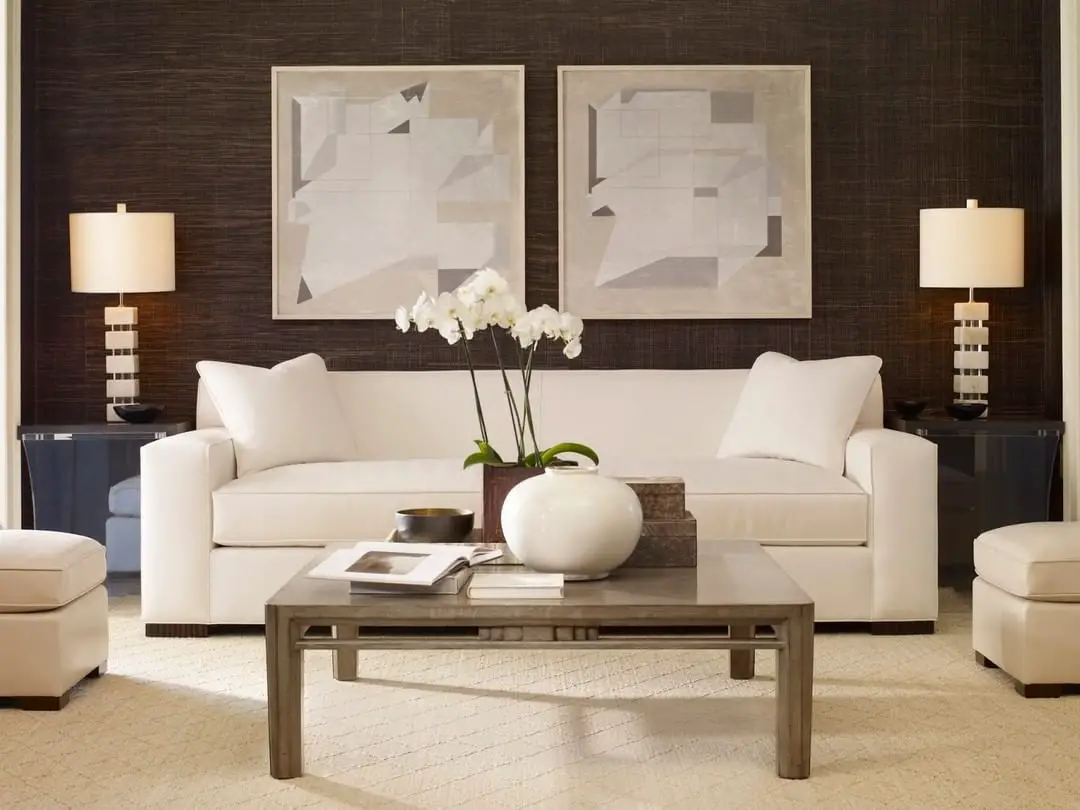
The arc lamp is one of the most useful tools in an MCM living room. It provides directed light over a seating area without requiring a side table, and its form connects directly to the broader design language of the 1960s that MCM grew out of. Position it behind a sofa or chair so the arc extends over the seating at reading height, roughly 50 to 55 inches from floor to the inner lip of the shade. A heavy marble or concrete base keeps the piece stable and grounded. A light chrome base on a tall arc lamp looks precarious, and it will be.
MCM Furniture in Small Apartments
One of the genuinely underappreciated advantages of mid century modern living room furniture is how well it performs in smaller spaces. This isn’t accidental. A significant portion of MCM design was developed for postwar housing, which was compact and required furniture that could do more with less visual noise. The same logic applies in MCM kitchens: the style was built for efficiency.
Why Tapered Legs Matter More in Compact Rooms
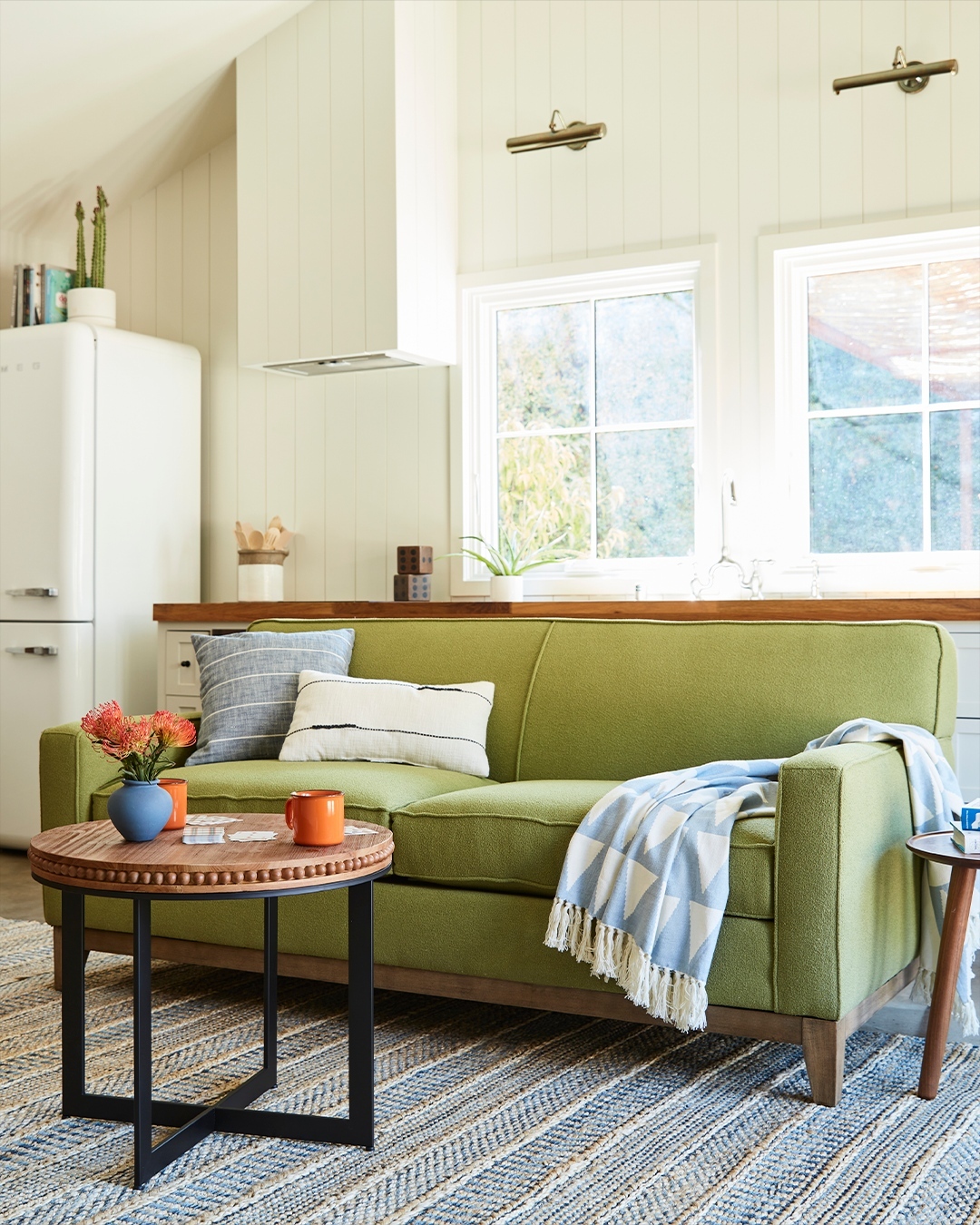
In a small living room, the floor plane is one of the most important visual elements. Furniture with a solid base or a skirt hides the floor and makes the room feel lower and more congested. Tapered legs expose the floor beneath the furniture, which maintains the sense of spaciousness even when the furniture is dense. This is worth understanding not just as an aesthetic preference but as a spatial principle: you can fit more furniture into a small MCM living room without it feeling crowded than you can in a room where every piece sits flat to the ground.
A few related Pinterest references in the same visual family as the section above.
The One Piece You Can Skip in a Smaller Space
If you’re working with limited square footage, the first piece to cut is the second accent chair. Most small MCM living rooms work better with one sofa and one accent chair than with two chairs flanking a coffee table. The asymmetry is more period-correct anyway, and the open side of the seating arrangement creates the negative space the room needs. I’ve seen this choice free up enough floor space for a floor lamp and a small credenza, which adds storage and a styling surface that compact rooms desperately need. Less furniture, more room.
A few related Pinterest references in the same visual family as the section above.
Frequently Asked Questions
What makes a sofa mid century modern?
The defining features are a low seat height (15 to 17 inches), tapered or dowel legs in wood or metal, and clean lines without decorative carving or ornamental detailing. Upholstery is typically leather, velvet, or wool in a solid color or subtle texture.
Is walnut the only correct wood for MCM furniture?
Walnut is the most common and most period-accurate choice, but teak and rosewood were equally typical in Danish and Scandinavian MCM design. Light ash and birch also work well. What to avoid is painted wood or heavily distressed finishes, which read as farmhouse or rustic rather than MCM.
Can I mix mid century modern furniture with other styles?
Yes, and historically MCM pieces were often mixed with other furniture rather than used in fully committed period rooms. MCM furniture works well alongside Japandi minimalism, 1970s Scandinavian design, and even contemporary pieces with clean lines. The key is consistency in proportion and material language rather than style purity.
What colors work well with MCM living room furniture?
Warm neutrals like camel, cream, and warm white are the most versatile backgrounds. Accent colors typical of the period include mustard yellow, burnt orange, avocado green, and teal. Bold geometric patterns on rugs or throw pillows can introduce color without requiring paint commitment.
How do I tell if a piece is authentic vintage or a reproduction?
Authentic MCM pieces typically have joinery marks from hand or early machine finishing, slight variations in surface grain, and hardware that shows patina rather than uniform shine. Look for manufacturer stamps or labels on the underside. Reproductions tend to have perfectly uniform surfaces and hardware that looks new regardless of claimed age.
What is the biggest mistake people make with MCM living room furniture?
Buying individual statement pieces without considering how they relate to each other. MCM furniture was designed as a system: the proportions, leg heights, and material language are meant to work together. A room assembled from unrelated MCM pieces will look like a furniture showroom rather than a designed space.