How to Style Zen Japanese Interior Design Like a Professional

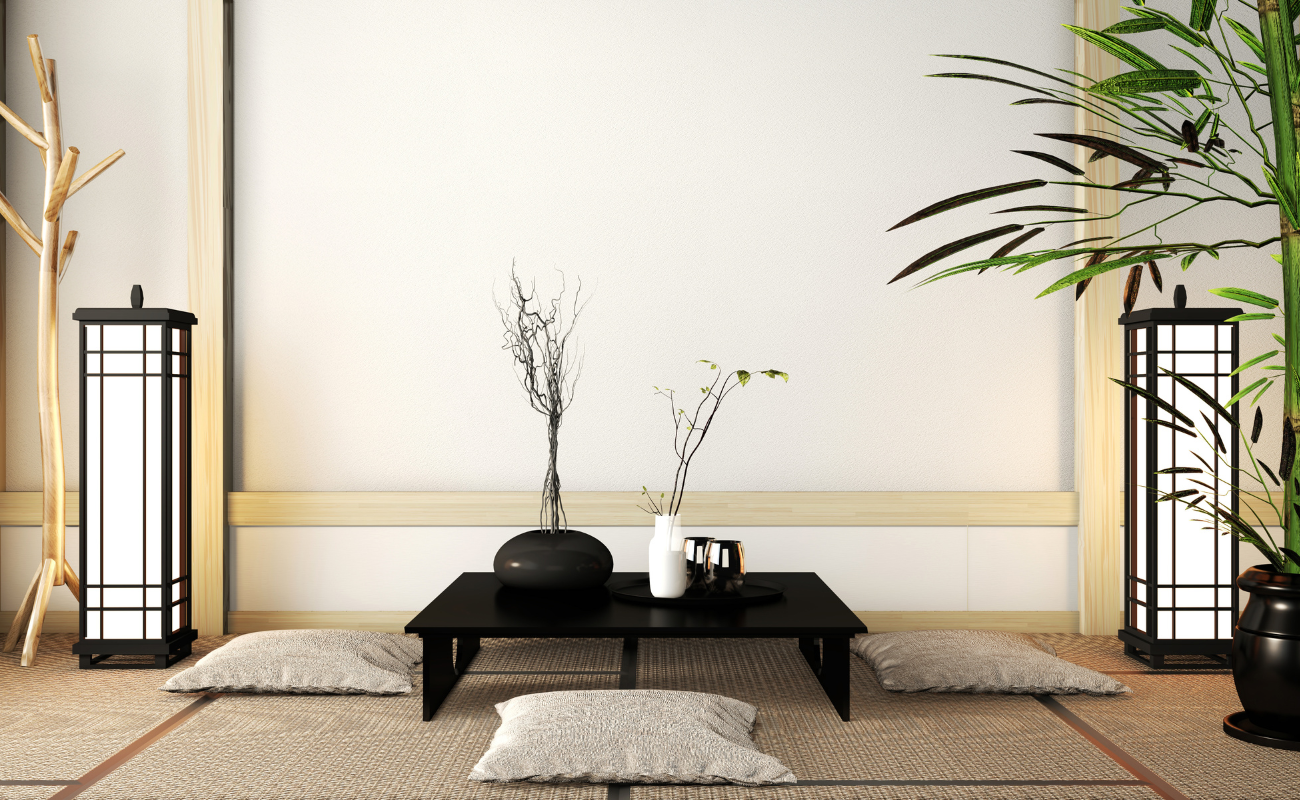
The first client who came to me asking for a “zen Japanese interior” wanted something that looked like a spa. Clean surfaces, a bamboo plant, no clutter. What she initially produced by following most guides on the subject looked like a room someone had recently moved out of. Zen Japanese interior design is not about subtraction for its own sake. It is about deliberate presence: every object earns its place, every material contributes something real.
I have worked with this aesthetic across more than a dozen residential projects, and the approach that holds up draws from a few connected principles. The key principle here is that Zen design is not a style checklist. It is a framework for making decisions about space. Here is how to apply it correctly.
The Philosophy Behind Zen Japanese Interior Design
Why Wabi-Sabi Is the Most Misunderstood Design Principle
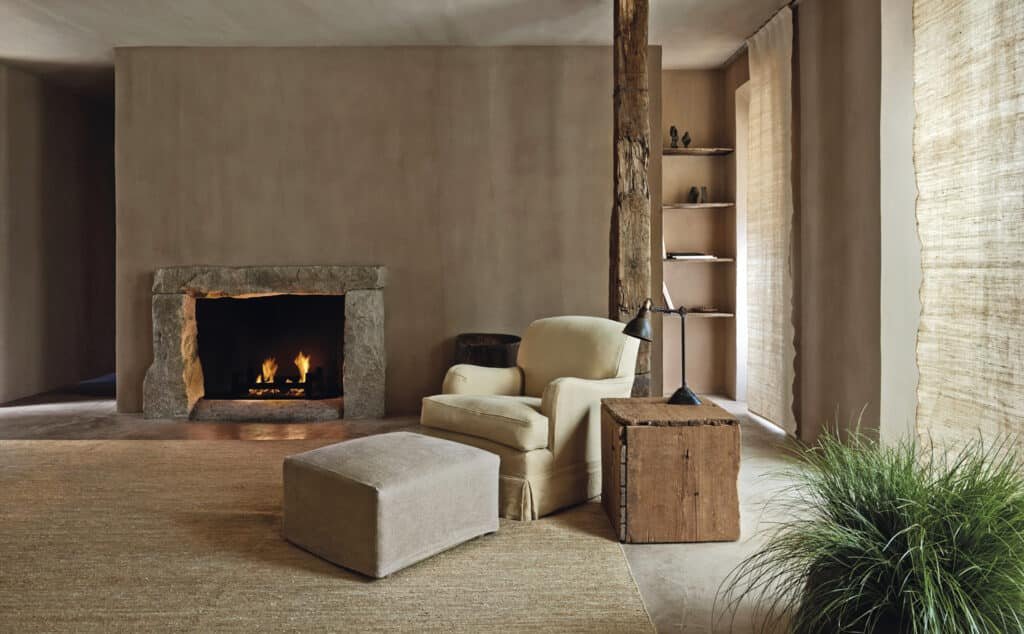
Most people encounter Wabi-Sabi through images of cracked ceramics and weathered wood, and come away thinking it means distressed. That is not it. Wabi-Sabi is about the right kind of imperfection: the linen napkin worn soft from years of use, the wooden table that has developed a patina from actual meals. The operative word is authenticity. Faux distressing from a mass-market retailer reads the opposite of Wabi-Sabi. It reads as effort pretending to be effortlessness.
In practice, this means sourcing materials that age well rather than materials that look aged. A solid oak side table will develop character over decades. A pressboard piece with a wood-look finish will simply deteriorate. I have seen clients spend carefully in the right places here. One good handmade ceramic bowl on an otherwise spare shelf reads as intentional. Three manufactured “rustic” vases read as decoration.
What Minimalism Actually Means Here
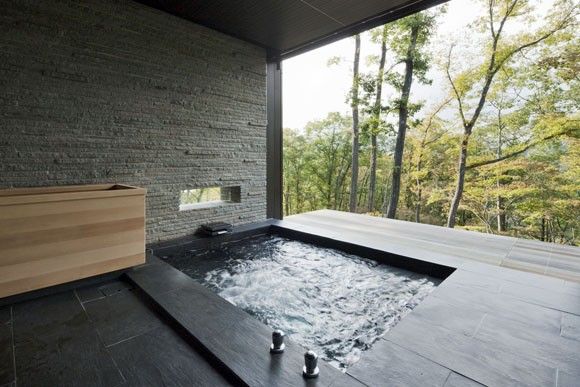
Here is something most guides get wrong: real Zen minimalism is not about having fewer things. It is about having the right things, correctly proportioned and placed. I have seen too many so-called “zen spaces” that feel cold and underscaled. Ceilings too visible, walls too bare, the room just waiting to be furnished. That is not Zen. That is abandoned. Contrary to what you see everywhere, an underfurnished room is just as much a design failure as an overfurnished one.
The actual test is whether each item in a room has a reason to be there. Not a justification but a reason. A floor cushion placed near a window where someone actually sits and reads passes the test. The same cushion placed in a corner “for texture” does not. Understanding the core principles of interior design helps here. It is easier to edit a space correctly when you understand what each element is contributing.
Space, Nature, and Flow
How Open Floor Plans Read in Zen Design
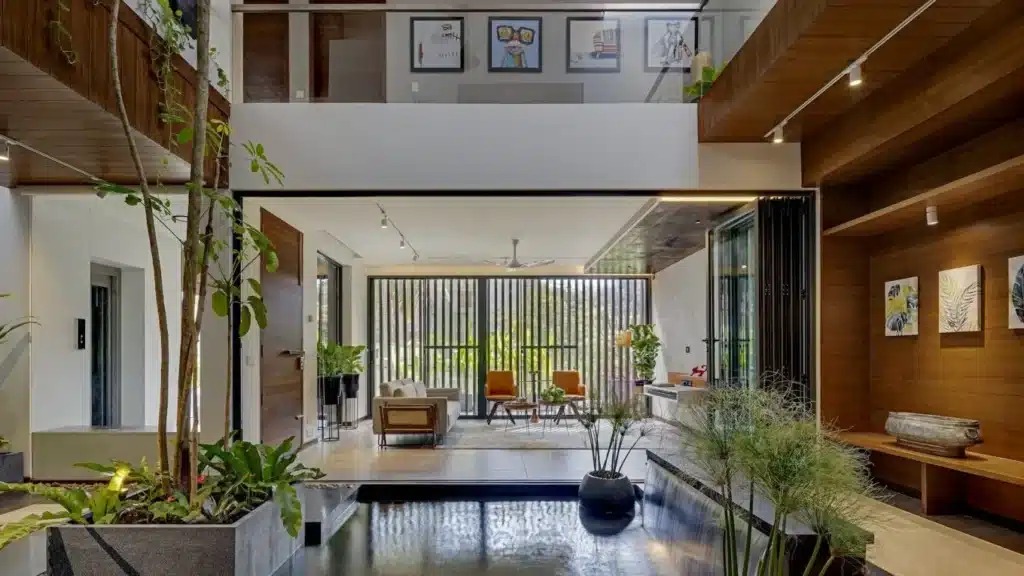
Zen Japanese design uses open space deliberately, not because it is fashionable, but because circulation and sightlines matter. A room where the eye can travel without interruption creates a particular kind of calm. In practice, this means thinking about furniture arrangement before choosing furniture. Where does someone enter the room? Where does their gaze land first? That is where your best piece goes.
I worked on a Lincoln Park project in Chicago where the client wanted a Zen living room inside a 1920s greystone. Not an open-plan space at all. The solution was to remove a credenza that was blocking the view through to the rear window, and to keep all seating below eye level from the entry point. Same room, entirely different feeling. The architecture did not need to change, only the decisions inside it.
Bringing Nature Indoors Without the Plant Store Effect
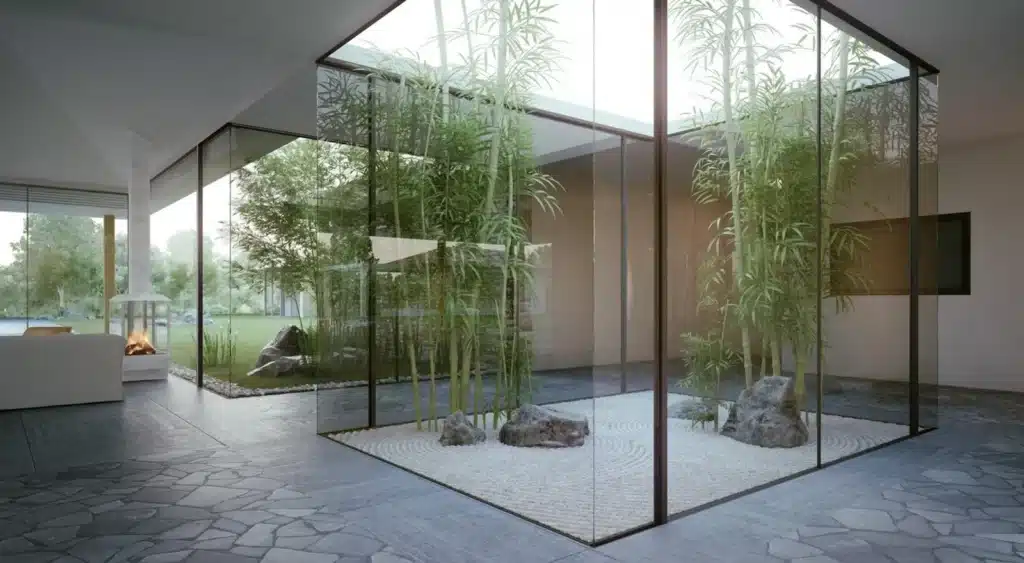
The connection between Zen Japanese design and nature is real, but it is often executed as “add plants.” The result is a room that reads more greenhouse than living space. The actual approach is more selective: one quality plant, correctly chosen for the room’s light conditions, placed where it reads as part of the composition rather than decoration. The vessel matters as much as the plant itself.
For low-light rooms, a Japanese peace lily or ZZ plant in an unglazed ceramic pot on a low stand hits the right note. For south-facing spaces, a bonsai on a tokonoma shelf is one of the cleanest ways to bring in the style’s character. Avoid “zen garden kits” from big-box stores. Instead, look at Japanese ceramics shops or artisan markets for vessels that will actually age well. That is the product investment worth making here.
Materials, Textures, and Focal Points
The Natural Materials Worth Investing In
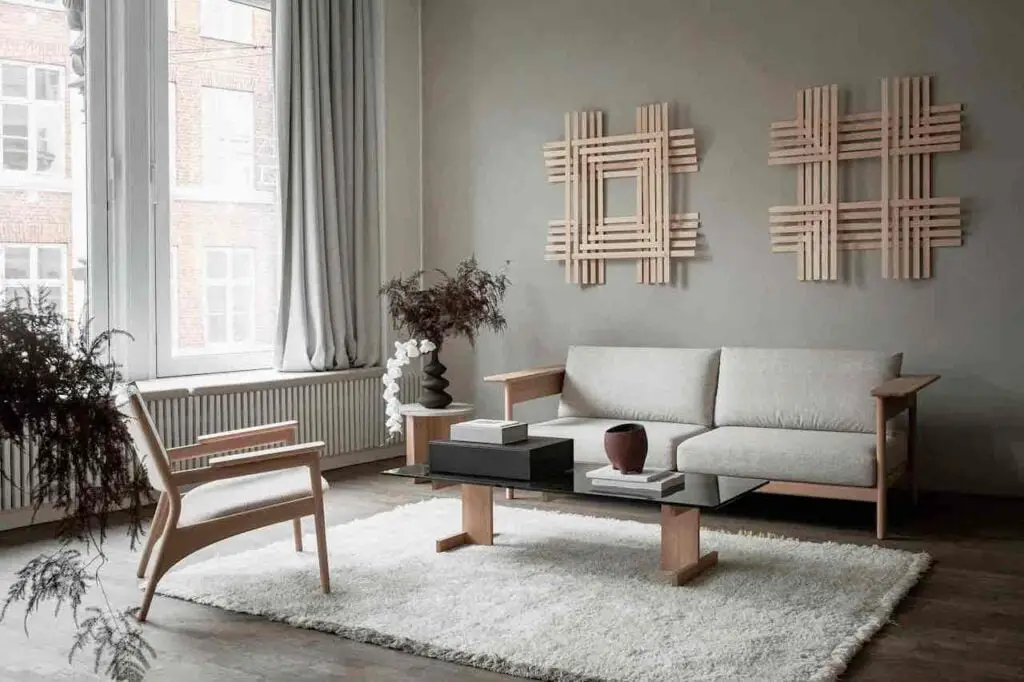
Wood is the core material in Zen Japanese interiors, but not all wood reads the same way. The style calls for visible natural grain and character, not uniform finish. Solid oak, walnut, and cedar work. MDF with a wood-effect laminate does not. In a bedroom redesign for a client in Evanston, Illinois, I specified a low-platform bed in solid white oak. The room felt more grounded immediately, even before any other change was made. That is what material quality does that product photography cannot capture.
Bamboo is frequently overused in Western interpretations of Japanese design. Bamboo flooring, bamboo blinds, and bamboo shelving all in the same room produces a theme-park effect rather than a Zen one. Pick one application, use quality material, and leave it. For flooring in most Western climates, natural sisal or unsealed stone tile reads closer to the spirit of this style than traditional tatami, which requires careful humidity management to last.
Textiles That Don’t Fight the Calm
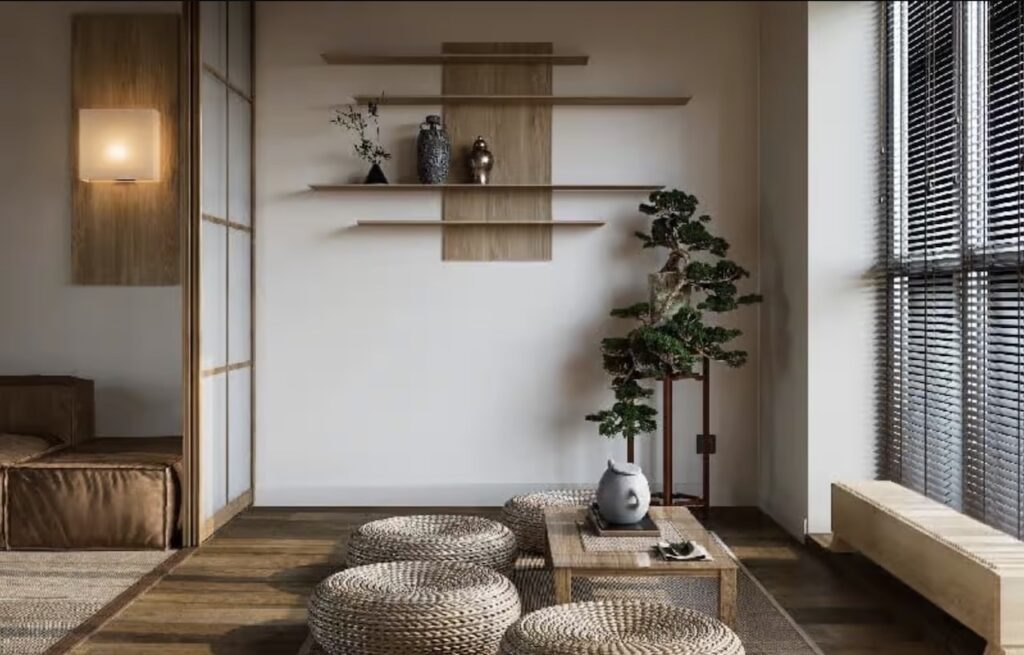
Natural fiber textiles (linen, cotton, wool) are the default in Zen Japanese design because they breathe, age gracefully, and carry texture without visual noise. Linen in particular gets better with use, which is exactly the Wabi-Sabi principle in practical form. I specify mid-weight linen for window treatments in almost every Japanese-influenced project: it filters light, holds its drape without stiffening, and in natural undyed tones does what this style needs without demanding attention.
Avoid polyester blends regardless of how organic they look on a product page. The texture reads differently in real space and catches light in a way that works against the soft quality Zen design depends on. If budget is constrained, prioritize textile quality at the windows. That is where material character shows most clearly in a room.
The Tokonoma Principle: One Focal Point Per Room
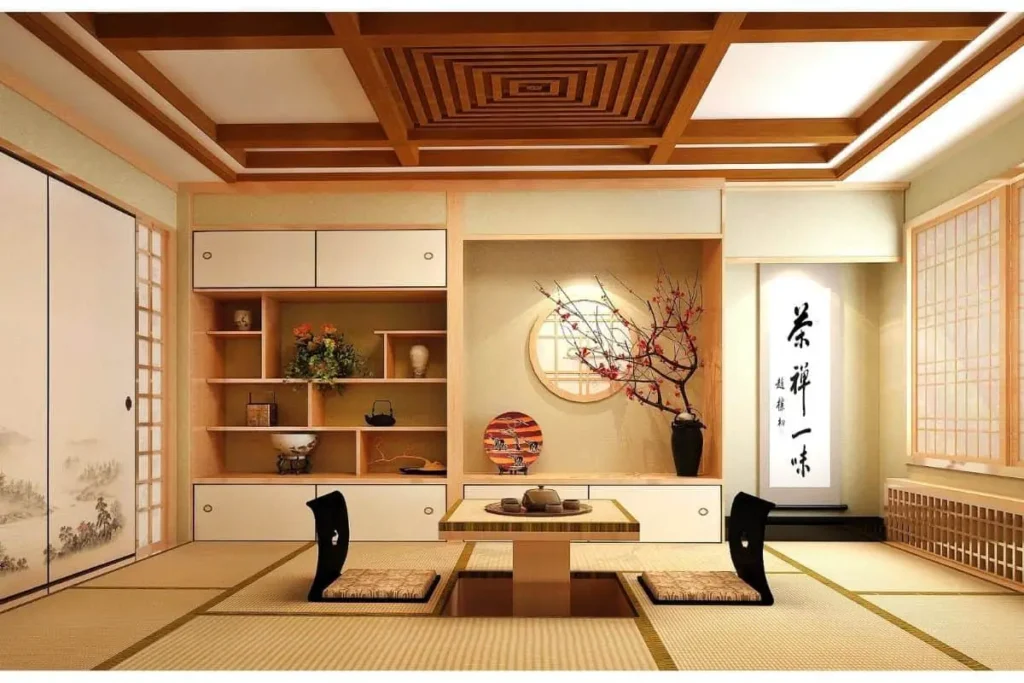
The tokonoma is a traditional Japanese recessed alcove designed to hold a single, carefully chosen display: a hanging scroll, a flower arrangement, a piece of ceramics. The underlying principle translates directly into modern rooms. Identify one wall or surface per room that you treat as the display area, and keep everything else clear. This is probably the most useful single principle from Zen Japanese design for Western interiors.
Most rooms already have a natural focal point: a fireplace wall, the space between two windows, the wall opposite the entry door. Treat it as your tokonoma. One piece, placed with intention. Resist the impulse to add more around it. The discipline of restraint is the point.
Furniture, Light, and Color
Low-Profile Furniture and What It Does to a Room
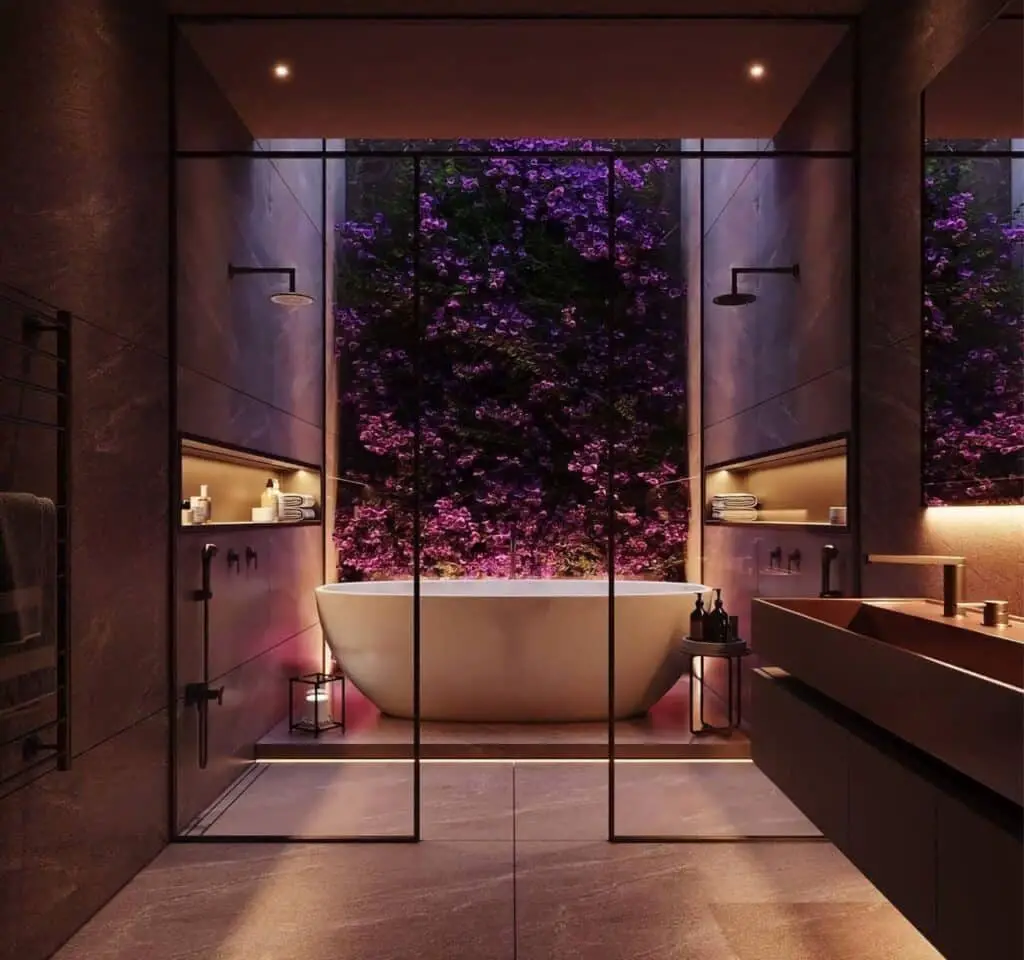
Low-profile furniture in Zen Japanese design is not primarily an aesthetic choice. It is a spatial one. When furniture sits close to the floor, the proportion of visible wall increases, the ceiling reads higher, and the room feels more spacious than its actual dimensions. A platform bed at 25 centimeters height changes the perceived scale of a standard bedroom more than any paint color choice. The Japandi bedroom approach applies the same principle with slightly warmer tones and more accessible sourcing options.
The practical challenge in Western homes is that low furniture means getting down to use it. Floor cushions and low sofas work better in rooms with good natural light and clear floor space. In a darker room or one with limited floor clearance, standard-height furniture in simple profiles achieves a similar visual effect without the ergonomic trade-off.
How to Work With Natural Light in a Zen Space
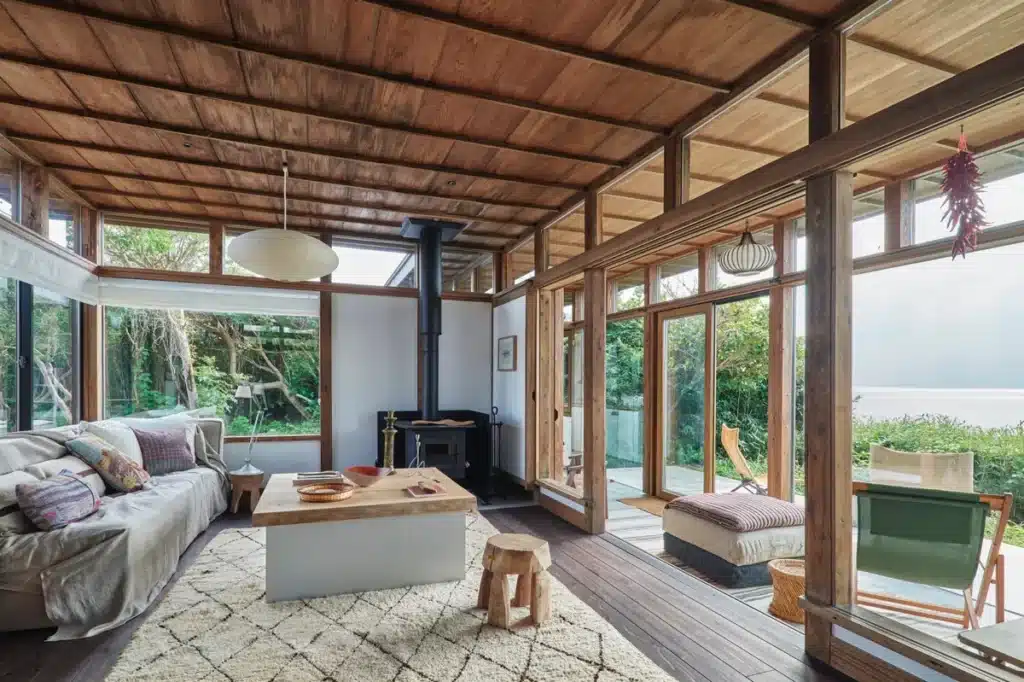
Shoji screens work in this design context because they diffuse direct sunlight into something softer and more even. The Western equivalent is a frosted or translucent linen roller blind. I have used them in several south-facing rooms where direct light was both an asset and a problem: they allow the room to feel bright without the harsh afternoon glare that undermines the atmosphere. Natural light in a Zen space should read as present but not aggressive.
Getting Artificial Lighting Right
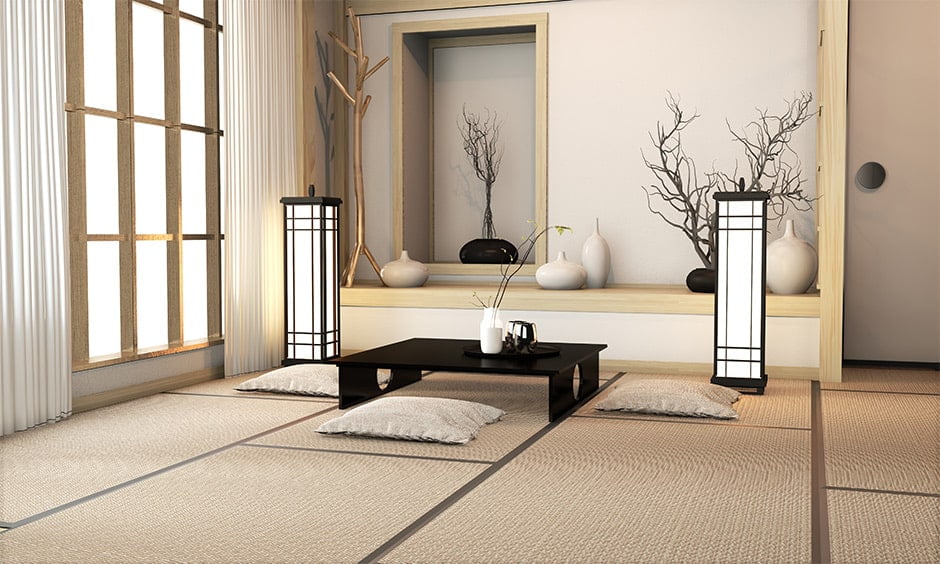
Overhead lighting works against Zen Japanese design. A single ceiling fixture illuminates everything equally, which is visually flat and creates no sense of depth or warmth. The approach that works is layered indirect light: floor lamps with paper or fabric shades, concealed LED strip lighting at low level, candles as accent sources in the evening. Paper and rice paper shades in particular produce the diffused warm light that characterizes Japanese interior spaces, and remain one of the most cost-effective ways to shift a room’s atmosphere.
The Color Palette That Actually Holds
The standard advice is “neutral tones,” which is accurate but incomplete. The Zen Japanese palette is specifically warm-neutral: warm whites, the tones of undyed linen, warm grays, and the natural colors of wood and stone. Cool grays and cool whites push the room toward Scandinavian rather than Japanese Zen. For walls, I work with warm whites consistently. Benjamin Moore’s White Dove and Farrow and Ball’s String both read clean without clinical. Warm enough to support natural wood tones, neutral enough to disappear behind them.
Accents, when used, draw from nature in muted form: moss green, indigo, a warm ochre. One or two choices, not a palette. You do not need to avoid color entirely. You need to avoid busy color. A single indigo-dyed linen cushion in a room of warm neutrals reads as intentional. Four accent colors assembled from a mood board read as decoration.
Zen Elements in Everyday Home Life
Rock Gardens and Bonsai: What Actually Works at Home

The miniature stone garden is one of the most recognized symbols of Zen design, and one of the most often done poorly in a domestic context. Small sandbox-style kits sold as “desk zen gardens” are props, not functional design elements. If you want to incorporate this principle correctly, the right scale is a tabletop garden of reasonable size: a circular tray around 40 centimeters in diameter minimum, with actual river stones and fine-grain sand, placed on a low surface where it can be seen and occasionally raked. Below that size, it reads as a novelty item rather than a design element.
Bonsai requires genuine commitment. These are living trees that need specific care. But a mature specimen in the right position does something no artificial plant achieves. If the maintenance is not realistic, a single large natural stone or a piece of driftwood on a low platform reaches for the same visual quality without the responsibility.
Designing a Meditation Space That Doesn’t Look Like a Prop
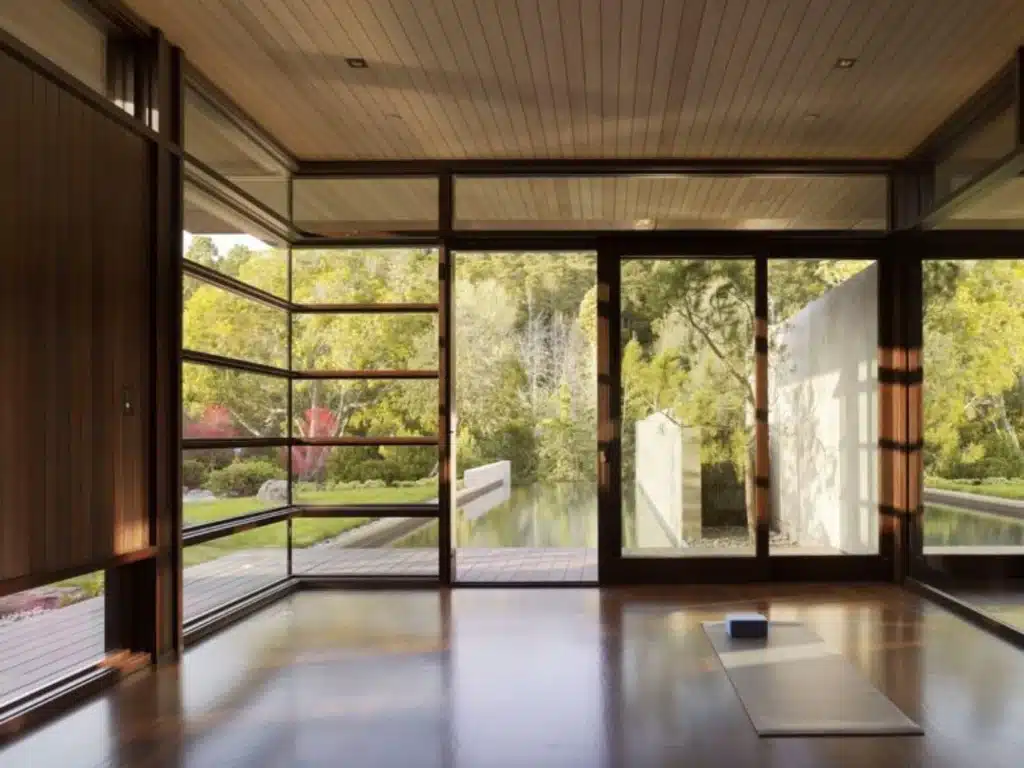
A dedicated meditation or yoga space at home does not require a separate room. In a Hyde Park, Chicago bedroom redesign, I cleared a 6×8 foot area near the window, placed a natural jute mat, one floor cushion in undyed linen, and a single low shelf with a small plant. The client uses it every morning. The key was keeping the zone’s purpose exclusive. Nothing else lives on that mat or that shelf. The moment you add a pile of folded laundry or a charging cable, it stops reading as a meditation space and becomes a corner.
The Japandi Crossover and Contemporary Japanese Design
Where Japanese Zen Meets Scandinavian Design
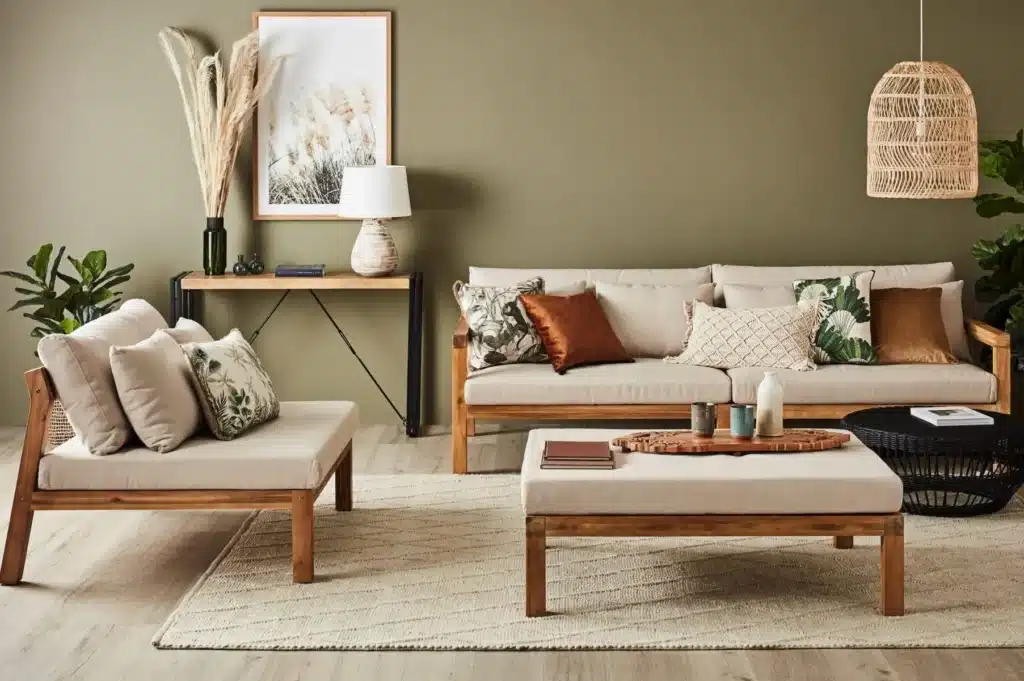
Japandi is the hybrid style that draws from both Zen Japanese design and Scandinavian minimalism, and it is widespread enough now that many Western interiors described as “Zen” are actually Japandi. The distinction is worth understanding. Japanese Zen leans warmer and more organic, with visible natural grain, earth tones, and ceremonial objects. Scandinavian design adds lighter woods, functional simplicity, and a cooler palette. Japandi splits the difference: warm-toned woods, clean lines, natural textiles, and a near-absence of decoration.
For most Western homes, Japandi is the more practical starting point. Full Zen Japanese design calls for a level of spatial discipline: low furniture, clear floor space, and intentional sightlines. That level of control benefits from architectural cooperation. Japandi achieves the same spirit with more flexibility. If the bedroom is where you want to start, the Japandi bedroom is a good reference point for how the approach reads in a specific room context.
Contemporary Japanese Design in Modern Homes
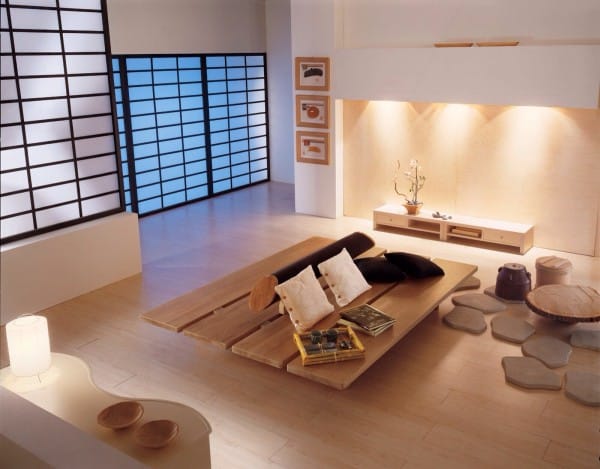
Contemporary Japanese interior design takes the Zen principles and layers in a more international sensibility. Think of Muji’s design language: functional, beautiful, almost invisible in its quality. This version of the aesthetic is the most accessible entry point for Western homes. The key moves are choosing furniture with exceptional material quality and simple profiles, keeping the room’s organization invisible through closed storage and built-ins, and lighting the space with warm indirect sources. The philosophy is present, but the vocabulary is easier to work with across different architectural contexts.
Frequently Asked Questions
What is Zen Japanese interior design?
Zen Japanese interior design is a residential design approach rooted in Zen Buddhism principles: intentional use of space, connection to natural materials, and careful editing of what belongs in a room. It is not minimalism for its own sake, but a framework for ensuring every element has a reason to be there.
What colors are used in Zen Japanese interior design?
The palette centers on warm neutrals: warm whites, natural linen tones, warm grays, and the earthy colors of unfinished wood and stone. Accents in muted moss green, indigo, or ochre work well in small doses. Cool grays and cool whites push the aesthetic toward Scandinavian rather than Japanese Zen.
What furniture is used in Zen Japanese interior design?
Furniture is typically low-profile, made from natural materials such as solid wood, and kept to a functional minimum. Floor cushions, low platform beds, and simple wooden benches are common. The key is that each piece occupies a deliberate position rather than filling space.
What is Wabi-Sabi and how does it apply to Zen design?
Wabi-Sabi is a Japanese philosophy that finds beauty in natural imperfection and the marks of time. In interior design, it means sourcing materials that age well rather than ones that look artificially distressed. It is a core philosophical foundation of Zen Japanese design, not just an aesthetic style choice.
How is Zen Japanese design different from Japandi?
Zen Japanese design is warmer, more organic, and more ceremonial in its object choices. Japandi blends Zen principles with Scandinavian minimalism, producing a slightly cooler palette, lighter woods, and a more flexible approach to furniture height. For most Western homes, Japandi is the more practical starting point.
Can Zen Japanese interior design work in a small apartment?
Yes. The core principles of clear sightlines, low furniture, and limiting each room to one focal point all serve small spaces well. The main requirement is disciplined storage: Zen design requires that clutter has somewhere to go, which means closed-front storage solutions are essential in a smaller home.