Southern Interior Design: What Defines the Style

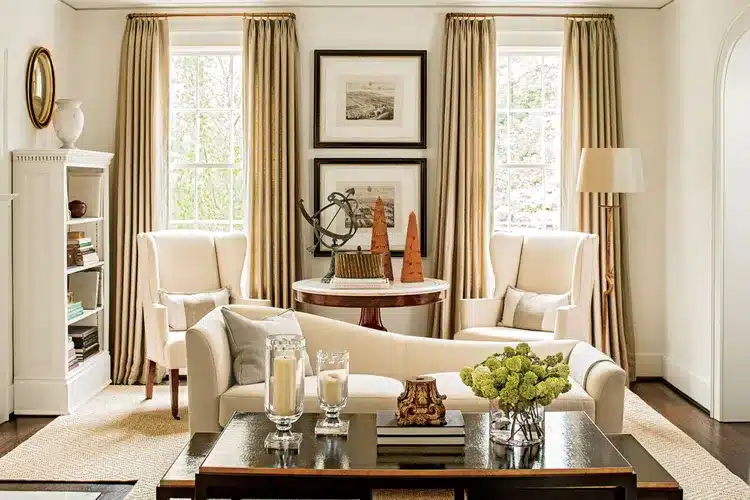
A few years ago I was working on a renovation in Nashville for Someone who had bought an 1890s craftsman bungalow and wanted the interiors to feel properly Southern. She kept sending me inspiration photos, and about the third time she pinned something and said “this is it,” I realized we were looking at three completely different things: one was New Orleans creole, one was a Charleston coastal home, and one was a ranch house in Texas hill country. Southern interior design covers a lot of ground. The key is understanding what makes a space feel like this region rather than just decorating it with mason jars and sweet tea references.
In practice, southern interior design comes down to three things: the primacy of hospitality in room planning, a specific approach to layering materials that prioritizes comfort over minimalism, and a genuine relationship between indoor and outdoor living. Once you understand those principles, the style decisions follow naturally.
What Southern Interior Design Actually Means
The Visual Vocabulary Beyond the Clichés
The most recognizable features of southern interior design (coffered ceilings, wainscoting, wide plank floors, wraparound porches) are architectural, not decorative. You can work with any of them or none of them, depending on your building. What matters more is the approach to furniture and objects: antiques are anchor pieces, not accessories. A single well-chosen piece of period furniture (a secretary desk, a proper armoire, a carved sideboard) gives the room a gravitational center that everything else can orbit. Without that anchor, even expensive new furniture looks assembled rather than collected.

Hospitality as a Layout Principle, Not a Feeling
Southern living rooms are conversation rooms first, television rooms second. That is not a stylistic preference. It is a literal layout requirement. Seating groups face each other. Chairs pull into the arrangement. Nothing sits more than eight feet from the center of the conversation. I have walked into a lot of Southern homes where the family did not consciously plan any of this, but the furniture arrangement enforced it anyway, because that is how those rooms were always set up. If you are starting from scratch, this is the principle to build around before you pick a single piece of furniture.

Layering Materials and Texture
Antique Pieces as Structural Anchors
One homeowner came to me with a 1940s breakfront she had inherited from her grandmother, a heavy walnut piece with original brass hardware. Her first instinct was to modernize it with new hardware and a coat of paint. I talked her out of it. We built the dining room around it instead: a round pedestal table with similar visual mass, ladder-back chairs with rush seats, a jute rug. The breakfront anchored the whole room. The principle is straightforward: do not try to update a genuinely old piece unless it is structurally compromised. Let it be old. That is its value in the room.

Plants and Flowers Are Maintenance, Not Decoration
Fresh flowers on the dining table, potted plants on the porch, something growing by the kitchen window. In southern interior design this is not a styling choice, it is upkeep. Think about it the same way you think about keeping a kitchen clean. The scale matters: one large statement plant (a fiddle-leaf fig, a potted olive, a substantial snake plant) reads as purposeful; six small pots scattered around a room reads as a hobby. If you want to understand how to use plants architecturally rather than incidentally, it is worth spending time with interior plant design principles before you start buying.

Textiles: The Line Between Layering and Clutter
Most people who try to layer textiles end up with clutter. The reason is that they vary pattern and value at the same time. Start by keeping value constant: all your fabrics should sit in the same range of light-to-dark, even if the patterns differ. For southern rooms specifically, natural fibers work and synthetic blends generally do not, even if they are cheaper. Jute rugs, cotton dhurries, linen upholstery, and sisal entry mats all share a texture quality that makes them look right together. I have recommended Dash and Albert cotton dhurrie rugs for years because they are affordable, hold up to real use, and the patterns are direct enough not to fight everything else in the room.

Color in Southern Interior Design
Warm Neutrals Without Going Muddy
Most people choose their base neutrals too warm, and the result looks fine in daylight and terrible under artificial light. This is a specific problem in southern interiors, where the base palette tends toward cream and bone rather than cool white. The fix is to test paint samples at night under the actual bulbs you plan to use. My consistent recommendation for southern rooms is Benjamin Moore White Dove OC-17: it reads warm in direct light but does not shift orange under warm bulbs. For walls that need more personality, Farrow and Ball Old White holds its quality in low light in a way that most creamy whites do not.

The Case for Haint Blue Ceilings
Haint blue porch ceilings are one of the most regionally specific design traditions in American interiors. The color comes from the Gullah Geechee people of the South Carolina and Georgia coast, who used indigo-derived pigment to ward off evil spirits. Whatever you make of that history, the practical effect is undeniable: a blue-painted porch ceiling separates the overhead plane from the sky without making the space feel enclosed. It turns the porch into a designed room rather than an unfinished overhang. Sherwin-Williams Worn Turquoise is the most accurate historical approximation I have found; Benjamin Moore Wythe Blue runs slightly more contemporary and works well in coastal-adjacent settings.

The Bold Move Most People Are Afraid to Make
Here is something worth saying plainly: the southern interiors that actually look like something are not the ones playing it safe. The rooms that read as genuinely Southern have one item that should not work but does. A heavily lacquered chinoiserie cabinet in a room full of rough-hewn wood. A Persian rug with deep reds and navy set against white wainscoting. A saturated grasscloth wall in a bedroom otherwise finished in cream and wheat. Most people think of traditional design as cautious and predictable. The real tradition includes considerably more eccentricity than the curated Pinterest version suggests, and that eccentricity is exactly where the character lives.

Furniture Selection and Room Layout
Mixing Old and New Without Losing the Thread
The practical rule I use with clients: one genuinely old (or convincingly vintage) piece per room, surrounded by new furniture that has appropriate mass and proportion. The problem with most contemporary furniture is not that it is contemporary. The problem is that it is too light. Sofas with thin arms and low backs sit oddly next to a heavily carved Victorian cabinet. When buying new for a southern room, look for deep upholstery, solid wood construction, and profiles with some visual weight. West Elm has a few lines that work in this context; most fast-furniture retailers do not. The goal is furniture that will look right in twenty years, not furniture that looked right last season.

Rugs as Foundation, Not Finish
Southern rooms work best when the rug is chosen first, not last. It is the piece that mediates between old wood floors, patterned upholstery, and whatever is on the walls. For a traditional southern room, a good-quality wool rug in a Persian or Oriental pattern (not a cheap machine-made approximation, but something with actual pile density) does this work better than any other option. Safavieh’s Heritage Collection is a reasonable entry point if a genuine antique rug is not in the budget: the patterns are traditional, the construction is solid, and they improve with age rather than degrading. Choose the rug before you commit to paint color or upholstery fabric.

The Seating Arrangement That Makes a Room Function
The most common living room mistake I see is furniture pushed against all four walls. People do it because it feels spatially safe, and it makes rooms look larger in photographs. In real life, it makes conversation nearly impossible. For a southern room, group seating within eight feet of each other: two sofas facing across a coffee table, with chairs at each end. That is the standard arrangement, and it works because it is built for actual people talking to each other. I have rearranged furniture in enough client living rooms to be confident about this: the room always improves when the furniture moves away from the walls. This principle is also foundational in colonial interior design, which shares the same hospitality-first logic.

Indoor and Outdoor as a Single System
The Front Porch Is a Designed Room
Southern homes are built with the assumption that the porch will be used, not just occasionally, but as a regular part of daily life. This means it needs the same level of design attention as the living room: furniture that is genuinely comfortable, a ceiling fan that actually moves air, a rug that can handle weather, and overhead lighting that makes the space usable after dark. A porch with one rocking chair and no light fixture is an afterthought, not a room. I have seen well-designed interiors attached to porches that clearly were not part of the design conversation, and the disconnect is visible from the street. The exterior sets the tone for everything inside.

Bringing the Landscape Into the Interior
The materials connection between a southern landscape and a southern interior is worth taking seriously. Stone, reclaimed wood, brick, and unpainted plaster appear inside southern homes because they are the same materials as the surrounding landscape. Seagrass mats, sisal runners, and cotton rope are the fiber version of the same idea. In coastal Southern design specifically, this connection gets more precise: bleached wood, sea glass, and natural linen approximate the palette of the shoreline in a way that feels honest rather than themed. For more on how this plays out in the coastal variation, the approach to coastal farmhouse decorating covers the same material logic from a complementary angle.

Modernizing Southern Design Without Losing the Character
Where Contemporary Art Works in a Traditional Room
Most people are cautious about putting contemporary art in a traditional space, and that caution usually produces weak results: small prints in thin frames that disappear against the wall, or gallery arrangements that look like they were composed by someone trying very hard to seem intentional. The principle that works is scale. One large-format print (60 by 40 inches at minimum) in a substantial frame looks deliberate next to period furniture. It does not compete with the furniture, it contrasts with it, and that contrast is the point. A properly scaled modern piece next to a Georgian chest of drawers signals someone who knows both worlds, rather than someone hedging between them.

The Coastal Southern Variation
The Charleston-to-Savannah corridor produces interiors that share the DNA of southern design but run considerably lighter than the inland version. White-painted brick, sea-washed wood, linen that looks like actual linen rather than a linen approximation. The furniture profiles are finer: cane-backed chairs, delicate occasional tables, less of the heavy carved wood that anchors an inland Tennessee or Georgia room. If your building is near water, this variation will serve you better than trying to work with the heavier inland palette. The underlying principles stay constant: antique anchors, hospitality-first layout, indoor-outdoor material continuity. For a solid grounding in how these principles connect across all styles, interior design basics covers the framework that makes southern design legible in the first place.
Frequently Asked Questions
What are the defining characteristics of southern interior design?
Southern interior design is built around three principles: hospitality-first room planning with conversation-oriented seating, layered natural materials anchored by one or two genuine antique pieces, and a strong connection between indoor and outdoor living. The result is rooms that feel collected over time rather than assembled at once.
Do I need an older home to use southern interior design?
No. The style is driven by furniture choices and layout principles, not architecture. One genuine antique anchor piece and the right seating arrangement will read as southern in any space. Wraparound porches and coffered ceilings are nice to have, not requirements.
What colors work best in a southern interior?
Warm neutrals like cream, bone, and natural linen form the base. Haint blue is the most regionally specific choice for porch ceilings. Accent colors vary by sub-region: coastal rooms use sea glass blues and bleached whites, inland rooms lean toward warmer ochres and deeper greens.
How do I use antiques without the room looking like an antique store?
Use one substantial antique per room as an anchor, then surround it with new furniture that has appropriate mass and proportion. Avoid clustering multiple small antique objects together. One well-chosen piece does more work than a collection of lesser ones.
Is a front porch necessary for southern interior design?
For a building that has one, yes. The porch functions as a transition room and needs furniture, lighting, and a ceiling treatment to work properly. If your building has no porch, focus on strong indoor-outdoor material continuity inside the home instead.
If you liked this post about southern interior design, don’t forget to follow us on Pinterest so you don’t miss any more interior design news!