Minecraft Interior Design: Spatial Lessons for Real Rooms

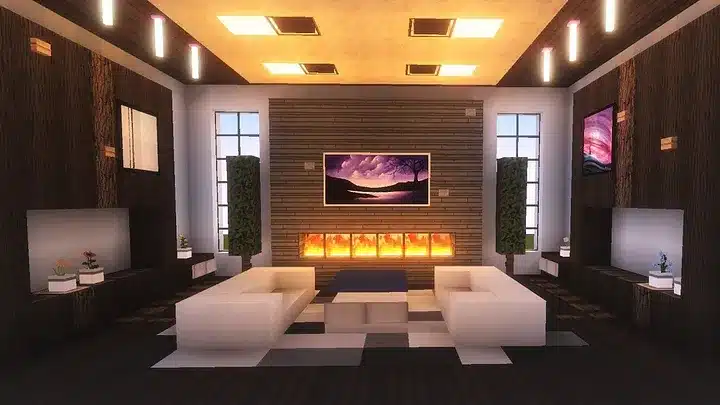
I spent an embarrassing number of hours in Minecraft before I admitted the game was teaching me about real rooms. The builds that looked finished were not the ones with the most blocks. They were the ones where furniture scale matched the ceiling, where light had a source you could point to, and where one wall did most of the visual work.
That is why I still treat Minecraft interior design as a serious layout lab. You can test proportion, circulation, and material contrast without buying a single chair. This guide is what I wish I had when I was placing random tables in every corner of my farmhouse and wondering why the room felt chaotic.
Nothing here requires mods or texture packs. I play vanilla survival on a laptop that barely keeps up, which forces simple choices. That constraint mirrors decorating on a real budget: you learn what actually changes the room instead of chasing endless options.
Start With the Room Box, Not the Decor
In Minecraft interior design, the first mistake is decorating before the shell makes sense. I build the floor plan with empty air first: mark sleeping zone, crafting zone, storage, and the path between them. If the path kinks around furniture that does not exist yet, the finished room will always feel cramped.
Ceiling height matters more than texture packs. A room with a seven-block ceiling reads grand; drop it to four blocks and the same furniture feels oversized. I mirror that in a typical apartment by checking how low a pendant would hang before I commit to a tall bookshelf.
Light direction is the other half of the box. Place torches or lanterns on the wall where you want the eye to travel, not evenly everywhere. Even light flattens depth. I use that rule when I arrange lamps in a real bedroom: one stronger source, one softer fill.
Window placement is part of the box too. A single wide opening on the short wall changes how long the room feels. I test that in game, then check whether my real living room needs the sofa off-axis so the window stays visible from the entry.
Furniture Scale and the Three-Block Rule
Most bad Minecraft builds use furniture that is one block too wide or too tall. I use a rough three-block rule for living areas: leave at least three open blocks between major pieces so avatars can pass without clipping. That translates directly to coffee table clearance in a small living room.
Beds, tables, and counters should align to a grid. Offsetting everything by half a block looks creative for about ten seconds, then it looks noise. when redesigning a home office I lined the desk, shelf, and chair rail to one wall axis. The room calmed down immediately.
Vertical scale is where Minecraft interior design teaches proportion fast. A two-block-high opening feels like a generous doorway; squeeze it and the whole wall feels wrong. I compare door height to ceiling height before I choose art above the frame in real rooms.
Rugs in game are flat blocks, but they still define zones. I use a different floor block for dining versus sitting before I place walls in survival replays. In a typical apartment I tape out rug sizes on the floor for the same reason: zone first, furniture second.
Material Contrast Beats Texture Spam
Early builds fail when every surface competes. Pick two materials that disagree on purpose: smooth stone against rough wood, dark trim against pale plaster. I limit accent blocks to edges and furniture, not entire walls.
In survival mode I use stripped logs and stone bricks because they read clearly at a distance. In real rooms I do the same with oak versus painted MDF: one honest material, one quiet backdrop. Mixed fake wood prints in one sightline create the same static as six different Minecraft planks in one corner.
Color temperature still applies. Warm lantern light against cool deepslate reads cozy; cool light on warm oak can look muddy. I test both in-game before I buy warm-white bulbs for a north-facing room.
Metallic accents need restraint. A little copper or iron around a fireplace is enough; covering every surface in ore blocks looks like storage, not design. I keep metal to hardware and lamps at home for the same reason.
Focal Points and Sightlines
Every room needs one decision you notice first. In Minecraft interior design that might be a fireplace wall, a tall window, or a painting centered on the short wall. I build that wall first and let secondary furniture support it.
Sightlines from the doorway matter. Stand at the entry chunk and look straight in: if the first thing you see is the back of a sofa, fix the layout before adding plants. I rearranged my real living room after a bookshelf blocked the window view from the hall.
Storage should not be the hero unless the room is a storeroom. Hidden chests under stairs work in game; in life, closed storage along one line keeps the focal wall clean. I connect that idea to the broader design basics when friends ask why clutter looks unfinished.
Art placement follows the focal wall. One strong piece at eye height beats five small frames scattered. I hang real art the same way I place maps in game: centered on the wall that already has the best light.
What Transfers to Real Apartments
Minecraft interior design is not a shopping list of block IDs. It is practice for decisions you make with money on the line: scale, path, light, contrast, focal point. I keep a screenshot folder of builds that worked and note why.
When I help friends layout studio apartments, I sketch in blocks first. It sounds silly until someone realizes their small sofa eats half the circulation path. The game removes price anxiety so you focus on structure.
If you only take one habit back to real life, take the lighting pass last. Walk the room at night in-game, then do the same at home with lamps only. Problems show up in both places the same way.
For style inspiration, browse style guides after the layout works. Finish is easier when the bones are right. Most Pinterest fails are layout fails with good paint on top.
Common Layout Mistakes I Still Catch Myself Making
Floating furniture in the center of a large Minecraft room without a rug or floor change looks lost, the same way a solo sofa floats in a big loft. I anchor with a floor pattern or low walls before I call the layout done.
Overbuilding stairs and balconies inside small shells steals floor area. I simplify vertical circulation in game and remember that open stair volume in real lofts also eats usable furniture zones.
Too many doorways break wall space for art and storage. I pick one main entry and treat other openings as windows or archways with purpose.
When a build finally works, I screenshot the top-down view and tape-measure my real room against it. That habit saved me from buying a second-hand sectional that was six inches too deep.
Treat Minecraft as a layout lab, not a style mood board. The aesthetic pins are the finish layer; the game forces you to solve the layer underneath. That is the part most real-world guides skip, and it is the part that actually fixes a room.
When you get one build right, copy the floor plan into a sketch before you tear it down for resources. I keep a notebook of block grids next to real room measurements. The habit sounds nerdy until the next time you avoid buying furniture that will not fit.
The same constraint thinking shows up on land. Van interior design is the closest real-world version of a block grid: every cell earns its keep.
If the problem is volume rather than a game engine, start with interior design basics and then steal only the Minecraft habit of repeating one module.
For a darker, denser room that still has to function, I would rather send you to dark bedroom ideas than to another fantasy build.
FAQ
Does Minecraft interior design help real decorating?
Yes, for proportion, circulation, and lighting logic. It does not replace material samples or budget planning, but it trains your eye faster than scrolling photos. I still bring fabric swatches home before I commit to a sofa, even if the block layout looked perfect.
What block height equals real ceiling height?
There is no exact formula, but a four-block room feels like a standard apartment ceiling and seven blocks feel double-height. Use that ratio when judging furniture scale, then confirm with a tape measure before you buy.
Should I match Minecraft builds to one real style?
Pick one material story per room first. Style comes after the shell reads correctly. Mixing five themes in one chunk is the same mistake as mixing five trends in one studio.
Where should light go in a Minecraft room?
Put the brightest source on the focal wall or entry sightline, then add lower fill light. Even torch grids flatten depth and make builds look like mining tunnels.
Can kids use this to learn real design?
Yes, with supervision on screen time. The layout lessons transfer; adult budgets and building codes still apply in real life.
Do shaders change layout lessons?
Shaders change mood, not proportion. Test layouts in default light first so you are not fooled by bloom.