Medieval Interior Design: Stone, Timber, and Proportion in Modern Rooms

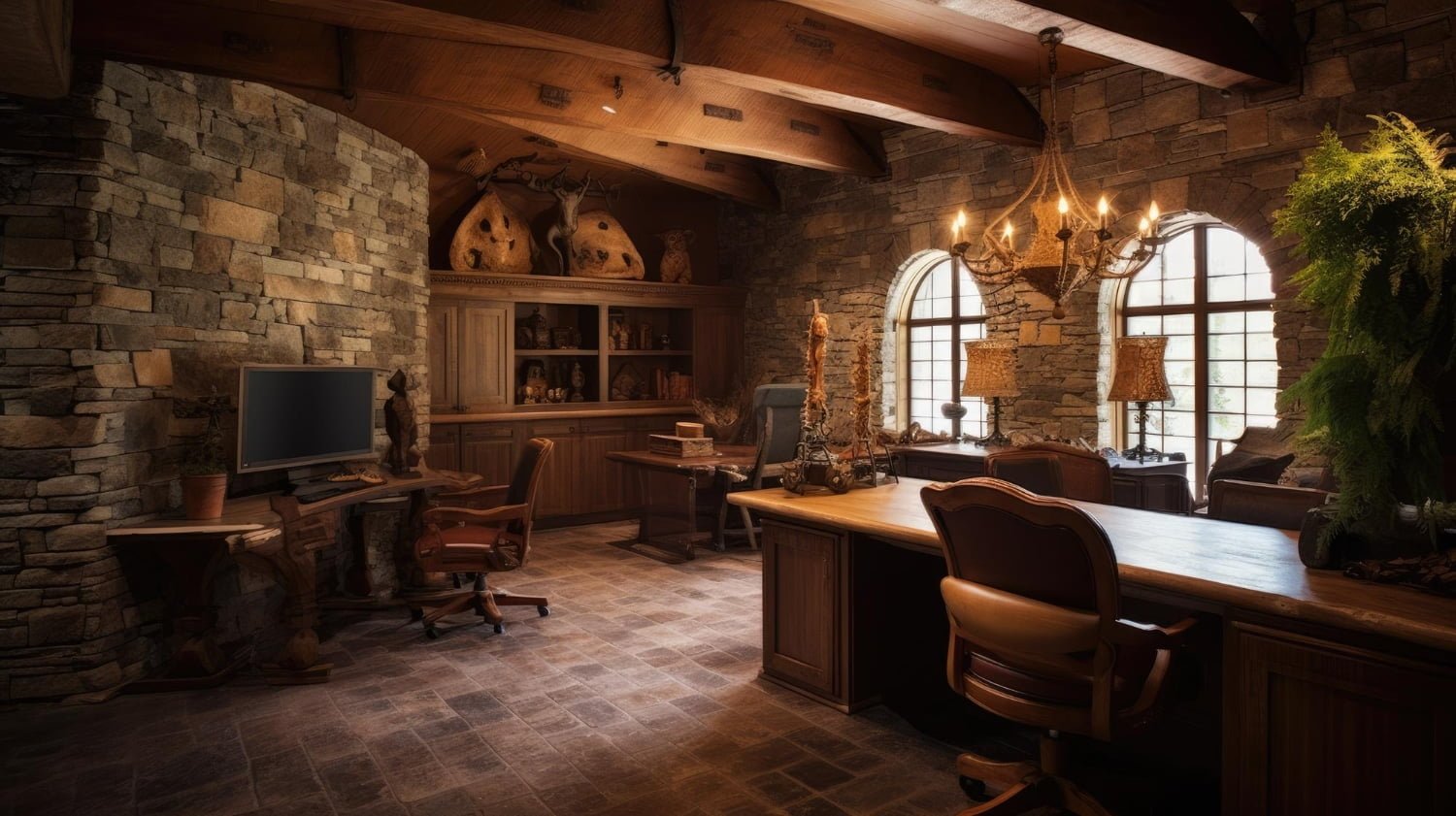
I found medieval interior design the way I find most of my obsessions: late at night, scrolling through a Pinterest board I didn’t mean to open. A living room with exposed stone walls, a wrought iron chandelier, heavy tapestries. My first reaction was “that’s a lot.” My second reaction, about thirty seconds later, was “why does this feel more livable than anything in a typical apartment?” That was three years ago. Since then Testing a lot of these ideas in a typical rental, with mixed but genuinely interesting results, and I’ve learned what actually moves the needle versus what just adds clutter.
Medieval design looks intimidating from the outside. Castles, stone fortresses, furniture built for a completely different century. But the elements that make a room feel medieval, the textures, the quality of light, the visual weight of the materials, are more accessible than people expect. You don’t need actual stone walls. You don’t need a vaulted ceiling. What you need is to understand which details carry the style and which you can fake convincingly. Here’s what I know from actually trying this.
The Architectural Details That Set the Tone
Vaulted Ceilings: Even the Illusion Changes a Room

The vaulted ceiling is the architectural signature of medieval interiors. Barrel vaults, rib vaults, groin vaults: each type creates a different kind of spatial drama, but the common thread is height, and what height does to a room. Spaces with genuine vaulted ceilings feel different in a way that’s hard to describe until you’ve been in one. Sound behaves differently. Movement feels more deliberate. The ceiling isn’t just overhead; it’s part of the room in a way flat ceilings never are.
For the rest of us without a castle: exposed ceiling beams are the closest practical substitute. Dark-stained wood beams running across a plain ceiling shift the eye upward and add visual weight without requiring structural changes. Polyurethane faux beams from companies like Ekena Millwork cost around $60 to $120 per beam and install without a contractor. I put three across my bedroom ceiling two years ago and the first comment from every visitor is about the room feeling different, in a way they usually can’t pin down. The beams aren’t doing as much work as a genuine barrel vault, but they shift the register of the room in a direction the style needs.
Gothic Arches: The One Element That belongs in the room in Any Room

If I had to name one element that converts a regular room into something that feels deliberately medieval, it would be the Gothic arch. The pointed form, narrower at the base and meeting at a peak, shows up in doorways, windows, furniture, niches, and mirrors. What makes it effective is that it’s architectural in feeling without requiring any actual architecture. A mirrored arch leaned against a wall does the same visual work as a structural doorway. An arched bookcase headboard in a bedroom shifts the mood of the entire space.
I had a real moment with this at an estate sale in my neighborhood. A secondhand arched mirror with a dark wood frame and a pointed top, $35. I put it in my hallway, and the first thing every visitor mentioned was something about the space feeling old, but not in a negative way. In the way that deliberate, designed spaces feel. The arch was doing all the work. For a more structured approach, arched cabinet doors, arched wall panels sold as decorative millwork, and furniture with Gothic arch detailing all signal the style clearly. Pottery Barn and Restoration Hardware both carry pieces in this direction, on the pricier side, but the signal is immediate.
Stone Walls: The Real Version and the One That Actually Convinces People

Stone walls are central to the medieval look, and also the element most people dismiss as completely out of reach. The assumption is that stone walls mean a full renovation. That’s not the only path. Peel-and-stick stone panels have improved significantly in quality, and the key to making them work is treating one wall as an accent rather than trying to cover the full room. One wall with stone texture looks intentional. Four walls with it tips into theme park territory. I’ve seen this done in apartments where visitors assume it’s real until they get close enough to touch it.
For homeowners, cultured stone veneer is the more permanent option: a fraction of the weight and cost of real stone, installable in a weekend. In any format, the texture to look for is irregular limestone, not a perfect brick grid. Medieval stonework varied considerably in size and finish because it was quarried locally. The irregularity is part of what makes it feel authentic. A too-perfect pattern looks like a kitchen backsplash rather than a castle wall, which is the opposite of the effect you’re after.
Materials That Carry the Style
Wood: Where the Carving Detail Actually Matters

Medieval woodwork had two defining qualities: the heaviness of the pieces and the carving detail on the surface. Oak was the dominant species, dense and dark when aged, built to outlast its owners. The carvings ranged from simple geometric patterns on everyday pieces to elaborate foliage and religious scenes on high-end work. That surface texture, the fact that the wood has been actively worked and marked, is what carries the medieval signal in a modern room. Smooth furniture in a dark stain doesn’t communicate the same thing. A carved piece does.
Solid oak shows up regularly at estate sales and antique shops at prices far below new retail. Sourcing most of my medieval-leaning pieces this way: a heavy oak console table from an estate sale for $80, a carved oak mirror from an antique store near me for around $120. The carving detail is what’s worth paying for. If you find a smooth piece in oak, it doesn’t move the room the way a carved one does. Buying old is both cheaper and more effective here than buying new, which is not always how it works in interior design but is absolutely true for this style.
Tapestries and Heavy Fabrics: The Practical Side of the Aesthetic

Most people don’t know this about tapestries: they weren’t primarily decorative. In large stone buildings with no central heating, hanging heavy textiles on walls was a primary insulation strategy. The fabric trapped air and reduced the cold radiating from stone. Wealthy medieval households were covered in them because it was as much practical as beautiful. That context makes them feel less like costume to me. They’re an intelligent design response to a specific problem, which is a more honest way to think about why they belong in this aesthetic.
The colors that feel most authentic are derived from the natural dyes available at the time: deep crimson from madder, forest green from weld and indigo, rich navy from indigo alone. Gold thread appeared in higher-end work. You don’t need a historically accurate woven tapestry to get the effect. A densely woven throw in jewel tones draped over a sofa, or a large textile piece hung on a wall, achieves the same visual weight. Look for wool or wool-blend fabrics: the texture holds the heaviness the style needs in a way synthetic velvet doesn’t quite replicate. I have a large-format tapestry from Society6 in my bedroom that cost $65 and does more design work than anything else in that room.
How to Light a Medieval Room
Candles and Iron: Why This Combination Still Works

Medieval rooms were lit almost entirely by candle flame. Chandeliers and candelabras held multiple candles and were hung high to maximize their reach. The effect was warm, flickering, and uneven in a way that’s fundamentally different from any modern electric source. That quality of light is a significant part of why medieval-inspired rooms feel different from contemporary ones. It’s not just the furniture or the stone. It’s the light itself, and most people underestimate how much it contributes to the overall mood.
You don’t have to use actual candles, though the combination of real flame and electric light in the evening is worth trying if you haven’t. What matters most is color temperature: warm white bulbs at 2700K or lower, and dimmers on every circuit in the room. A wrought iron chandelier with warm Edison bulbs is the single most impactful lighting change you can make. Amazon carries wrought iron chandeliers starting around $80; look for ones with arms that curve upward and hold exposed bulbs rather than shaded ones. Pair that with two or three pillar candles on a dark wood surface and the light quality at night becomes genuinely different from what any ceiling fixture alone can produce.
Stained Glass: More Flexible Than People Assume

Stained glass is the element I’m most opinionated about in medieval design, mostly because it’s so underused in contemporary interiors. There’s a tendency to treat it as either a church feature or a Victorian relic, but a single stained glass panel in jewel tones does something to natural light that can’t be replicated any other way. The colored shadows it throws across a floor or wall are genuinely unusual. It’s not subtle and it doesn’t pretend to be, which is exactly why it belongs in this style. The connection to Victorian Gothic design is close here: both traditions use stained glass as a mood tool rather than just decoration.
Most people treat stained glass as all-or-nothing: you either have the actual glass or you don’t. That’s not accurate. Window film in stained glass patterns is removable and has improved in quality over the past few years. For something more permanent, small stained glass panels hung in a window frame, not replacing the glass but sitting inside the frame, are available from Etsy makers for $50 to $200 depending on size. Placement is critical: you want light to actually pass through it at some point in the day. Even an hour of colored light in the morning changes how a room feels for the rest of the day in a way that’s hard to predict until you’ve seen it.
Furniture and Color: Getting the Details Right
Heavy Furniture: Which Pieces Are Worth Prioritizing

Medieval furniture was heavy by design: solid wood, minimal upholstery, built to outlast the people who owned it. Chests served as both storage and seating. High-backed chairs signaled status. Tables were long and rectangular, built for communal use. Beds were curtained for warmth. All of this came from practical necessity in cold, drafty spaces, but the visual result is rooms that feel grounded and built to a different scale than what most contemporary furniture targets.
You don’t need to replicate any of this literally. The design signal is visual weight: pieces with mass, dark finishes, visible joinery, solid legs. The furniture that undermines this style most quickly is the light-legged Scandinavian aesthetic that dominates mainstream home stores right now. A high-backed chair in dark wood or velvet at a desk or dining table shifts a room significantly. In the bedroom, a four-poster frame even without curtains establishes the style more effectively than almost anything else you could add. The curtained four-poster appears in dark interior design more broadly, but medieval is where the tradition originates and where it feels most at home.
The Color Palette: Not Just Dark
Most people default to “dark and moody” when they think about medieval color, which is directionally right but incomplete. The full palette includes deep reds, forest greens, navy blues, and burnished golds. All jewel-toned and saturated, but not necessarily dark overall. What makes them feel medieval is the underlying warmth: reds that lean toward crimson, greens that lean toward hunter, blues that are deep and muted rather than bright or cool.
If you’re painting, a deep forest green or a warm charcoal with brown undertones works better than a blue-grey. Farrow and Ball’s Mizzle is a green that fits the palette. Benjamin Moore’s Black Pepper gives you a dark neutral with enough warmth to avoid feeling clinical. If you’d rather keep walls neutral and bring color through textiles and accessories, that’s actually more historically accurate: medieval stone rooms often had neutral wall surfaces that were warmed entirely by the fabrics and furnishings layered into them. That’s also the more rental-friendly approach, and the one I’d recommend trying first. The Baroque design tradition shares a lot of this same color logic and is worth looking at for reference on how to use deep saturation without making a room feel oppressive.
Making It Work Without Going Full Castle
The mistake I see most often with medieval design is trying to do too much at once. Tapestry, wrought iron chandelier, high-backed chair, stone wallpaper, carved oak chest, all in one room at the same time. The result tends to feel like a film set rather than a home. Medieval design is dramatic by nature, and drama requires restraint in how it’s deployed or it stops being a design choice and starts being a theme.
The first time I seriously applied these principles, I focused on one room and committed to three elements: faux ceiling beams, a tapestry wall hanging, and a four-poster bed frame. Everything else stayed neutral. The result was a room that felt noticeably different without feeling costumed. The restraint was what made it work. Had I added the arched mirror and the stone wallpaper panel at the same time, it would have been too much in a way that’s genuinely difficult to recover from without starting over.
The practical recommendation: start with lighting and one structural detail. Get a wrought iron chandelier with warm bulbs. Add one architectural element, an arched mirror or a tapestry, and live with that for a few weeks before adding anything else. Medieval design builds well in layers, and the best versions of it in real homes are rooms that feel like they developed over time. For a related historical design tradition worth comparing, the Arabian interior design guide covers a parallel tradition of ornate, material-rich interiors from the same period, with a different regional vocabulary but a shared logic around layering and texture.
Frequently Asked Questions
What defines medieval interior design as a style?
Medieval interior design is defined by heavy materials, architectural drama, and rich color. Key elements include exposed stone or wood textures, vaulted or beamed ceilings, Gothic arches, wrought iron fixtures, tapestries, and deep jewel-toned colors like crimson, forest green, and navy. The style emphasizes visual weight and a sense of permanence over lightness or minimalism.
Can you do medieval interior design in a rental apartment?
Yes, with some adaptation. Faux ceiling beams, removable stone-texture wallpaper, arched mirrors, tapestry wall hangings, and a wrought iron chandelier all work in rentals without permanent changes. Focus on textiles, lighting, and movable furniture rather than structural changes and the style translates well.
What is the most important element to start with in medieval interior design?
Lighting is the highest-impact starting point. A wrought iron chandelier with warm Edison bulbs at 2700K or lower, combined with a few pillar candles, immediately changes how a room feels at night. From there, one architectural element such as an arched mirror or tapestry builds the style without overwhelming the space.
How do I stop a medieval-themed room from looking like a costume?
Restraint is the answer. Pick two or three elements and let everything else stay neutral. A room with a tapestry, beamed ceiling, and iron chandelier reads as styled. The same room with stone wallpaper, carved furniture, and heraldic accessories reads as a theme. Fewer committed pieces done well carry more weight than an all-in approach.
What is the difference between medieval and Gothic interior design?
Gothic interior design is a specific visual style within the broader medieval period, defined by pointed arches, dramatic verticality, and ornate tracery. Medieval design as a broader category includes Gothic elements but also encompasses simpler, more rustic features: exposed timber, stone walls, heavy furniture, and tapestries. Gothic is the cathedral; medieval is the manor house.
What furniture materials work best in a medieval interior?
Dark solid oak is the most effective material for the aesthetic and the most historically accurate. Look for pieces with carved details, thick legs, and visible joinery. Estate sales and antique shops are better sources than new retail for both authenticity and price. Avoid light-colored wood and thin-legged furniture, which work against the visual weight the style requires.
If you liked this post about medieval interior design, don’t forget to follow us on Pinterest so you don’t miss any more interior design ideas.