Mid-Century Modern Kitchen: What Makes the Look Work

The mid century modern kitchen gets misread more often than any other room in this style category. People see the walnut cabinets and the Sputnik chandelier and think they have it covered, and then the room ends up looking like a furniture showroom from 2012. The key principle here is that MCM kitchens are not about the objects. They are about the relationship between materials, light, and function.
A solid mid century modern kitchen for a home in Evanston who had bought a 1958 split-level and wanted the kitchen to match the bones of the house rather than fight them. That project taught me more about what this style actually requires than any studio course I took at IIT. What follows is what I would tell someone starting that renovation today.
Color, Pattern, and the Tile Moment
How Jewel Tones Create Structure Without Overwhelming the Room
Mid century modern kitchens from the 1950s and 60s were not afraid of color. Burnt sienna, deep teal, warm ochre, forest green: these are colors that appear in the original source material and still read correctly today. What makes them work is restraint in application. The key principle here is one dominant saturated surface, with everything else pulled back. A teal backsplash against white cabinets and a walnut countertop works. The same teal on cabinets, countertop, and ceiling does not.
I once worked with Someone who wanted turquoise tile on every available surface. What I actually specified was a single run of handmade turquoise field tile on the backsplash, with soft white cabinets and a light terrazzo floor. She was skeptical. When it was done, she said it looked more like her original vision than her own plan would have. The restraint made the color louder, not quieter.
A few related Pinterest references in the same visual family as the section above.
Geometric Backsplash Tile as a Visual Anchor, Not Just a Pattern
Geometric tile is one of the clearest markers of the era. Hexagonal tile, elongated subway with contrasting grout, quatrefoil, stacked Moroccan. In practice, the tile functions as a visual anchor: it holds the eye in a particular zone of the kitchen and gives the room a focal point that does not depend on a statement appliance or expensive countertop material. Fireclay tile and handmade ceramic tile work especially well because the slight variation in surface catches light differently at different times of day, which is exactly the kind of subtle movement this style depends on.
A few related Pinterest references in the same visual family as the section above.
Art as Interior Architecture, Not Decoration
MCM homes from the original era were designed with artwork treated as a structural element of the room, not as something added after the fact. A single large abstract piece on a neutral wall does more for a mid century modern kitchen than three medium-sized prints arranged in a grid. The scale has to be right, and the palette has to relate to the room rather than just sit in it. Look for abstract or organic forms in limited colors. Avoid anything that competes with the tile or looks like decorative filler.
Natural Light and the Open Envelope
Large Windows Are Not Optional in This Style
MCM architects, from Joseph Eichler to Richard Neutra to Marcel Breuer, treated the window as a wall panel, not an aperture. In a kitchen context, window placement relative to the work triangle matters more than size. I have seen this work most effectively when the primary window faces east: morning light lands on the countertop, bounces warm off the wood cabinets, and the room reads completely differently at 8am than it does at noon. That variation is a design feature. A kitchen with flat, directionless light does not benefit from MCM materials the way a well-lit one does.
A few related Pinterest references in the same visual family as the section above.
Why MCM Kitchens Rarely Feel Cluttered When Done Right
The open-plan kitchen was not invented by MCM designers, but the movement made it mainstream in American residential architecture of the 1950s and 60s. A room breathes differently when it does not have walls interrupting sightlines, which is a basic design principle most people overlook. If you are working with a closed or semi-closed kitchen, removing a non-structural wall to open the sightline toward the dining area is often the most effective change you can make before spending money on materials. More on basic design principles that apply across all styles.
The Island and Open Shelving
Islands That Function as Social Infrastructure, Not Just Countertops
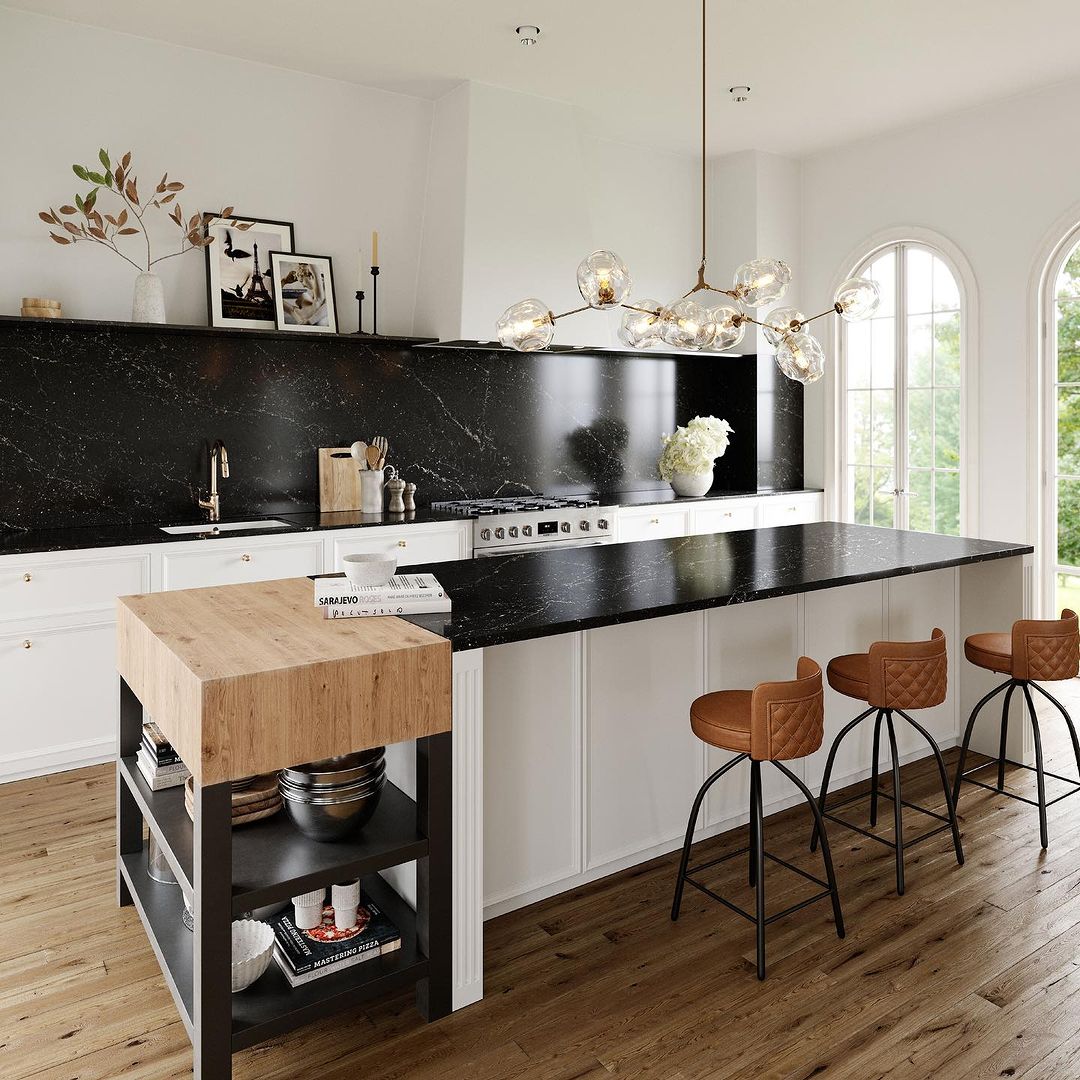
MCM kitchen islands were not afterthoughts. They were designed from the floor plan outward, with seating and social interaction built into the brief. The common mistake in renovations is adding an island that is too large for the room, which kills the open quality that MCM depends on. A practical rule: at least 42 inches of clear circulation on all sides. Anything less and the island becomes an obstacle rather than an invitation. The island surface material matters too: a butcher block top in walnut or teak on an otherwise flat-front cabinet base is a period-accurate combination that stays convincing well.
A few related Pinterest references in the same visual family as the section above.
Open Shelving: The Display Principle Most People Get Wrong
Contrary to what you see in most renovation reveals, open shelving in a mid century modern kitchen works best when it holds a limited number of objects: a set of ceramics, two or three plants, a well-chosen stack of cookbooks. The moment it becomes functional storage, you have lost the aesthetic. I tell clients that open shelving in an MCM kitchen should be treated like a gallery wall, not a pantry. Curate it once, adjust it seasonally, and resist the urge to fill every inch of it.
Related garage setups in the same functional family: storage, work zones, and finishes that keep the space usable rather than decorative.
Wood: The Non-Negotiable Material
Walnut Flat-Front Cabinets and the Hardware That Completes Them
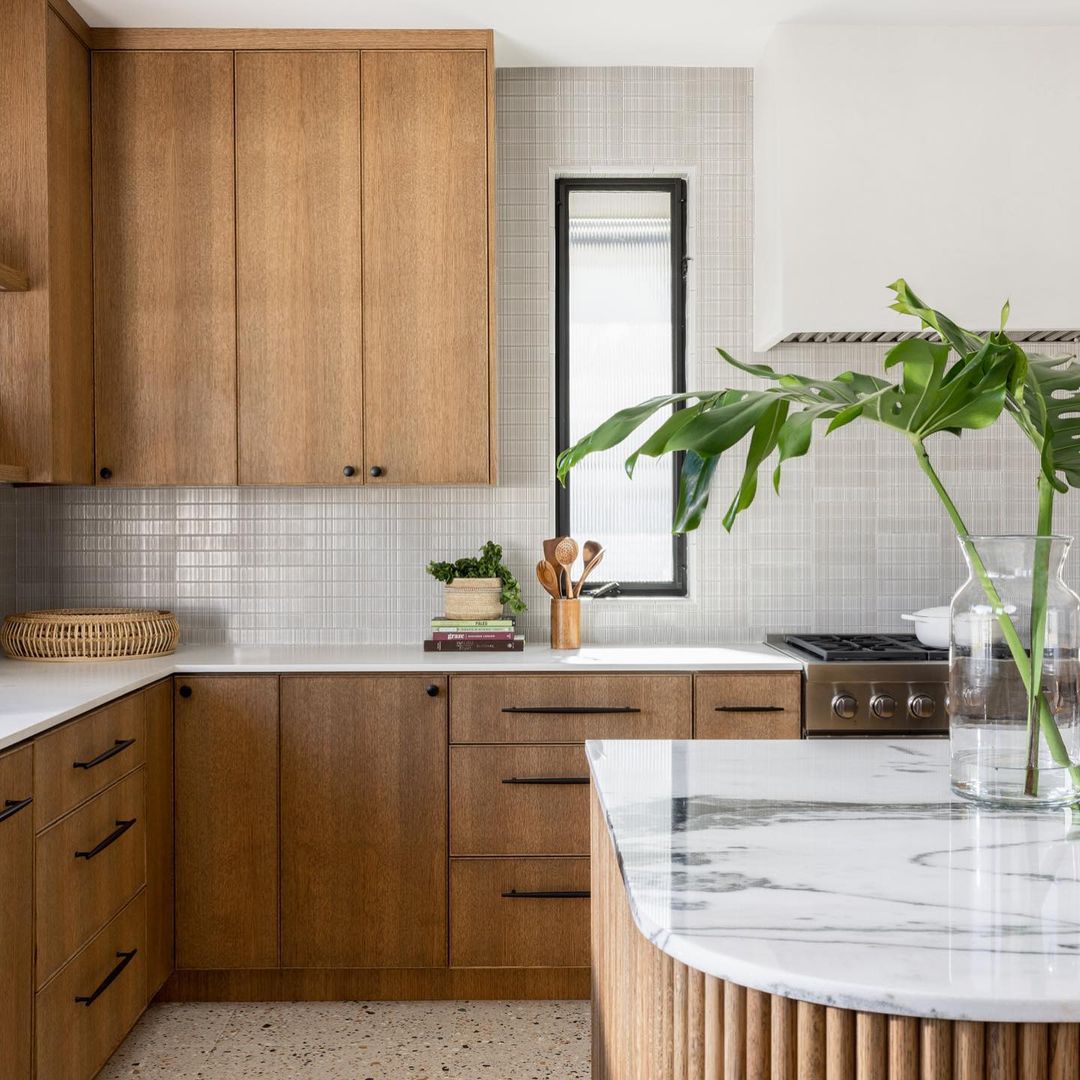
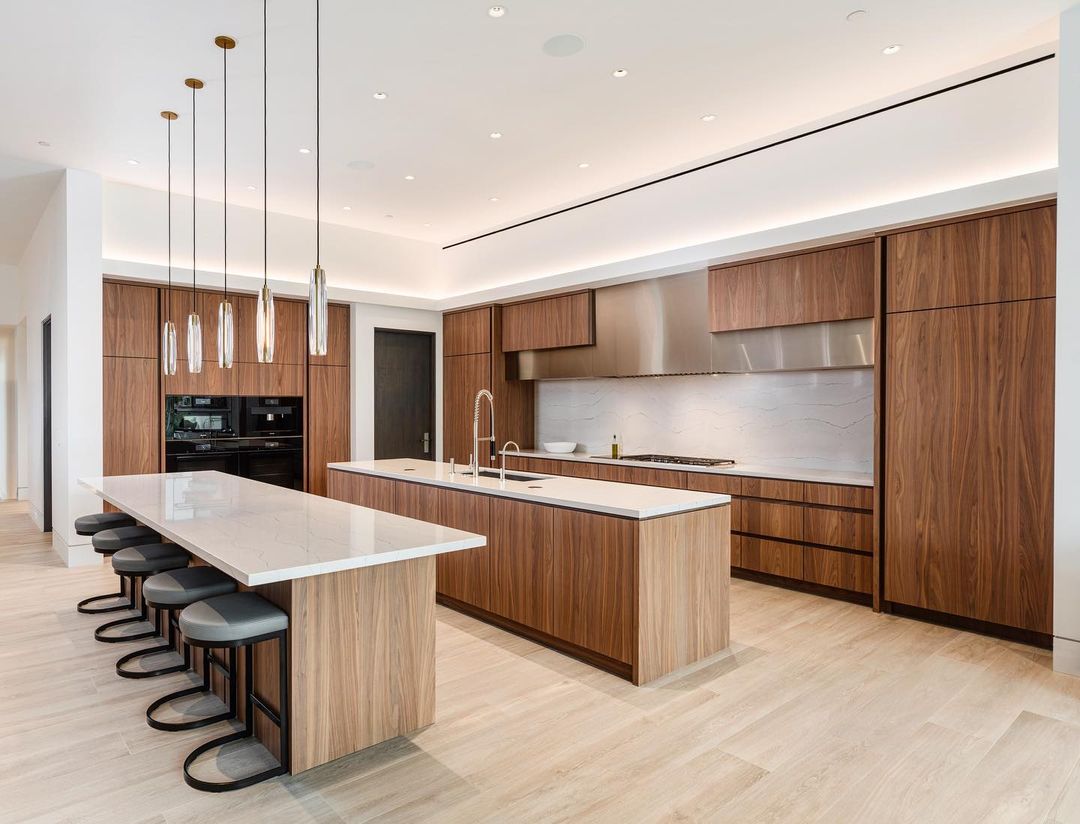
Walnut is the canonical mid century modern wood, and for good reason: the grain is active enough to read as warm, flat enough to read as modern. Flat-front cabinet doors with no raised panel and no routed detail are not negotiable in this style. The moment you add an ornamental profile to the door, the room starts reading traditional. For hardware, brushed brass or matte black linear pulls are the correct choice: long, horizontal pulls on lower cabinets, shorter pulls on uppers. Bin pulls and round knobs both read wrong for the era.
Teak and Oak as Honest Alternatives to Walnut
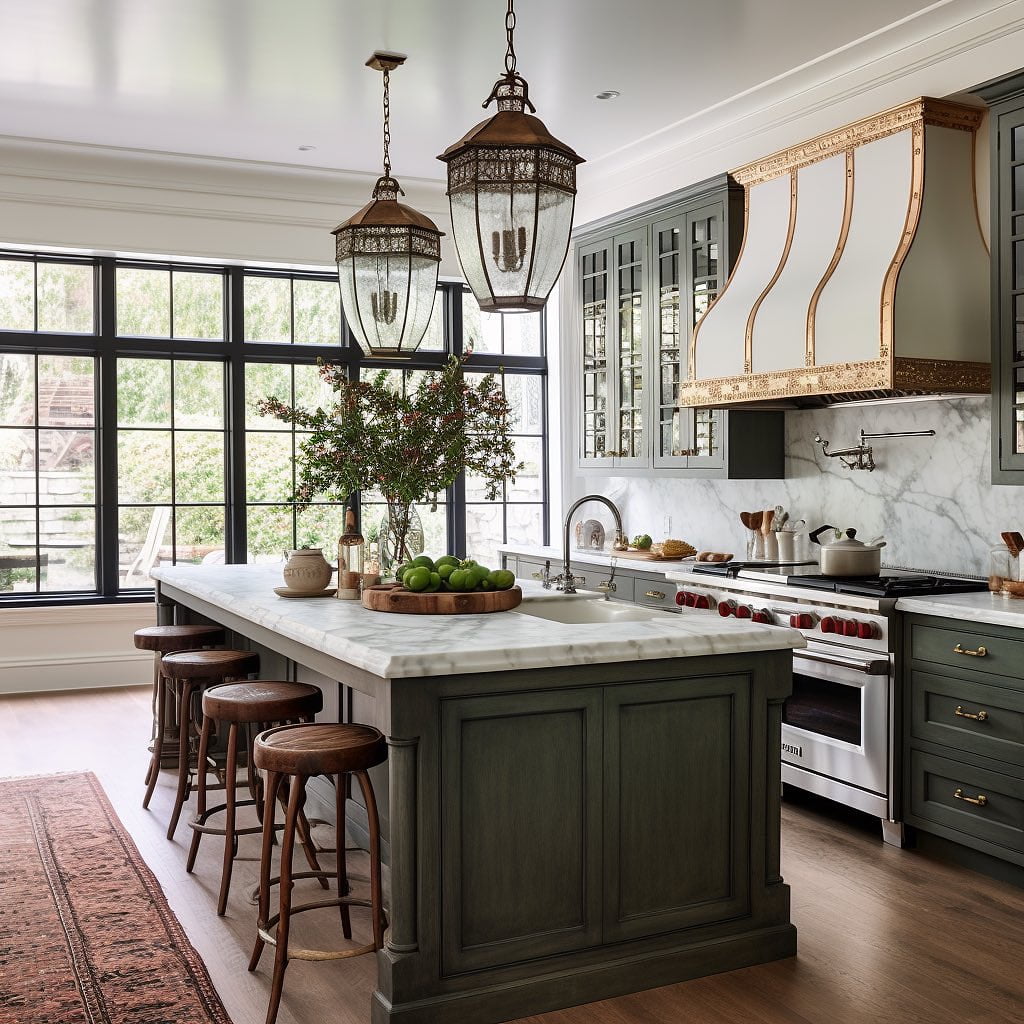
Teak is warmer and more orange-toned than walnut. It works particularly well in kitchens with a strong natural-light story, where the warmth of the wood becomes part of the room’s character rather than competing with it. Oak is lighter and more widely available, which means it requires more discipline elsewhere to avoid reading generic. A light oak cabinet with white quartz countertops and a sage green backsplash can work; the same oak with a gray countertop and stainless hardware looks like a 2018 renovation, not a 1958 house. Worth understanding: the wood does not make the kitchen MCM. The proportions and restraint of the overall design do.
A few related Pinterest references in the same visual family as the section above.
Surfaces: Tile, Stone, and the Countertop Decision
Why Terrazzo and Fireclay Tile Still Feel Authentically Right
Terrazzo flooring was everywhere in postwar American construction: colorful chips of marble or glass set in cement, durable and visually interesting in a way that plain tile is not. It reads MCM without trying. Fireclay tile, fired at high temperature with a slightly uneven glaze, works similarly well. The surface variation catches light in ways that mass-produced ceramic does not, and the color range runs from muted earth tones to saturated jewel shades.
A few related Pinterest references in the same visual family as the section above.
A few related Pinterest references in the same visual family as the section above.
The Quartz vs. Concrete Countertop Question
Quartz is the more practical choice: low maintenance, consistent appearance, available in surface options that work with MCM palettes. White and pale gray quartz both feel period-appropriate even if not historically accurate to the 1950s. Concrete countertops require sealing, develop a patina over time, and are genuinely heavy, which can be a structural consideration in older homes. My recommendation: quartz if you want longevity; concrete only if you are willing to maintain it and find the aging process a feature rather than a problem.
Related garage setups in the same functional family: storage, work zones, and finishes that keep the space usable rather than decorative.
Related garage setups in the same functional family: storage, work zones, and finishes that keep the space usable rather than decorative.
Lighting: The Move Everyone Underestimates
The Sputnik Chandelier Is Not a Cliche: It Is a Diagram
The Sputnik chandelier that appeared in American interiors in the late 1950s was not purely decorative. It was a cultural reference embedded in a functional object: a response to the space race, a form that signaled optimism about technology and the future. In a mid century modern kitchen, it still works because it creates a visual focal point at ceiling height, which draws the eye up and makes the room feel taller. Placement matters: centered over the island, not centered in the room. A Sputnik hung in the middle of the ceiling above a kitchen with no island underneath it looks lost.
A few related Pinterest references in the same visual family as the section above.
Pendant Lights Over the Island: Getting the Height Right
Most pendant lights in kitchen renovations are hung too high. The standard I use: the bottom of the pendant should sit 30 to 36 inches above the countertop surface. That is close enough to create intimate light at the work surface, high enough to not interrupt the sightline across the island when you are seated. For an MCM kitchen, globe pendants in brass or matte black, or cylindrical shades in a warm metal finish, all read correctly. Drum shades and fabric shades read soft and domestic in a way that competes with the clean lines of the cabinetry.
A few related Pinterest references in the same visual family as the section above.
Plants, Appliances, and the Details That Finish the Room
Plants That Work in a Kitchen Without Looking Like Props
Plants belong in MCM kitchens: the style has always had a strong connection to nature, which shows up in material choices as much as in the literal presence of greenery. What does not work is scattering small plants across every surface. One well-placed plant at window height does more for the room than five small ones competing for attention on the counter. Trailing pothos, a large-leaved fiddle leaf fig, or a run of herbs in a long ceramic planter along the windowsill all work. The key is genuine presence, not the look of styling.
More Hawaiian and tropical-leaning interiors with open light, natural texture, and indoor plants carrying the mood.
More Hawaiian and tropical-leaning interiors with open light, natural texture, and indoor plants carrying the mood.
Retro Appliances That Actually Perform
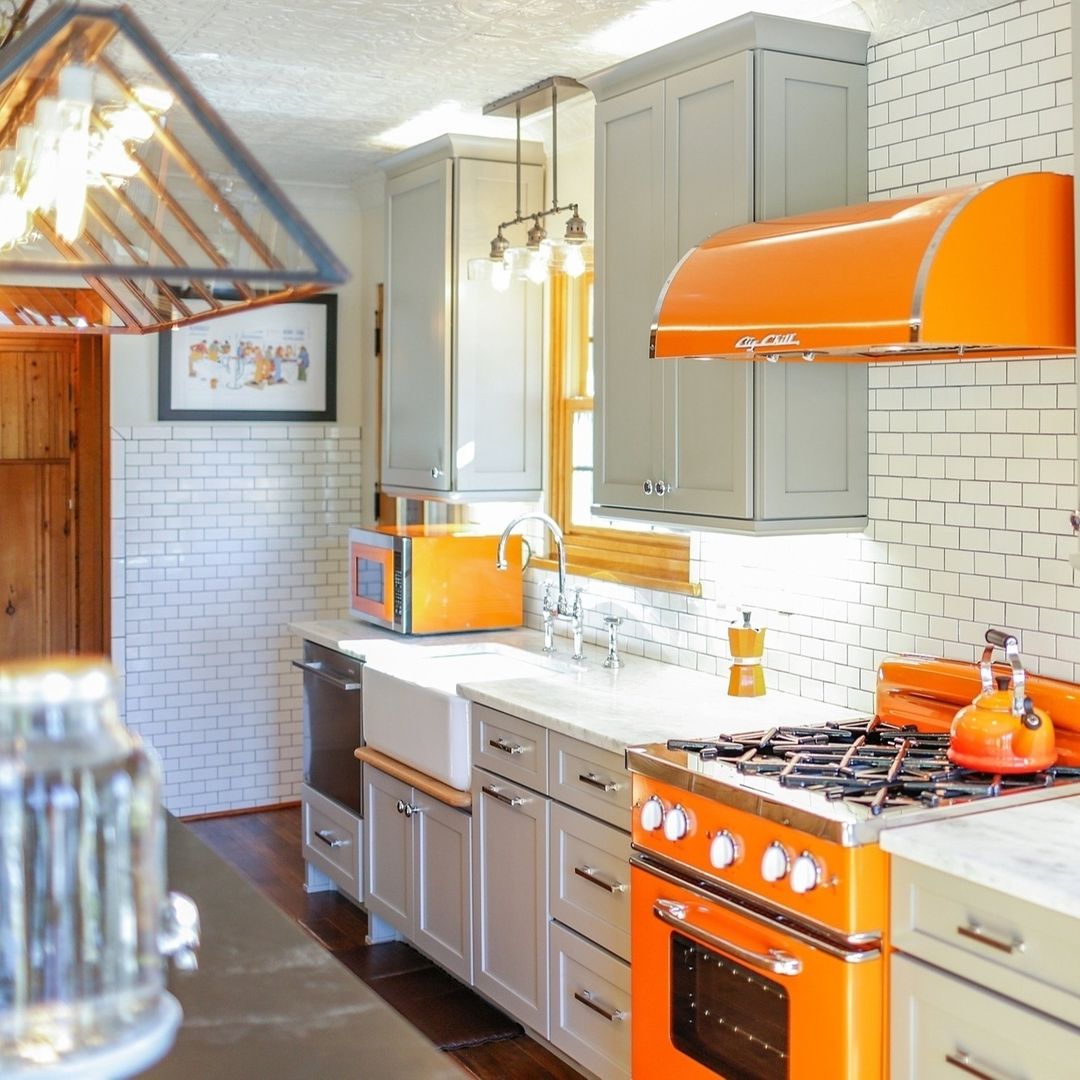
Companies like Big Chill and Smeg produce retro-profile ranges and refrigerators in period-appropriate colors: avocado green, cream, cherry red, cobalt blue. In practice, this is one area where the splurge is worth it. A Big Chill range in a warm color does more to establish the MCM character of a kitchen than any tile choice, because the appliance is large and sits at eye level. Stainless steel is also correct for the era: it appeared in postwar American kitchens from the late 1950s onward and looks both functional and modern. The one finish to avoid is matte black on large appliances, which reads too contemporary for the style.
A few related Pinterest references in the same visual family as the section above.
Art, Furniture, and the Character Layer
Choosing Art That Does Not Just Sit on the Wall
An abstract print in the right scale functions as a design element, not decoration. The mistake most people make is going too small: a 12 by 16 inch print disappears on a kitchen wall. Look for something at least 24 by 30 inches, in a limited palette that picks up one or two colors already in the room. The visual language of 1960s American design is a useful reference when sourcing art: graphic, confident, with geometric or organic forms.
Dining Chairs That Complete a Mid Century Modern Kitchen
The Eero Saarinen tulip chair is the canonical MCM dining chair, and it still works in a kitchen context because the single pedestal base reads clean against any floor material. Shell chairs in fiberglass or polypropylene, Eames-inspired DSW chairs, and Scandinavian bentwood chairs are all appropriate alternatives at different price points. If you are designing a full mid century modern dining room adjacent to the kitchen, the chair choice becomes even more important because it carries across both spaces. What does not work: upholstered dining chairs with tufting, chairs with decorative carved legs, anything that looks traditional or rustic. The chair profile needs to be light, spare, and functional.
A few related Pinterest references in the same visual family as the section above.
A few related Pinterest references in the same visual family as the section above.
Frequently Asked Questions
What are the defining features of a mid century modern kitchen?
Clean-lined flat-front cabinetry in walnut or teak, geometric or handmade tile backsplash, open floor plan with good natural light, period-appropriate lighting such as Sputnik or globe pendants, and a limited but confident color palette. The style is about the relationship between materials and light, not any single object.
What countertop material works best in a mid century modern kitchen?
White or pale gray quartz is the most practical choice and reads correctly with MCM cabinet materials. Concrete is also period-appropriate but requires sealing and regular maintenance. Avoid heavily veined marble, which reads more transitional than MCM.
Can I add a mid century modern kitchen to a newer home?
Yes, with the right material choices. The style does not require an original postwar house. Flat-front cabinets, warm wood tones, geometric tile, and MCM-profile lighting fixtures will read correctly in most residential kitchens regardless of when the house was built.
What colors are typical in a mid century modern kitchen?
Jewel tones used sparingly: deep teal, burnt sienna, warm ochre, forest green. Typically applied to one surface only, with the rest of the palette pulled back to white, cream, or warm neutrals. Avocado green, mustard yellow, and burnt orange are also historically accurate for the era.
Is open shelving a good choice for a mid century modern kitchen?
Open shelving works well in this style, but only if treated as a curated display rather than functional storage. Limit what is on the shelves to ceramics, a few plants, and a small number of well-chosen objects. The moment it becomes a pantry, the aesthetic breaks down.